
Forex
Forex Margin vs Leverage: Why Your Deposit Is Not Your Loss Limit
Learn the difference between margin and leverage in forex, why a 1% move can cost 30% of your money, and leverage limits in the US, UK, EU and Australia.
Forex is often sold with five big promises. Each has some truth in it, and each has a catch. Learn both before you decide if forex is for you.
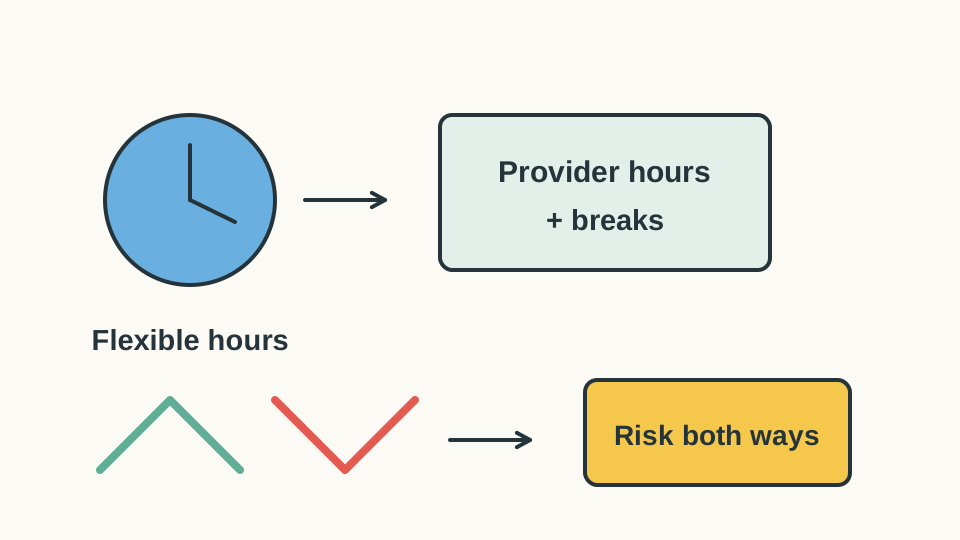
Forex is open around the clock on weekdays, but your provider sets its own hours.
People give five reasons to trade forex: long hours, a huge market, two directions, small deposits and . Each one has some truth. Each one also has a catch, and adverts often leave the catch out.
First, be clear about what you would trade. Changing US dollars into Canadian dollars to pay a bill gives you real money. Opening a leveraged trade on USD/CAD is different. You may hold a contract whose value follows the price, not the currency itself.
In the US, a retail forex dealer is your : it takes the other side of your trade. The CFTC explains this and tells you to check the dealer before you send money. A polished app does not show who owes you money, or what happens if the firm fails.
Try it yourself
Sort each claim you might see in a forex advert. Is it a fair point with a catch, or a myth? Tap a claim, then tap a box.
4 fair points, each with a catch: open around the clock on weekdays, profit when a currency falls, small deposits, and news you can follow. 4 myths: forex is crisis-free, you can always sell at the price you see, leverage only boosts profits, and a $9.5 trillion market means profit for everyone.
What would you expect?
What this shows: The real benefits of forex are true but incomplete. The myths all promise safety or easy profit, which no market can give.
Long hours, two directions and small deposits are real features. Each comes with a cost: weekend gaps, losses in both directions and leverage. A pitch that leaves out the cost is selling, not teaching.
On weekdays, trading moves from one financial centre to the next around the world. So a learner in Toronto, London or Sydney can watch prices at a time that suits them.
The catch: your provider sets its own hours, holidays and maintenance breaks. News over the weekend can make Monday's first price very different from Friday's last one. Seeing a price on your screen does not mean you can close your trade at that price.
Open all day can also mean checking all day. A routine works better: a set time to watch, a calendar of big news and a time to stop. Our forex market hours lesson explains sessions and weekend gaps.
Forex is a huge market. The BIS says about $9.5 trillion was traded a day in April 2025. A busy market usually has many buyers and sellers, which traders call .
The catch: that number is not profit waiting for you. Your own trade still depends on the pair, the time, your size and your provider. A that is tight in the morning can be wide during big news. Your order can fill at a worse price than the one you saw.
Closing a trade and getting your cash out are separate steps, too. Withdrawal checks, bank transfer times and the firm's own finances still matter. A big market does not promise you instant access to your money.
Yes. You can buy a pair if you think it will rise, or sell it if you think it will fall. If EUR/USD rises, the euro has gained against the US dollar. A buyer gains before costs, and a seller loses.
The catch: two directions also means two ways to be wrong. Prices can swing back and forth and hurt both sides. Forex is not crisis-free, either. Currencies can move sharply when the news is bad.
A currency is only strong or weak compared with another one. The Canadian dollar can rise against the US dollar and fall against the euro on the same day. Read how to read currency pairs before you act on a headline about a strong dollar.
Often, yes. Many providers let you open an account with a small deposit. With leverage, that deposit can control a trade many times bigger. That sounds like a shortcut, but it is also the main risk.
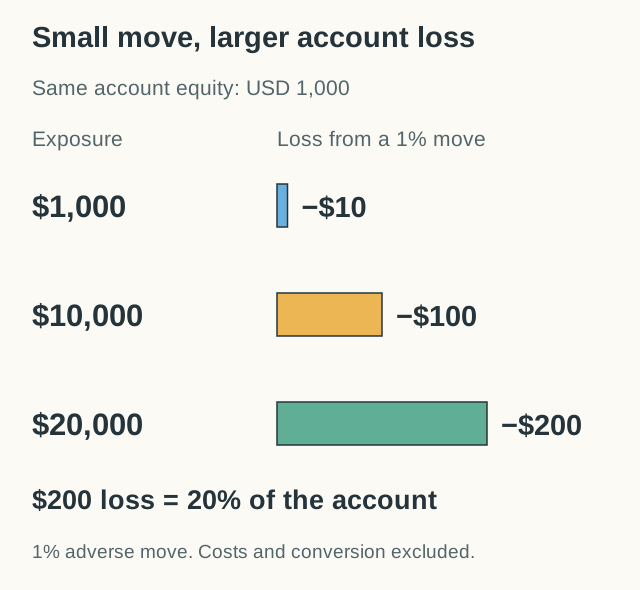
Say you have $1,000 in your account and open a $20,000 trade. A 1% move against you loses about $200, not counting fees. That is 20% of your money. The same move in your favour makes about $200. Leverage raises the stakes. It does not make you more likely to be right.
Your deposit, called , is not the most you can lose. Your provider may close your trades early, and a stop order can fill at a worse price. In the UK, the FCA limits leverage on CFDs and stops retail clients losing more than their account balance. Rules like these depend on where you live and what you trade.
Decide what you want to learn. If you want to understand travel costs, or the currency risk in foreign shares, you do not need leveraged trading. If short-term trading interests you, learn about spreads, overnight fees and losses before you deposit anything.
Curiosity is a good reason to keep learning. Hoping to replace a salary is a poor reason to choose a trade size.
Start with the ABC of forex trading, then learn what the spread costs you. Before you choose a provider, work through the broker checklist and our forex broker comparison.
Forex is a good subject to learn, because prices react to news you can read. Trading it with leverage is risky, especially for beginners. Learn how pairs, spreads and leverage work, and practise with virtual money first.
On weekdays, trading moves from one financial centre to the next, so prices change almost all day. Your provider sets its own hours and breaks, and most providers close at the weekend.
Mostly because of leverage. A small deposit can control a big trade, so a small price move can wipe out a large part of your money. Costs, weekend gaps and fast markets add to the risk.
Learn the difference between margin and leverage in forex, why a 1% move can cost 30% of your money, and leverage limits in the US, UK, EU and Australia.
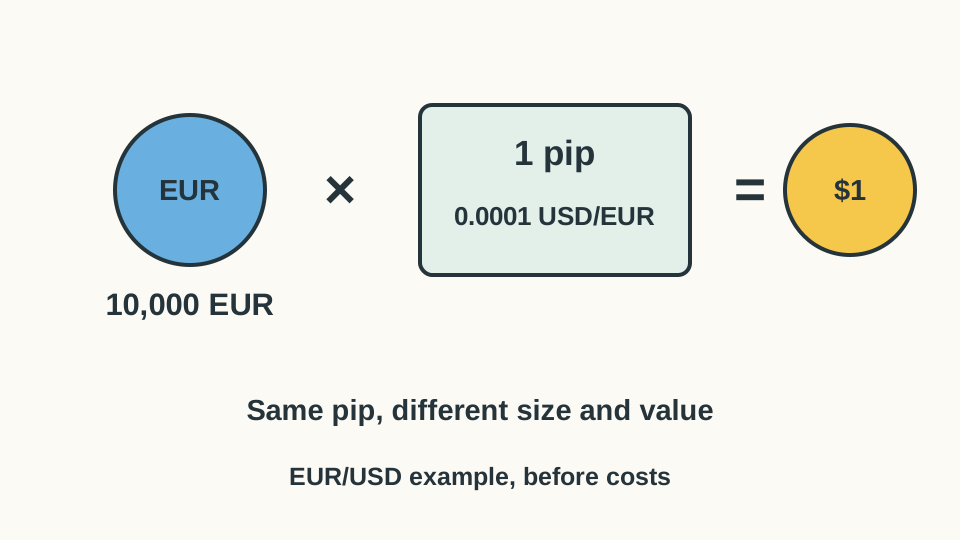
Learn what a pip is and how to turn a pip move into money on EUR/USD, USD/CAD and USD/JPY, and why your trade size matters more than the pip count.