

Forex
Beginner Forex Trading Course: 6 Practice Tasks With Answers
Practise forex on paper or with virtual money: read a quote, price a spread, size a trade from your loss limit and handle a stuck order. Answers included.
Good habits can stop avoidable mistakes, but they cannot promise profit. Here are 7 habits worth building, and the simple maths behind each one.
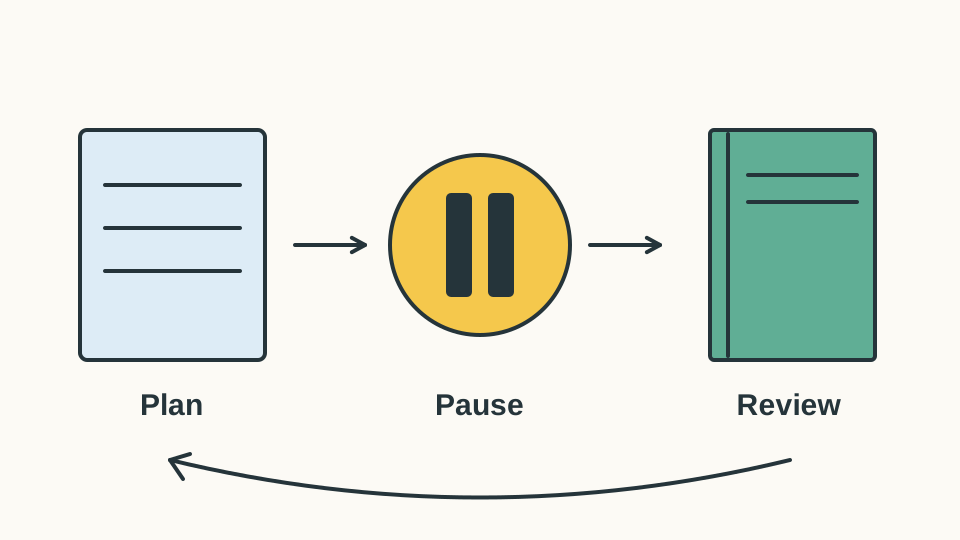
Good habits can stop avoidable mistakes. They cannot make a losing idea profitable or stop markets from moving against you. With that in mind, the first habit is the most basic one: keep each loss small.
Here is why. Say you practise with a $2,000 account and lose 20%. You now have $1,600. To get back to $2,000, you need to gain $400 on $1,600. That is a 25% gain, not 20%.
It gets worse as losses grow. Lose 50% and you have $1,000 left. Now you need a 100% gain just to get back to the start. A fall from the top of your account to a low point is called a .
So decide where you will exit before you enter. A can close the trade for you. It helps, but it is not a promise: in a fast market or a weekend gap, it can fill at a worse price.
Try it yourself
Start with $2,000 and a 20% loss. Slide the loss higher and watch the gain you need to get back. Go past 50%.
From $2,000, a 20% loss leaves $1,600, which needs a 25% gain to get back to $2,000. A 50% loss leaves $1,000, which needs a 100% gain.
What would you expect?
What this shows: Losses and gains are not equal. Lose 20% and you need +25% to get back. Lose 50% and you need +100%.
After a loss, you are growing a smaller amount of money. That is why careful traders keep each loss small, before the account gets hard to rebuild.
Choose the size from the loss you can accept, not from the profit you hope for. A common habit is a for each trade, such as 1% of the account.
This is arithmetic, not a recommended risk level. Pip values depend on the pair, the trade size and your account currency. Costs and price jumps can still make the loss bigger than planned.
Old trading advice says to trade bigger when winning and smaller when losing. If you always risk the same share of your account, that happens by itself. Your trades shrink after losses and grow after gains. What you should never do is raise your stake to win back a loss.
Swapping cash, buying a currency future and opening a trade in an app are different deals. Before you trade, write down:
A strategy that makes money before costs can lose after them. This happens most when trades are small and frequent. See what the spread costs.
Rules depend on where you live. In the US, start with the CFTC's forex fraud guidance. In Canada, the UK and Australia, check that your provider is registered where you live and read your local product rules. Do not assume US rules apply to you.
Write down what you will see before you enter, what would prove the idea wrong and when you will review the trade. Define vague words. What exactly is a "strong trend" or "major support"? Put it in numbers.
If you change a rule, keep the old version and write down why. Otherwise every losing trade can be explained away, and every winning one can be called proof.
An old piece of trading advice is "repeat your strategy if it still works". The written rule is what makes that possible. Without it, you cannot tell if you followed the same strategy at all.
A clear rule can still lose money. But clear rules let you find that out from your records, not from memory.
You do not have to feel perfectly calm to follow a plan. Prepare for tired, rushed or upset decisions before a loss tests you.
Watch out for : jumping straight back in to win back a loss. A bigger trade does not make your idea better. It only makes the possible loss bigger.
A winning streak can fool you too. A few good trades do not mean your forecasts have improved. If a plan only works when you stay perfectly calm, it is not a realistic plan.
The old advice is "let your winners run and cut your losers short". The idea behind it is true: how much you win and lose matters as much as how often. Compare two made-up strategies, each with 10 trades:
| Strategy | Wins | Losses | Net before costs |
|---|---|---|---|
| A: wins 7 of 10 | 7 × $10 = $70 | 3 × $30 = $90 | −$20 |
| B: wins 4 of 10 | 4 × $25 = $100 | 6 × $10 = $60 | +$40 |
Strategy A wins more often but loses money. Strategy B wins less often but comes out ahead. A on its own tells you very little.
Record your average win, average loss, costs and biggest drawdown, not just how many trades won.
An is a real advantage that still makes money after costs, over many trades. Believing you have one is easy. Checking it takes careful records.
Review your records on a set day, not after every loss. Ask two questions. Did I follow my rules? Did the market do something my plan did not expect? A loss that followed the plan is not a mistake. A win that broke the rules still is.
One good trade does not prove a method. One bad trade does not disprove it. Do not jump to the latest strategy that seems to be winning.
Be careful with practice results. The NFA explains that simulated results benefit from hindsight and carry no real financial risk. Label practice as practice. A demo gain does not show you are ready to risk savings. For more routines, see daily trading habits and a practice journal template.
Keeping each loss small. A 50% loss needs a 100% gain just to get back to where you started. So protecting your account comes before chasing profit.
No, everyone does. The habit is to plan for them: set limits on time and losses, take breaks, and never raise your trade size to win back a loss.
Not necessarily. A trader can win fewer than half of their trades and still make money if the wins are bigger than the losses. The opposite can happen too: a high win rate can still lose money.
Practise forex on paper or with virtual money: read a quote, price a spread, size a trade from your loss limit and handle a stuck order. Answers included.
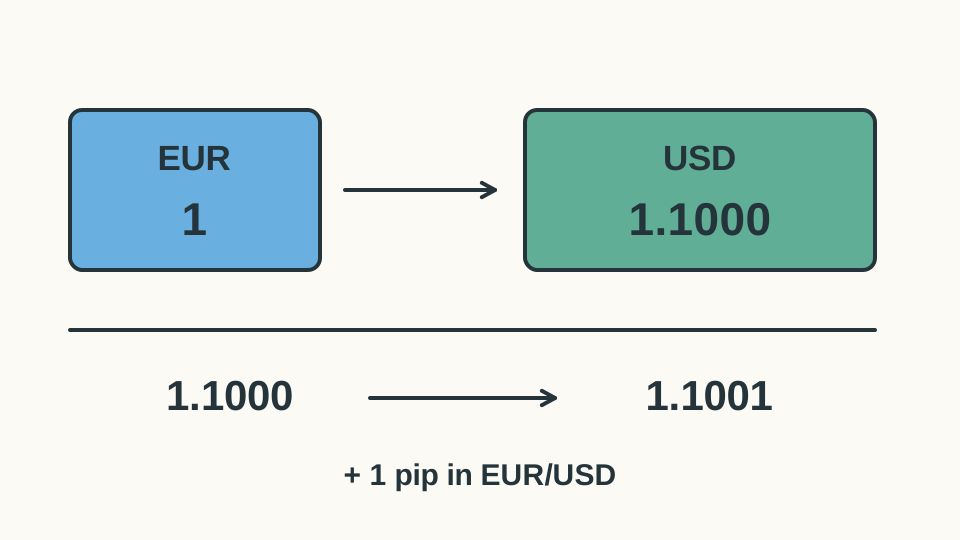
Learn the forex basics in plain words: currency pairs, going long or short, pips, lots, the spread, and how leverage makes a small move cost a lot.