

Trading skills
5 Famous Forex Traders: Their Stories and What They Can Teach You
Meet five famous currency and macro traders: Lipschutz, Soros, Kovner, Druckenmiller and Tudor Jones. Learn what their stories show, and what they hide.
Social trading lets you watch other people's trades and ideas. Learn what that can teach you, and why watching a trader is not the same as trusting one.
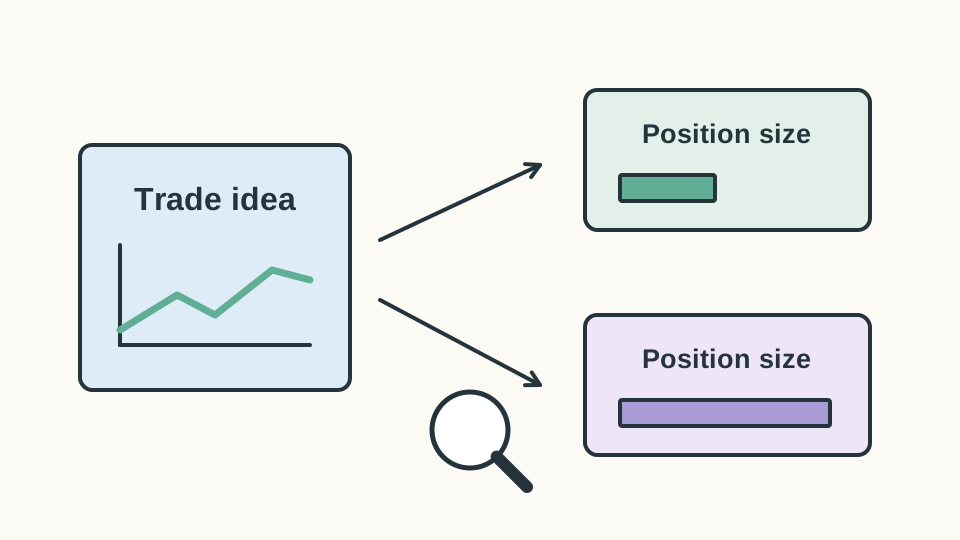
means using an app or website where people share their trades, portfolios and ideas, and others can follow them. It works a bit like a social network, but the posts are about money.
It can mean three quite different things:
| What you do | Who makes the decision? | Question to ask |
|---|---|---|
| Read a feed or someone's portfolio | You decide whether to act | Is the information complete and independent? |
| Get a | You choose whether and when to place an order | Can you still get the price in the signal? |
| Copy a trader automatically | Orders are placed for you, under rules you agreed to earlier | What limits and account rules apply? |
A trading signal is a suggestion to buy or sell, often with a price. goes further: the platform places trades in your account when the other person trades.
The rules for these services depend on what they do and where you live. In the EU, the regulator ESMA has published guidance on copy trading. That is EU guidance, not a rule for the US, Canada, the UK or Australia. Check your own regulator, and check which company actually provides the service.
Used well, social trading can teach you a lot:
The learning comes from studying the reasoning, not from accepting the conclusion. Say a post claims a currency will rise after a rate decision. Ask what was already expected, which other currency is involved, and how the trade could lose money.
A useful post gives you something you can check later. It shows the entry price, the exit plan, the size of the position and what would prove the idea wrong. A useful track record includes losing periods and open losses, and shows results after costs.
Be careful with posts that show:
Also ask what the person posting gets paid for. Some platforms reward popular traders for attracting copiers and their money, and some people earn from referrals or trading volume. That can shape what they post.
In the US, the SEC warns about stock tips on social media, including people who pretend to be real, registered professionals. Check any identity through official contact details, not through the chat. Our guide to common forex scams shows more tricks to watch for.
Try it yourself
Read each post and choose Red flag or Seems fine. Each answer shows the exact words that matter, and why.
'Up 312% this month, only 20 spots left' is a red flag: one month says nothing about risk, and the countdown rushes you. 'Bought at 1.1000, stop at 1.0950, size 1% of my account' gives you something to check.
What would you expect?
What this shows: Big numbers, urgency and confidence are not evidence. A useful post shows the plan, the exit, the size and how it could fail.
Social feeds reward attention, not accuracy. Posts you can check later teach you something. Posts that push you to act fast mostly help the person posting.
Copying saves you from placing every order yourself. It does not take the responsibility off you. You still choose who to copy, how much to put in and when to stop. You still need to understand the assets, the costs and how often the person trades. You also need to know their : borrowed money that makes both gains and losses bigger.
Your results can also differ from theirs. You may start later, get different prices, pay currency conversion fees or hold positions too small to copy exactly.
The platform's own risk warnings are worth reading next to any leaderboard. If you cannot explain how much you could lose, the copy button has not solved the hard part. Our guide to checking a trader before you copy goes further.
Not always. Different names can hide the same bet.
Count the risks, not the profiles. And look past the . A trader who wins 8 times at $5 and loses twice at $25 has an 80% win rate, but has lost $10 overall.
Start by watching, not copying. Pick one public idea, and without putting money in, write down:
Check back on the planned date, and keep the ideas that failed in your notes too. Do not rewrite the reason after you know the outcome. Your notes will soon show you which kinds of posts are worth your time.
It can be a good way to learn, if you use it to study decisions, including losing ones. It is risky if you copy trades you do not understand. Start by watching and taking notes, with no money at risk.
Social trading is the wider idea: sharing and reading trades and ideas. Copy trading is one part of it, where a platform automatically copies another person's trades into your account.
Usually from trading costs such as spreads, commissions and overnight fees, and sometimes from subscriptions. Some also pay popular traders, which can affect what those traders post. Read the fee page before you start.
Meet five famous currency and macro traders: Lipschutz, Soros, Kovner, Druckenmiller and Tudor Jones. Learn what their stories show, and what they hide.

Seven daily trading habits for beginners: plan before you trade, size from your stop, check the calendar, know your orders, count costs and review.