

Forex
How to Calculate the Risk-Reward Ratio (With a Simple Forex Example)
Learn the risk-reward ratio formula with a simple EUR/USD example, the win rate you need to break even, and why a bigger target is not always better.
A smooth return chart can hide big risks. These five steps help you read an eToro profile like a careful investor, so you can judge the risk before you copy anyone.
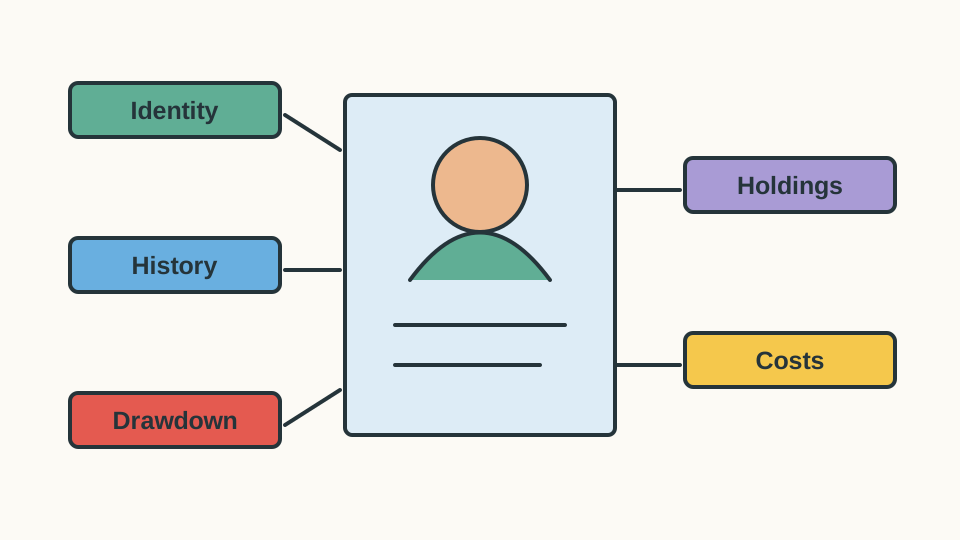
Look for a long, complete record that includes a bad time for markets.
Check this first, because the answer depends on your country.
Read the terms for your own country before you look at anyone's profile. A global web page does not tell you what your account can do.
Then work through the five steps below. They turn a shiny profile into a set of plain questions. You can also start from the names eToro features in our best traders to copy on eToro.
Anyone can have a lucky few months. So look for a record of at least a year, and ideally several years that include a bad time for markets.
Then check that the record is complete:
Also remember the traders you can't see. Many people who took big risks and lost are no longer near the top of any list. The ones still there may simply be the lucky survivors.
Be extra careful with very new accounts. A short, perfect record says more about luck than about skill.
A is a fall from a high point to a later low point. If an account grows to $1,000 and then drops to $800, the drawdown is $200 ÷ $1,000 = 20%.
Falls are harder to win back than they look, because the gain starts from a smaller amount. After a 20% fall to $800, you need 25% just to get back to $1,000. After a 50% fall, you need 100%.
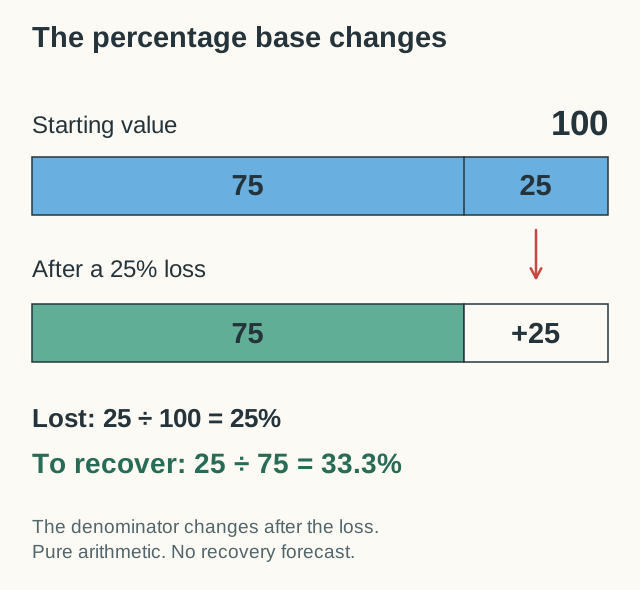
Find the , the biggest fall in the record, and when it happened. Check whether it is measured daily or monthly, because monthly numbers can hide a sharp fall inside a month.
A small past drawdown does not cap the next one. Try the activity below to see how a big return can hide a deep fall.
Try it yourself
Pick the trader you would copy using only the 12-month return. Then press See the full story and run steps 1, 2 and 4 on each card.
Trader X (fictional) showed +96% over 12 months, but fell 52% at its worst, had a risk score of 7 and 14 months of history. Trader Z (fictional) showed +14%, fell 11% at its worst, scored 3 and had 60 months of history. A 52% fall needs a 108% gain to recover.
What would you expect?
What this shows: The top return hid a 52% fall. After a 52% drop, an account needs a 108% gain just to get back.
Trader X also had the shortest record and the highest risk score. Steps 1, 2 and 4 would all have warned you before you looked at the return. Past performance does not predict future results.
A huge percentage gain can come from one lucky, oversized trade.
Look at the size of each trade, not just the result. Warning signs include:
Copying several people does not always spread this risk. If you copy two traders with $500 each, and each has 60% in the same stock, $600 of your $1,000 follows that one stock.
eToro gives each portfolio a from 1 (lowest) to 10 (highest). It is based on how much the portfolio's value has been moving.
The score is a useful first filter, but it is a model, not a promise:
So don't just read today's number. Look at how the score has changed over the past months, and read the trader's posts when it went up. Many beginners start their research with lower scores, but the other steps still matter.
eToro pays its Popular Investors up to 1.5% a year of the money copying them. That is not wrong, but it means popularity and pay go together. A friendly, confident writer is not always a careful investor.
Copying has no extra fee on eToro, but each copied trade has the normal costs: spreads, overnight fees on CFDs and any currency conversion.
Before you copy, write down three rules for yourself:
Start in eToro's free virtual portfolio before you use real money. Past performance does not predict future results, and you stay responsible for any losses.
Read social trading for beginners for what copying can and can't teach you.
There is no magic number. At least a year is a common starting point, but several years that include a bad market tell you much more. A short record, even a great one, may just be luck.
There is no safe number, and the next fall can be deeper than the last. Compare traders over the same dates, and ask whether you could watch your money fall that far without panicking.
No. eToro's risk score shows how much a portfolio's value has been moving. A low score can rise quickly if the trader changes style, and any portfolio can lose money.
Yes. You can lose if the trader makes bad trades, uses leverage or changes strategy, and stopping after a fall does not undo the loss. eToro says you remain fully responsible for any losses.
Not automatically. Different traders can own the same stocks, so your risk may not be spread at all. Check what each one holds and how much overlaps.
Learn the risk-reward ratio formula with a simple EUR/USD example, the win rate you need to break even, and why a bigger target is not always better.
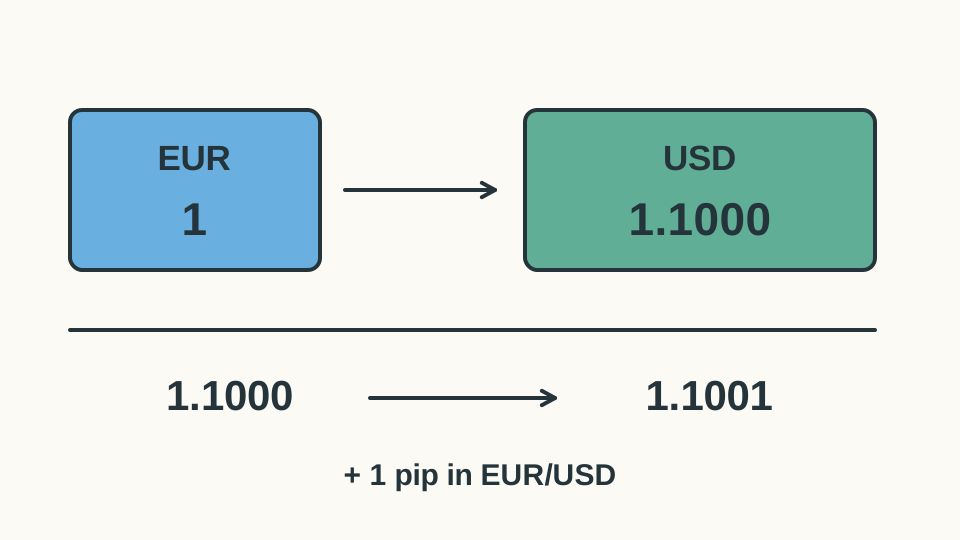
Learn the forex basics in plain words: currency pairs, going long or short, pips, lots, the spread, and how leverage makes a small move cost a lot.