
Forex
15 Forex Strategies and Patterns for Beginners (and How They Fail)
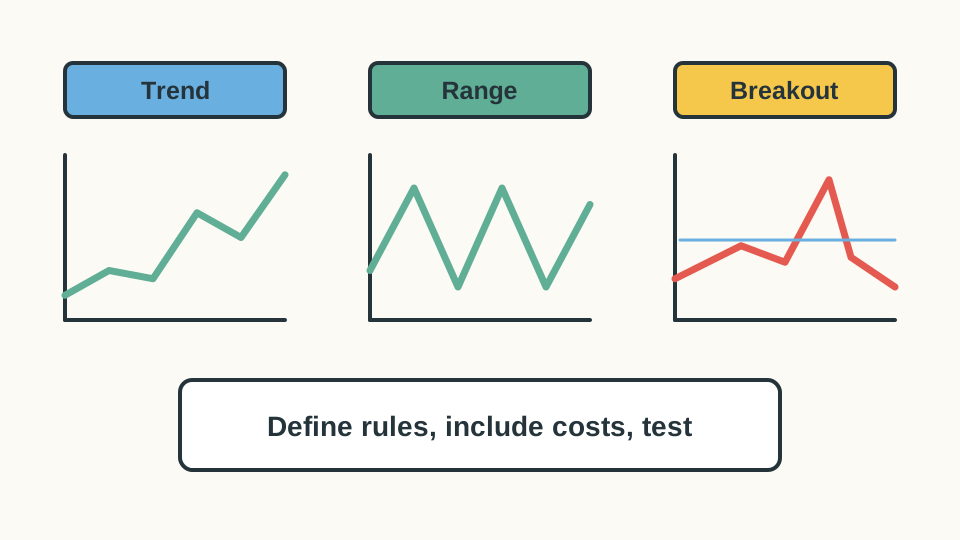
15 forex strategy ideas and chart patterns, from head and shoulders to carry trades: what each one bets on, how it fails and how to test one honestly.
A convincing trading screen does not prove your money is real or that you can withdraw it. Learn 6 common forex scam patterns and how to check an offer before you pay.
It starts with a promise of big, steady profits with little risk. It may come as a message, an advert, a course or a new online friend. Proof is offered as screenshots, a rising dashboard or happy comments. All of these can be made up.
Photos of fast cars, travel and piles of cash prove nothing. They can be rented, borrowed or copied from someone else. Comments like "I owe it all to my !" with a contact link are often fake too.
Ask a simple question: if a strategy really won 95% of the time, why would anyone sell it to strangers?
A scam may even let you withdraw a small amount at first, to win your trust. That does not make the rest real. Say a site shows your $2,000 growing to $2,800 in a month. The 40% gain is a number on a screen, not $800 you can spend.
Try it yourself
Read each made-up message. Tap "Red flag" or "Seems fine", then see which words gave it away.
Red flags in these messages: "wins 95% of the time", "turned my $500 into $65,000" and a 15% release tax of $1,860. More red flags: "no need to check the register", a $300 recovery fee plus a wallet recovery phrase, and a request for a login code. Seems fine: a firm that asks you to check the official register, and lessons that show losing trades.
What would you expect?
What this shows: Scams share the same signs: big promised profits, pressure to hurry, and requests for money, codes or access. Check the firm yourself before paying.
Scammers can fake screenshots, balances and licence numbers. They cannot fake a check you do yourself, using contact details from the regulator's own website.
A copies the name and licence number of a real, regulated firm. Only the website, email or phone number is different. The FCA explains this trick in its forex scam guidance.
To beat it, find the yourself. Look up the firm on the regulator's own register. Then contact the firm using the details listed there, not the ones in the message. If a salesperson says the official register is out of date, treat that as a warning.
Some brokers have no licence where you live at all. Their adverts can look very professional, with promises like "zero fees". If a firm has no permission to serve you, you may have little protection if it refuses to pay you.
Even a real licence is not a promise that you will not lose money. It means the firm is allowed to do certain things, and someone is watching.
Not always. Paid signals and trading robots can be legal. The problem is lying about results, hiding conflicts or not being clear about what you get.
A typical trap is a page of winning trades. It does not show how many signals were sent, how many lost, or whether anyone could trade at those prices. Ask 3 questions:
Unexpected emails, texts and chat messages are common ways in. A message saying you were "chosen" for a new trading robot, if you just send money, is a warning sign.
A test on past prices is not a promise about the future. Read how to check forex signals before you pay for any.
Some scams start as a friendship or a romance online. The person is patient. Weeks later, they mention a trading app that made them rich, and offer to help you open an account.
The CFTC warns about these relationship scams on dating and social apps. A long, friendly chat does not prove a business is real.
Other scams offer an "account manager" who will trade for you. That raises two big questions. Who holds your money? And who can move it?
Check the exact permission needed for the service, such as managing money for others. A company with the same name existing somewhere is not enough.
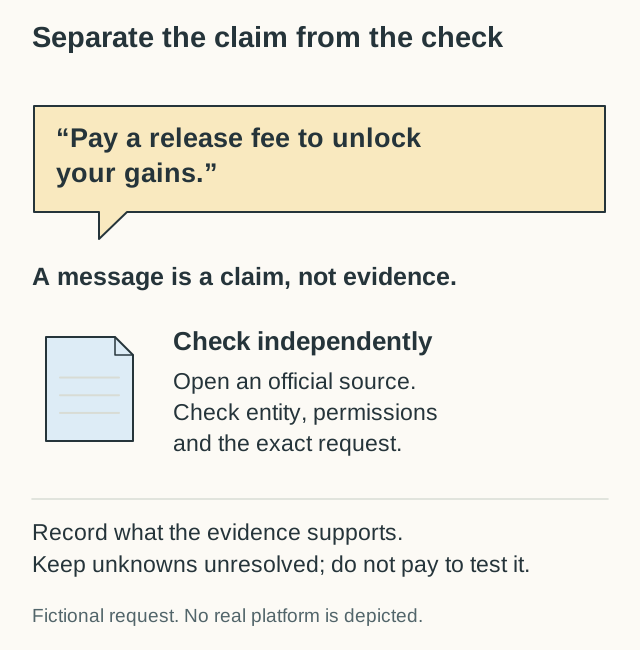
5. . Your account shows a big balance. When you try to withdraw, you are told to pay a "tax", "unlock fee" or "release fee" first. This is a serious warning. The CFTC describes fee demands that keep coming after each payment. A real-looking tax form does not make a real tax bill. Check with your tax office or an adviser, using contact details you found yourself.
6. Recovery scams. After a loss, someone may offer to get all your money back for a fee up front. They may claim to work with a regulator, a law firm or a crypto investigator. Treat this as a brand-new offer, and check it the same way. Never share a crypto wallet .
Do not let the hope of getting old money back push you into one more payment. Reporting a scam is free. Paying a stranger to recover money is a different thing.
Use the official route for your country. Find it yourself, not through a link in a message.
| Where you live | Where to check | What to confirm |
|---|---|---|
| United States | CFTC registration checks and NFA BASIC | Retail forex or derivatives registration, and any disciplinary history. Stock and fund firms use different checks. |
| Canada | CSA National Registration Search, plus your provincial or territorial regulator | The firm, the person, the registration category and the province. Ask the regulator about the exact product. |
| United Kingdom | FCA Financial Services Register, found through the FCA website | Matching contact details, permission for the activity offered and any warnings. |
| Australia | Moneysmart licence check and ASIC Professional Registers | An Australian financial services licence or authorised representative status. A company name alone is not enough. |
If you find no warning about a firm, that is not a clean bill of health. New scam names appear before warnings do. And a website that works in your country does not mean the firm may legally serve you.
Try this: a seller quotes a real licence number but uses a different website. They ask for 500 Canadian dollars to release your balance. What do you do first? Stop all payments. Contact the real firm through the regulator's listed details. Keep every message and payment record.
Act quickly, but calmly:
Whether you get money back depends on the case. Nobody can promise it.
The best protection is understanding the product as well as the seller. Next lesson: how to check a broker before you open an account. Then learn how to question a backtest, the kind of test many sellers use as proof. For crypto offers, see crypto scams.
Find the regulator for your country yourself. Search its register for the exact firm name, and contact the firm using the details listed there. A licence number on the firm's own website is not enough, because clone firms copy them.
Sometimes, but nothing is certain. Contact your bank or payment provider quickly through its official channel, keep all records and report the scam. Be very careful of anyone who contacts you offering to recover the money for a fee.
No. The danger is a misleading record or a hidden payment from a broker. Ask for every signal with dates and losses, and ask how the seller earns money.
15 forex strategy ideas and chart patterns, from head and shoulders to carry trades: what each one bets on, how it fails and how to test one honestly.
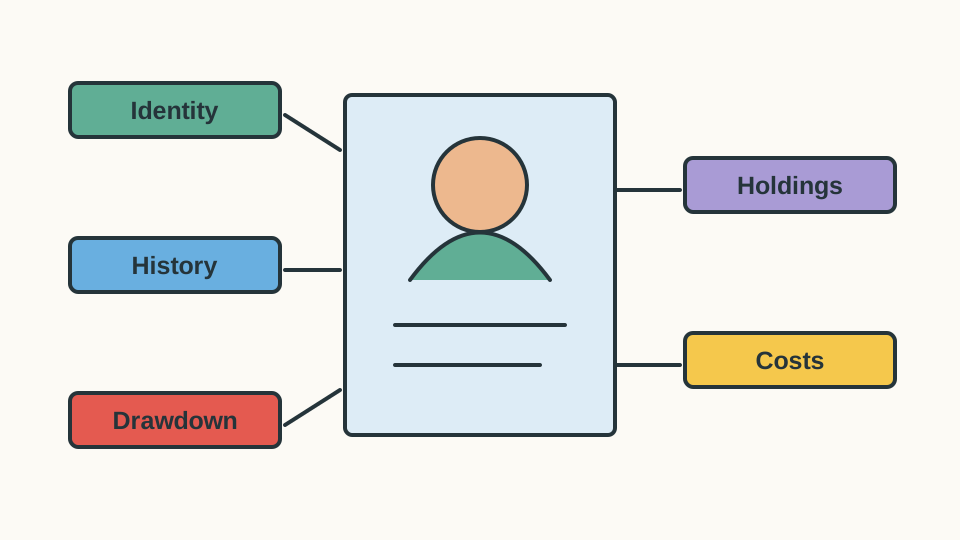
Find better eToro traders to copy in 5 steps: check the record, the deepest fall, big bets, the risk score and who gets paid, before you risk money.