
Crypto
Bitcoin Basics: How It Works and What You Own
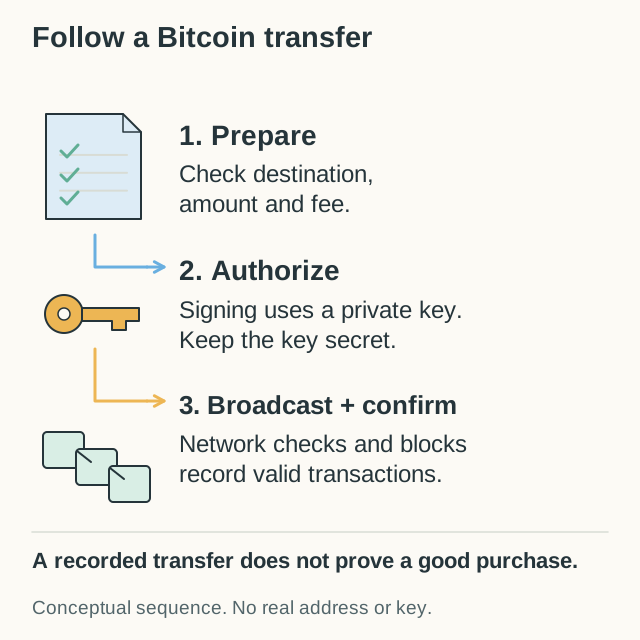
Learn what Bitcoin is, how a payment gets checked and recorded, why a wallet holds keys and not coins, and how $100 can buy part of a bitcoin.
Some people really did turn small Bitcoin buys into fortunes, and their stories are fun to read. Here is what the headlines leave out, and why you rarely hear the other stories.
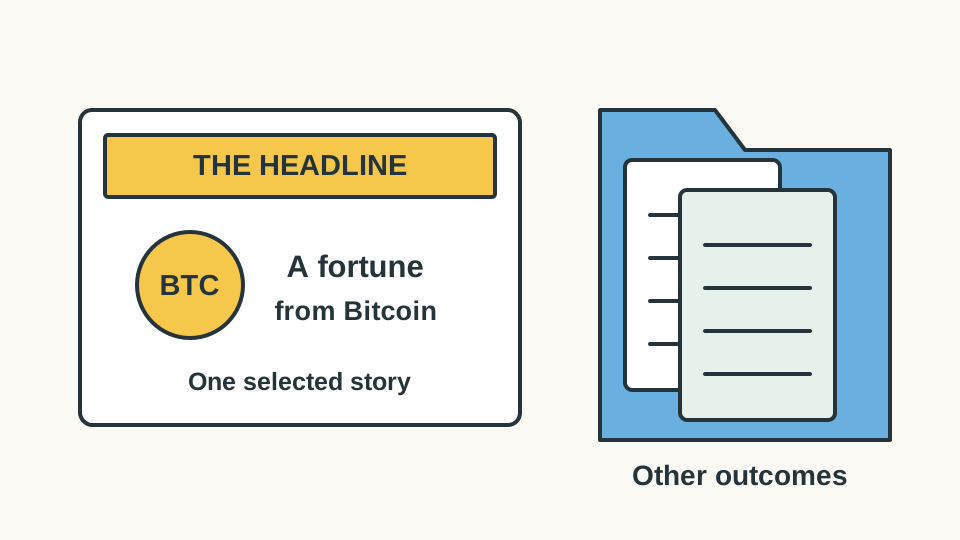
Bitcoin millionaire stories are real, but they were picked after the fact from a huge crowd.
A few Bitcoin fortunes made headlines around the world. Here are four of the best known, as news outlets reported them at the time.
These are real reports. But each one is a snapshot of one person at one moment. The rest of this page is about what that snapshot leaves out.
Try it yourself
Press the button to create 20 strategies that are pure coin flips, like 20 people trading on luck. Find the best one. Then run them all on new data.
20 imaginary traders each make 100 coin-flip trades, risking 1% each time. By luck alone, the best one ends up ahead and the worst one behind. Run on new data, the past winner has no edge: its next 100 trades are coin flips too.
What would you expect?
What this shows: Picked after the fact, pure luck can look like genius. A headline shows that one winner and skips the other 19.
Every line here is a coin flip, so none of them has real skill. Millionaire stories are chosen the same way: after the result is known, from a much bigger crowd.
No. A headline usually shows what someone's coins were worth at one price, on one day. That is : what the coins would fetch if they were sold right then. A gain only becomes , meaning real money, when the coins are sold.
So check three things. When was the number measured? How much was first put in? Is it a value on a screen, or money actually received? Koch's story includes a sale, which is how we know part of his gain became real money.
Look closely at what went in. At about $12 a coin, $1,000 buys roughly 83 bitcoins. The same 2017 report said Finman held 403. It also said he had once taken 300 bitcoins from an investor instead of $100,000 in cash. So the headline "$1,000 to a million" leaves out where most of the coins came from.
That is common in money stories. Later deposits, wages, business deals and costs often vanish from the headline. A good question to ask is: what else was added along the way?
| The headline shows | Ask |
|---|---|
| The value of the coins | At what price, and on what date? |
| A profit | After all buys, sales, fees and taxes? |
| A net worth | Including which debts and other assets? |
| A luxury purchase | What links it to gains that were actually sold? |
| A small starting stake | Were later deposits or other income left out? |
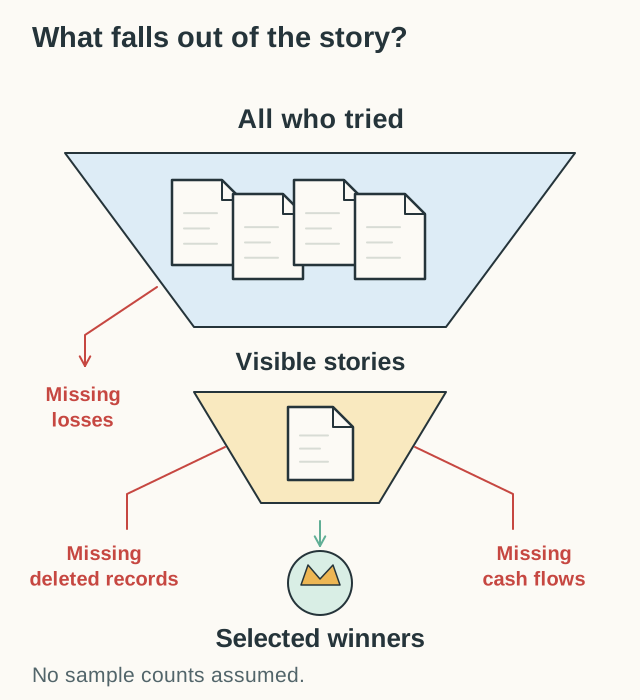
A list of winners tells you about the people who were picked. It does not count everyone who tried. To know how often a choice works, you need a whole group of people. You need the same start and end dates for all of them, and the failures as well as the successes. Forgetting the failures is called : only the survivors get counted.
The missing stories are real too. In 2014, customers of the Mt. Gox exchange were told that about 750,000 of their bitcoins were missing. In 2013, a hard drive holding about 8,000 bitcoins belonging to James Howells in Wales ended up in a landfill. In January 2025, a UK court ended his legal bid to search for it. Others sold early, or bought near a peak and sold after a fall.
Social media makes the gap bigger. Posts about big wins spread fast, while losing trades and wrong forecasts quietly disappear. A FINRA and SEC bulletin warns that information on social media can be inaccurate, incomplete or misleading. Some posts even try to move prices on purpose.
Write down the exact action the story makes you want to take. Then ask: what evidence would support that action if the story did not exist? If the only answer is "someone else made a fortune", you have found the missing step.
Courage and belief are not evidence. They can't tell you whether a loss would hurt your rent, your studies or another bill. Only your own numbers can.
Real gains also bring paperwork. In the US, the IRS digital assets page explains what needs to be reported. Readers in Canada and elsewhere need their own country's tax rules. This page makes no claim about any named person's taxes or wealth today.
To build your own evidence instead of borrowing someone's headline, try the crypto practice plan. And for the lighter side of crypto dreams, see our Bitcoin memes.
Widely reported stories include Kristoffer Koch, who found 5,000 forgotten bitcoins bought for about $27, and Erik Finman, who put $1,000 into bitcoin in 2011. These are news reports from their time, not checks of anyone's wealth today.
Nobody can know. Past stories were picked because they turned out well, and they can't tell you what happens next. Bitcoin can also fall a long way. The UK's FCA says never to invest money you can't afford to lose.
It means judging by the winners who are still visible and forgetting those who dropped out. A list of Bitcoin millionaires leaves out the people who lost money, sold early or lost access to their coins.
In 2013, a hard drive holding about 8,000 bitcoins belonging to James Howells ended up in a landfill in Newport, Wales. In January 2025, a UK court ended his legal bid to search the site for it.
Learn what Bitcoin is, how a payment gets checked and recorded, why a wallet holds keys and not coins, and how $100 can buy part of a bitcoin.
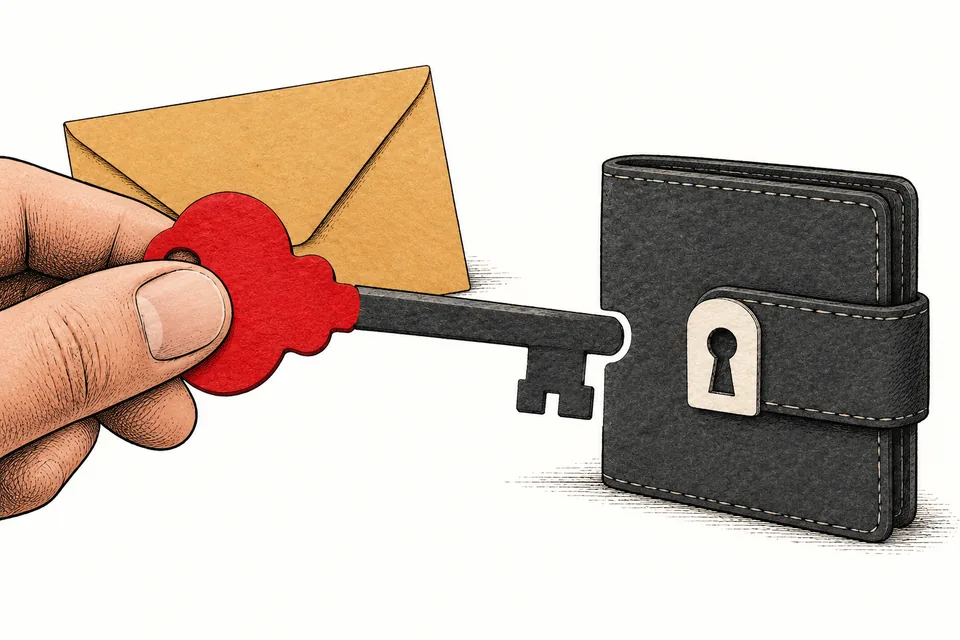
Learn the difference between your own wallet and an exchange account, what a seed phrase does, hot vs cold wallets, and what happens if a company fails.