

Crypto
Bitcoin Memes: 13 Funny Favorites and the Truth Behind the Jokes
13 funny Bitcoin memes and two viral crypto videos, from chart-checking to AI meme-coin hype, with the real lesson behind each joke.
Crash stories are easy to tell once you know where the bottom was. Here are five real Bitcoin crashes and shocks, what happened in each, and what they teach about risk.
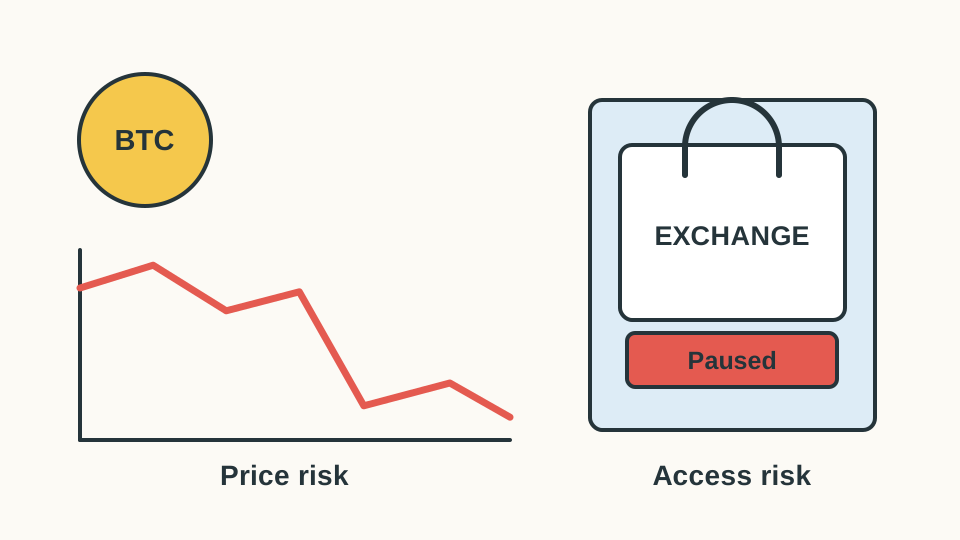
Bitcoin has had many sharp falls and shocks. The five below are recorded in reliable sources, so we can say what happened and when. They are not ranked by size. How big a crash looks depends on the , the currency and the dates you measure.
Many crash articles promise to show you how to profit, usually by buying the dip: buying after a big fall. The honest answer is less exciting. A crash story is easy to tell once you know where the bottom was. While prices are falling, nobody knows if today's drop is the bottom or the middle of the fall.
A story that buys at the exact low and sells at the next high already knows the future. Test it with other dates instead. Buy a week too early, sell a week too late, or imagine the price never coming back. If the idea only works with perfect timing, it is not a plan.
Making money from a fall by , meaning betting that the price will drop, is not a shortcut either. It uses a different kind of contract, often with borrowed money. If the price rises instead, the losses can grow fast.
Try it yourself
Watch an illustrative bitcoin price move in chunks. At each pause, choose Hold or Sell without seeing what comes next. At the end, compare your result with simply holding.
You start with $1,000 of illustrative bitcoin at a price of $100. The price swings up and down over 120 steps, and you choose Hold or Sell at 4 pauses. The widget then compares your result with holding to the end and with selling at the first big drop. Either one can win, and you only find out which afterwards.
What would you expect?
What this shows: At every pause you had to choose without seeing the next move. A drop only looks like the bottom after the price turns.
Crash stories are told after the low is known. In real time, the same drop can be the bottom or the middle of a longer fall. Holding and selling can each turn out to be the better choice.
Not by itself. Say a coin was $200 and is now $100. The old price explains the 50% fall. It does not prove that $100 is good value. Write down what changed in the coin or the market, and keep it apart from what changed only in the price.
The maths of getting back is harder than it looks, too. A fall from $1,000 to $500 needs a 100% gain just to return to $1,000, before fees. A 50% rebound only takes it to $750. A fall from $100 to $40 needs a 150% gain.
That is arithmetic, not a forecast. A big fall is not proof that a rebound must come. The drawdown lesson has a table for bigger and smaller falls.
Mt. Gox shows that a crash can be about access, not just price. By September 2017, bitcoin had set a new record price near $5,000. But when an exchange fails, its customers are left with a claim against a company. A rising chart does not hand their coins back.
The SEC's custody bulletin warns that if a company holding your crypto is hacked, shuts down or goes bankrupt, you may lose access to it. Treat that risk as a separate question from the trade itself. Learn who holds the keys in wallets and custody.
Not always at the price you planned. Say you buy one coin at $100 and plan to sell if it falls to $90. In a fast fall, the first price on offer might be $84. Your loss is $16, not $10. Write down both numbers: the plan and what really happened.
If you used a that never filled, you still own the coin. Record that too, instead of pretending you sold at your planned price.
The same thing happened on a much bigger scale in Ethereum's 2017 flash crash. A wave of automatic sell orders pushed the price on one exchange as low as $0.10 for a moment. Read the story in Ethereum's crashes.
A headline number leaves a lot out. Before you trust it, ask:
September 2017 shows why this matters. On the same day, bitcoin fell 18% on one exchange and up to 10% on another. Both numbers were true.
Want to try a losing trade without real money? The crypto practice plan walks you through one on paper. Buying, short selling and doing nothing are all choices, and no single crash chart can tell you which one is right.
It depends on how you measure: which exchange, which currency and which dates. This page lists five well-recorded crashes and shocks from 2013 to 2017 instead of a ranking, because the same fall can look bigger or smaller on different exchanges.
Mt. Gox, a big Japan-based bitcoin exchange, closed its website on 25 February 2014. Three days later, it applied to a Tokyo court for a form of bankruptcy protection. It said about 750,000 users' bitcoins and 100,000 of its own were missing, and that the figures could change.
Only with the right timing, and nobody can see the bottom while prices are falling. Buying early can mean riding a further fall. Short selling can lose money fast if the price rises. Crash stories look easy because they are told afterwards.
Not in one step. In December 2013, Chinese authorities stopped banks and payment firms from dealing in bitcoin. In September 2017, China's central bank banned ICOs, and the BTCChina exchange said it would stop trading.
13 funny Bitcoin memes and two viral crypto videos, from chart-checking to AI meme-coin hype, with the real lesson behind each joke.
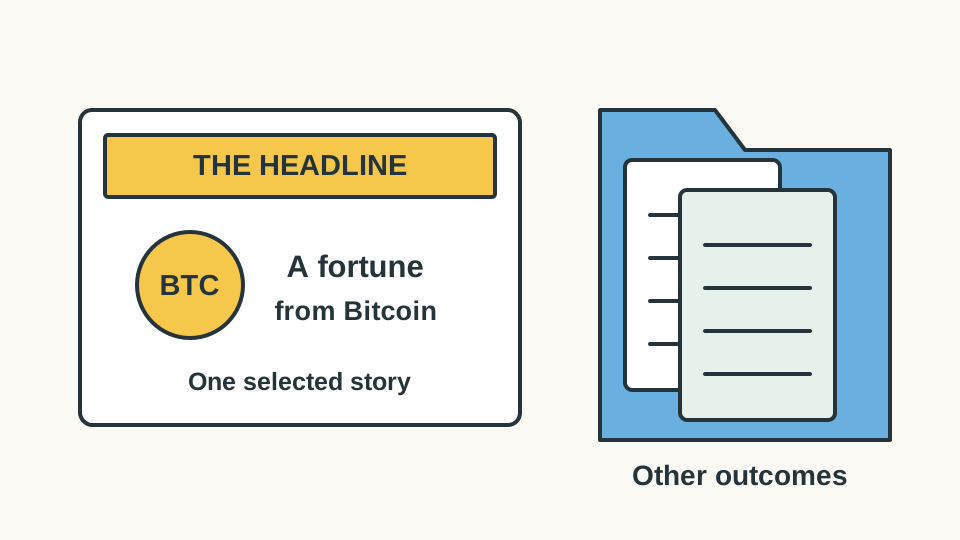
Bitcoin millionaire stories, from 5,000 forgotten coins to a $1,000 bet in 2011, and what the headlines leave out: timing, paper wealth and the losers.