
The Forex Growth List: Free Resources and a Study Plan for Beginners
You do not need 50 bookmarks to learn forex. Here is a small list of useful resources, what each one is for and a 30-minute study routine.
In this article
- How do I choose good forex resources?
- Try it: Sort these forex resources
- Which official forex sources should I bookmark?
- Where can I learn forex for free?
- Which forex tools, news sites and forums are useful?
- What books and films help beginners understand markets?
- How do I study forex in 30 minutes a day?
- Questions beginners ask
Use official sources for facts: central banks for rate decisions, regulators to check a firm.
How do I choose good forex resources?
Start with one question: what will I use this for? A resource is only useful if it solves a problem you have right now. Collecting 50 bookmarks is not the same as learning.
Next, ask what kind of resource it is. Most fall into one of 3 groups:
- publish the facts themselves, such as a 's rate decision or a 's register.
- Explainers report, teach or discuss those facts. News sites, books, lessons and forums are in this group.
- Sales pages want you to buy, sign up or trade more. Some are useful, but their main job is to earn money from you.
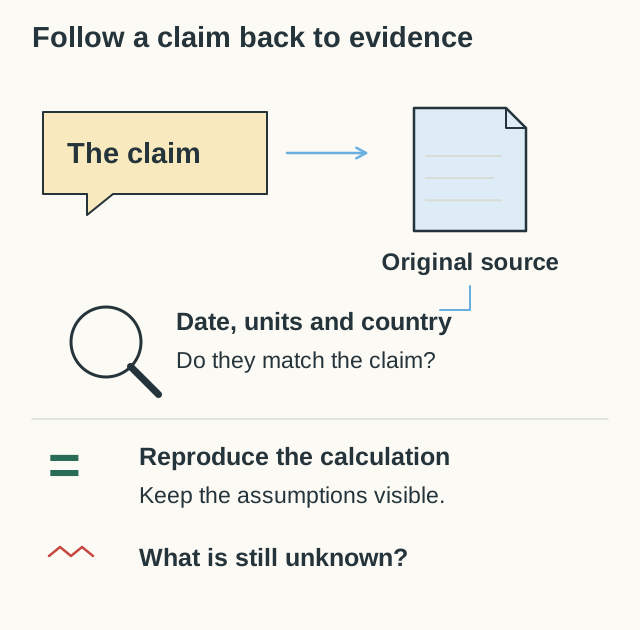
A free resource can still be selling something. A broker's free webinar may teach well, but the broker earns money when you trade. And if 5 websites repeat the same number, it may still come from one weak source. When a fact matters, go back to the original.
Try it yourself
Sort these forex resources
Drag each resource, or tap it and then tap a bin: original source, explains or discusses, or selling something.
Original sources: a Federal Reserve statement and Bank of Canada daily rates. Explains or discusses: a news article, a forum thread and a book. Selling something: a course ad with a countdown, a broker's free webinar and a signal channel with a broker sign-up link.
What would you expect?
What this shows: Ask what each resource is: the original data, someone explaining it, or someone selling to you. Trust and check each one differently.
Original sources tell you what was actually said or measured. Explainers help you understand it. Sales pages want you to act, even when they are free.
Which official forex sources should I bookmark?
These sources come straight from central banks, statistics agencies and regulators. Use them to check facts and to check a firm before you send it money.
| Task | Resource | How to use it |
|---|---|---|
| Read a US interest rate decision | Federal Reserve FOMC calendar | Open the original statement. The meeting minutes come out weeks later. |
| Check a Canadian dollar rate | Bank of Canada daily exchange rates | A daily average for reference, not the price you will get. |
| Look at economic data over time | FRED at the St. Louis Fed | Check the units, how often it is updated, who made the data and any revisions. |
| See how big the currency market is | BIS 2025 FX turnover survey | Shows trading by banks and big firms, including forwards and swaps. It is not a guide to what you could earn. |
| Check a US forex firm | CFTC registration checks | Use the right database and read any disciplinary history. |
| Check a Canadian firm | CSA National Registration Search | Check the province and category, then ask your provincial regulator. |
| Check a UK firm | FCA: how to check a firm | Match the contact details and check the firm's permissions. |
| Check an Australian firm | ASIC Moneysmart: check before you invest | Look for an Australian financial services licence, not just a company name. |
For the UK and Australia, the Bank of England and the Reserve Bank of Australia publish their own rate decisions. Each country's statistics office publishes its original economic data.
Always note the time zone. A calendar shown in your phone's local time is easy to mix up with the time zone used in an article.
Where can I learn forex for free?
If you cannot yet explain the first and second currency in a pair, start with our free forex learning path. It puts the basics in order, with a check for each step. You can also take our free forex PDF with you.
Fix gaps before you add more material. If you can read a price but cannot work out what a trade could lose, practise that sum first. Another course will not fix a missing step.
Before you pay for any course, ask 4 questions:
- Can I see the full syllabus?
- What is the total price?
- What are the refund terms?
- Does the course earn money from a broker when I sign up or trade?
Then practise with virtual money. Practice apps make claims about what they teach. Those are the maker's claims, so keep your own journal and judge your progress yourself.
Which forex tools, news sites and forums are useful?
Our original Growth List named many tools and sites. These kinds are still useful, if you know their limits:
- , such as the one on Forex Factory, list upcoming reports. Confirm the actual numbers with the original source.
- Charting sites let you study price history. Check the price feed, the time zone and the candle length. Our free investing tools guide compares a few.
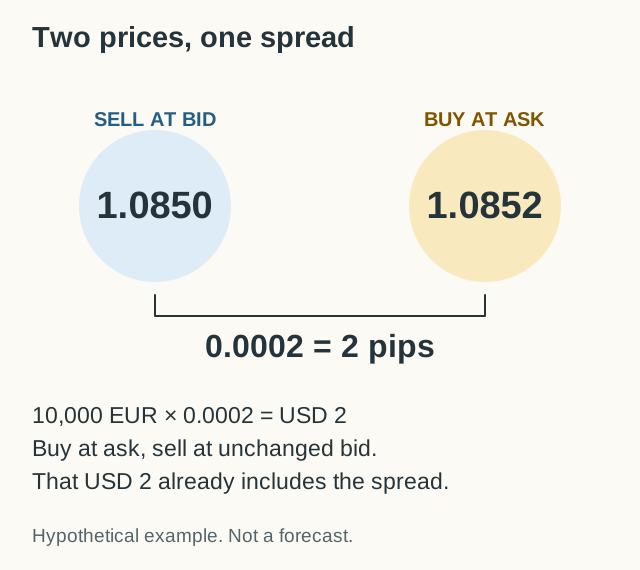
- calculators do the maths for you. Test one with a sum you can do by hand: on 10,000 euros of EUR/USD, 1 pip is $1.
- News sites, such as Bloomberg, the Financial Times, The Wall Street Journal, CNBC and FXStreet, report and comment. Tell the news apart from the opinion.
- Forums, such as BabyPips, Forex Factory and Reddit's r/Forex, show you questions you had not thought of. Posts are opinions, not facts.
Never accept an offer to manage your money from someone you met on a forum or in a private message. See how to spot forex scams.
What books and films help beginners understand markets?
Books give background that apps and forums skip. Two to start with:
- Currency Trading for Dummies: a plain introduction to how the currency market works.
- A Random Walk Down Wall Street: a classic investing book that argues it is very hard to beat the market by picking and timing investments.
Check the publication date, because rules and numbers change. Skip books whose titles promise a fixed income, such as a set amount of money every month. See our illustrated beginner books for more.
Films cannot teach you to trade, but some show how markets, leverage and incentives can go wrong. Margin Call, The Big Short and Too Big to Fail are dramas about the 2008 financial crisis. Inside Job is a documentary about the same crisis. The Wolf of Wall Street is a drama based on a real stock fraud. None of them is about forex, and none is a guide to copy.
How do I study forex in 30 minutes a day?
Use your resources in a short routine that ends with something written down:
- 5 minutes: pick one pair and say which way its price moves when each currency gets stronger.
- 10 minutes: read one original statement or data release.
- 10 minutes: write what changed, what was already expected and what is still unclear.
- 5 minutes: check one calculation and note your next question.
Can you demand the Bank of Canada's daily rate when you convert money now? No. It is an average for reference. Your rate depends on your provider and the moment you trade.
Keep your list small. For each resource, save the name, the link, what you use it for and when you last checked it. Delete anything you no longer use.
Questions beginners ask
What is the best free resource to learn forex?
Start with one structured path, such as our free forex learning path, and practise each step. Then add official sources for facts. More bookmarks do not mean more learning.
Are forex forums worth reading?
They can show you questions you had not thought of. But posts are opinions, not facts. Check claims against original sources, and ignore anyone who offers to trade your money in a private message.
Is the Bank of Canada exchange rate the rate I will get?
No. It is a daily average for reference. The rate you get depends on your bank or broker, the time you trade and their fees.