
The Stocks Growth List: Free Stock Market Resources for Beginners
More bookmarks do not make better research. This list sorts free stock market resources by the question each one answers, so you know where to look first.
In this article
- Where can you learn stock market basics for free?
- Where do you find facts about a company?
- Try it: Sort your sources: record, report or opinion?
- How do you check a broker or adviser?
- Which charts and data tools can you use?
- Where should you get stock market news?
- When is a paid tool or practice app worth it?
- Questions beginners ask
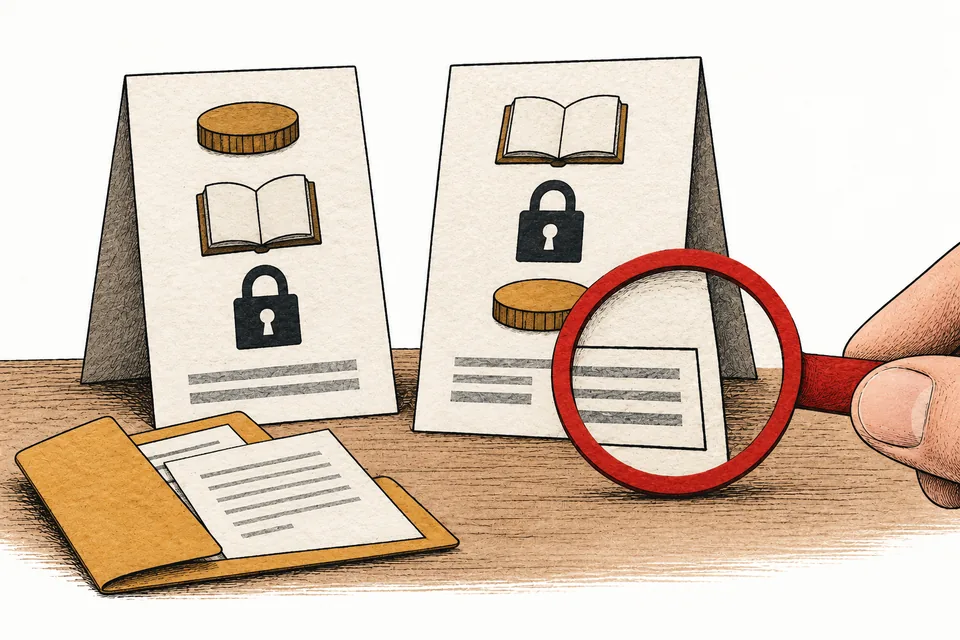
Learn the basics from regulators, then read company filings for facts about a company.
Where can you learn stock market basics for free?
Start with your country's market . Its lessons are free and plain, and it has nothing to sell you:
- US: the SEC's Investor.gov introduction to investing.
- Canada: the Ontario Securities Commission's GetSmarterAboutMoney stocks pathway.
- Australia: ASIC's Moneysmart guide to shares.
- UK: the FCA's consumer pages, for checking firms and knowing your protections.
A regulator lesson explains an idea. It does not tell you whether one investment suits you. For a step-by-step path, follow our free 6-module stock course, or download the stock market PDF for beginners.
Some classic books are worth borrowing from a library:
- The Intelligent Investor by Benjamin Graham
- One Up On Wall Street by Peter Lynch
- Stock Investing For Dummies by Paul Mladjenovic, a gentler start
Older editions may describe old rules and costs. Check the facts against current sources.
Where do you find facts about a company?
Go to the company's own filed reports. In the US, search SEC EDGAR by company name. For Canadian companies, the CSA's national systems page points you to SEDAR+. The company's own website also lists its reports, but check the dates and versions.
In the , start with four parts: what the business does, the financial statements, the risks and management's comments. Annual reports are long, so use the contents page to jump to these parts. Note whether each number covers a quarter, a full year or the last 12 months. A press release may show an 'adjusted' profit that is different from the checked, or audited, figure. Find the note that links the two. Don't mix them.
| Question | Where to look first | Keep in mind |
|---|---|---|
| How does the company make money? | Annual report and its segment results | The company is describing itself |
| Can cash cover the dividend? | Cash flow statement, debt notes and dividend announcement | Past cover is not a promise of future payments |
| When can my order trade? | Exchange calendar and your broker's rules | Access and order types vary |
| Is this firm registered? | The official register in your country | Registration says nothing about investment results |
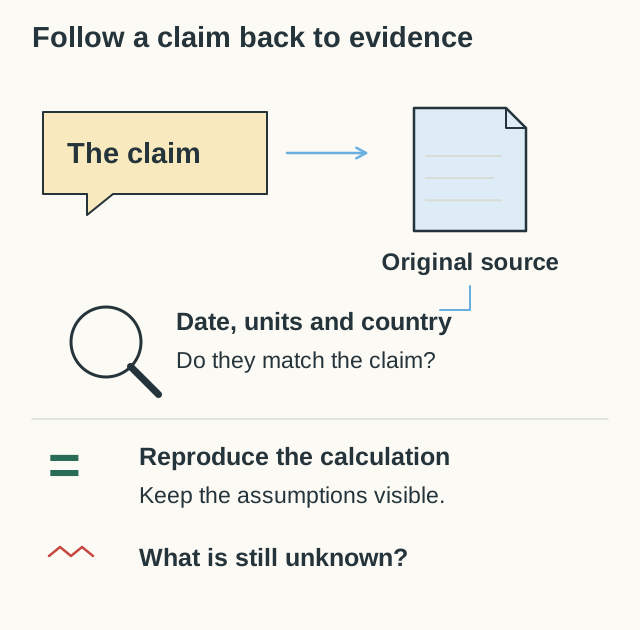
Try it yourself
Sort your sources: record, report or opinion?
Drag each source into the bin that fits, or tap a source and then a bin. Read the reason after each one.
Original records: the annual report on EDGAR, the company's dividend announcement and a regulator's register entry. Reports: a news article and a data site's dividend yield. Opinions or sales pitches: an analyst rating, a newsletter headline and a forum screenshot.
What would you expect?
What this shows: Not every source is evidence. Start with the original record, use reports to find it fast, and treat opinions as claims to check.
Reports and opinions are still useful, because they point you to questions. But when two sources disagree, the company's filing or the official register wins.
How do you check a broker or adviser?
Before you send money to anyone, check them yourself in the official register:
- US: FINRA BrokerCheck for brokers and investment advisers.
- Canada: the CSA's registration guidance, which explains how to search by province or territory and type of registration.
- UK: the FCA's guide to checking firms.
- Australia: ASIC keeps public registers of licensed firms and financial advisers.
Read the record, don't just look for a name. Fraudsters copy the names of real firms. So check that the website, email and phone number match the official entry. Never use contact details a stranger sent you as your only way to check them.
A clean record tells you who you are dealing with. It does not tell you whether an investment is a good one.
Which charts and data tools can you use?
Quote sites, and charting apps are handy for narrowing a question. Most broker apps and charting sites, for example, offer free charts. Before you trust a number, check four things. What currency is it in? When was it updated? Is it delayed? How is it defined?
Definitions vary more than you might expect. A dividend yield can use last year's payments or the latest payment scaled up to a year. A can use last year's profit or a forecast. Two sites can show different numbers for the same stock, and both can be right by their own rules.
For trading hours and holidays, go to the exchange itself, not a search snippet. Our stock market hours guide links the NYSE, Nasdaq, TMX, London and ASX schedules.
Where should you get stock market news?
Large news services such as Reuters, Bloomberg, CNBC, MarketWatch, the Financial Times and The Wall Street Journal report market news quickly. Some of them charge for full access. News is a fast summary, so check the key numbers in the company's own filing. Headlines are written to grab attention, so read past the headline before you react.
Forums, social media and YouTube show what people are talking about. Anyone can post there, and some posters are paid to promote stocks or products. Treat every tip as an opinion to check, and ask what the person gains if you follow them.
Before you follow anyone, read our checks for investing podcasts and for money tips on TikTok.
When is a paid tool or practice app worth it?
Give every subscription a job and a budget. Say a research service costs $20 a month. That is $240 a year: 4.8% of a $5,000 portfolio, or 0.48% of $50,000. On a small portfolio, that is a big cost before you earn anything.
Ask which decision the service will improve, and whether a free source already has the same facts. An expensive data feed is no use if you don't understand its numbers. A cheap newsletter is not good value just because it sends lots of stock ideas.
To practise, start with a notebook or spreadsheet. Write down each made-up trade, your reason, the costs and the result. A simulator adds real order screens. Keep your losses in the record, don't reset the balance, and compare each result with your plan.
Questions beginners ask
What is the best free website for stock research?
There isn't one best site. Use the source that fits the question. Company filings give company facts, the official register covers firms, the exchange sets trading hours and a regulator's site teaches the basics. Use data sites to find things fast, then check.
Are stock market newsletters worth paying for?
Only if you can name the decision it improves and the facts are not already free. Many newsletters sell stock ideas, not evidence. Check who writes it, how they are paid and whether they show all past picks, including the losers.
Is it safe to take stock tips from Reddit or YouTube?
Treat them as opinions, not facts. Anyone can post, some posters are paid to promote, and screenshots can be edited. Use a tip as a question to research in the company's own filings.
Which stock market books should a beginner read?
Classics include The Intelligent Investor by Benjamin Graham and One Up On Wall Street by Peter Lynch. Stock Investing For Dummies by Paul Mladjenovic is a gentler start. Check rules and costs in older editions against current sources.