
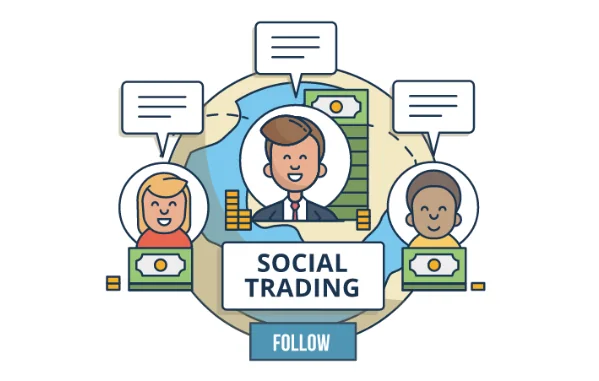
Trading skills
Social Trading Guide: How to Check a Trader Before You Copy
A plain guide to copy trading: read equity, not just profits, check drawdown and leverage, and spot repeated bets and hidden costs before you copy anyone.
Paying for a course and copying a trader are often sold as rival shortcuts. They are different deals with different risks, and neither one is a shortcut.
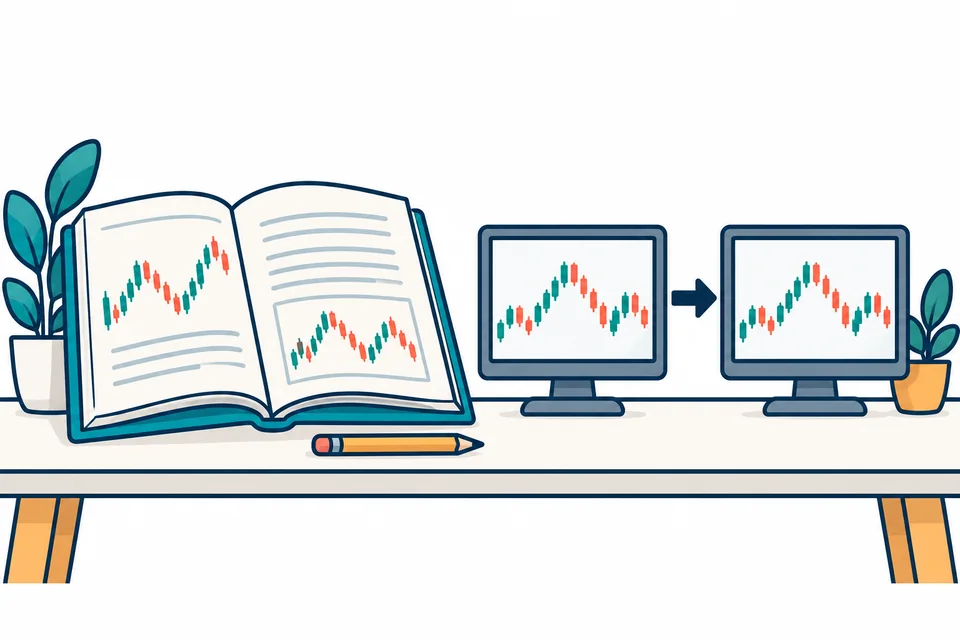
A course can cost you its fee and your time. Copying can cost you your trading money.
A trading course sells teaching: videos, lessons or coaching. is different. Your account automatically copies the trades of another person, using your money.
So the two are not the same kind of purchase. A course can be poor value without every course being a scam. A copy trader's record can be public without copying being the right choice for you.
The old version of this page said copying a "pro" was a proven way to start making profits today. It also used course prices, loss figures and research claims we could not check. Those claims are gone. This page compares what you actually commit to.
Start with what you are trying to do. If you want to understand orders, spreading risk or company reports, look for lessons and exercises that teach those skills. If you want someone else to make the decisions, that is an investment service. It needs different checks.
| Question | Course | Copy trading |
|---|---|---|
| What are you buying? | Teaching materials or access | Trades made for you, under your account terms |
| What can you lose? | The fee, your time, and any extra upsells | Your trading money, plus charges |
| What evidence matters? | The lesson list, a sample lesson, exercises and terms | The full record, risk, costs and permissions |
| What stays uncertain? | How good and how useful the teaching is for you | Future gains and losses, and how trades are filled |
After a good lesson, you should be able to explain an idea or do a calculation. After you start copying, your result depends on markets, risk, timing and costs, whatever you learned by watching.
A big headline return is the first thing most platforms show. Look past it. Check the : the largest drop from a high point. Check the , how concentrated the trades are, any open trades, and how many months of history there are.
Ask how the trader is paid. On some platforms, popular traders earn more when more people copy them or more money follows them. The platform can also earn more when people trade more. Don't assume that everyone wins together.
Followers can join at different prices and get different results. A low past drawdown or a low can't cap future losses. Copy trading platforms explain these limits in their own risk warnings.
In the EU, the regulator ESMA has published guidance for supervisors on copy trading. It covers costs, whether the service suits each client, and how traders are paid. Those EU rules don't apply everywhere, so check the rules where you live.
Try it yourself
Three made-up traders show only their 12-month return. Pick the one you would copy. Then press "See the full story" to flip the cards.
Trader A (fictional): +71% in 12 months, a 41% drop, risk score 7, 14 months of history. Trader B: +27%, an 18% drop, risk score 4, 30 months. Trader C: +12%, a 9% drop, risk score 3, 52 months. A 41% drop needs a 70% gain to get back to the start.
What would you expect?
What this shows: The biggest return came with the deepest fall. Trader A's 71% gain came with a 41% drop along the way.
To recover from a 41% drop, an account needs a 70% gain. If you start copying near a high point, you can get the drop without the gain. Trader A also has the highest risk score and the shortest history of the three.
Ask for the full list of lessons, a sample lesson, what you need to know first, the full price and the refund rules. Is it teaching a tool, or selling a "secret" winning method? Can you check who the teacher is, and what they claim?
Expensive videos, a rented sports car or a big following don't answer those questions. The US FTC warns about coaching offers that promise income and then lead to more and more costly purchases. Don't borrow money to buy a shortcut. Free lessons from regulators, exchanges and public companies may teach what you need first.
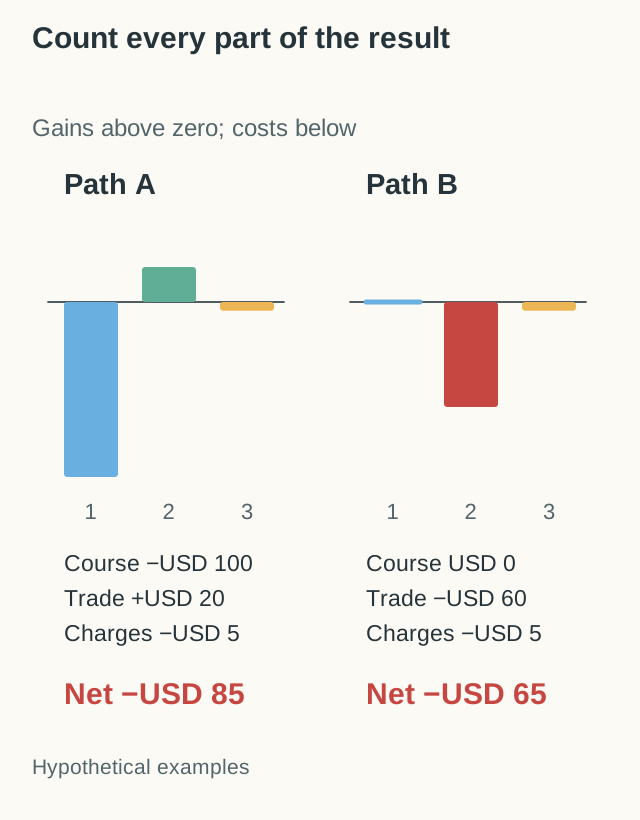
This sum is worth doing. Say a course costs $500, and you then trade with $200. To earn back the course fee from that account, you need $500 of profit. That is a 250% gain on $200, before costs and taxes.
But this only shows how hard it is to earn back a fee. It doesn't show that copying with $200 would earn anything, or that learning has no value. Paying no course fee and losing the $200 is still a loss. Keeping your money and using free lessons is a choice too.
Decide your goal first. If you want to learn, start with free lessons and practice with virtual money. If you want someone else to decide, treat copying as an investment, with all the checks above.
Use the same standard for courses, platforms and traders. Read how to check a trading profit claim and the 5 checks before copying a trader.
Neither is better for everyone. A course sells teaching. Copying puts your money into someone else's trades. Decide your goal first, and check either one with the same care.
On some platforms, popular traders are paid more when more people copy them or more money follows them. That can encourage risk. Ask the platform exactly how traders are paid.
It depends on the platform and your country. Minimums change, so treat any figure you see, such as $200, as an example. Check the provider's current terms, and only use money you can afford to lose.
A plain guide to copy trading: read equity, not just profits, check drawdown and leverage, and spot repeated bets and hidden costs before you copy anyone.
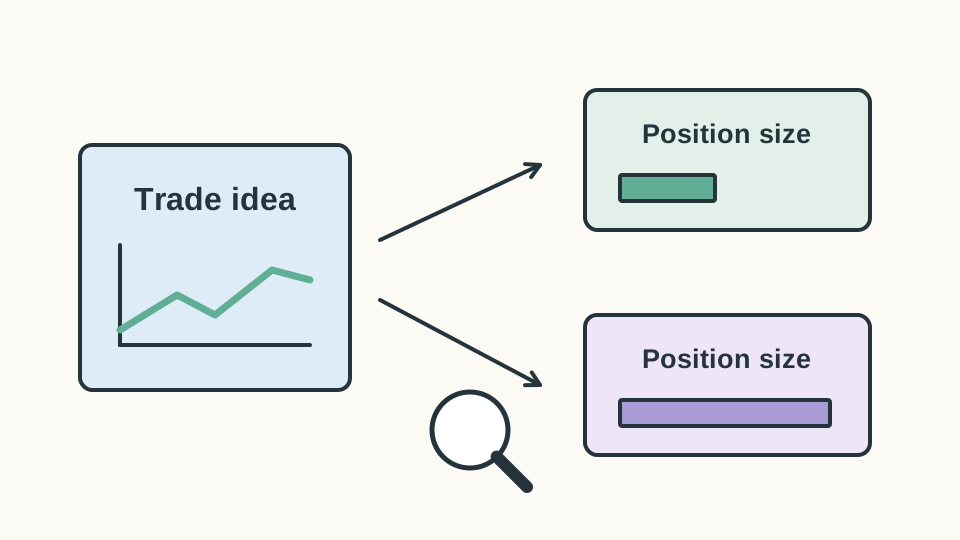
What is social trading? Learn how feeds, signals and copy trading differ, what you can really learn from other traders, and how to spot a bad tip.