Comparing Brokerage Fees: A Simple Guide for Young Investors

ye

Jumping into the world of investing is a thrill, but let's be honest-the fees can feel like a surprise pop quiz. In a nutshell, brokerage fees are what you pay a platform to execute your trades on stocks, ETFs, and other assets. While ads for 'zero commission' trading are everywhere, brokers still have to keep the lights on. Figuring out how they do that is the key to comparing brokerage fees like a pro.

Decoding Your Brokerage Bill

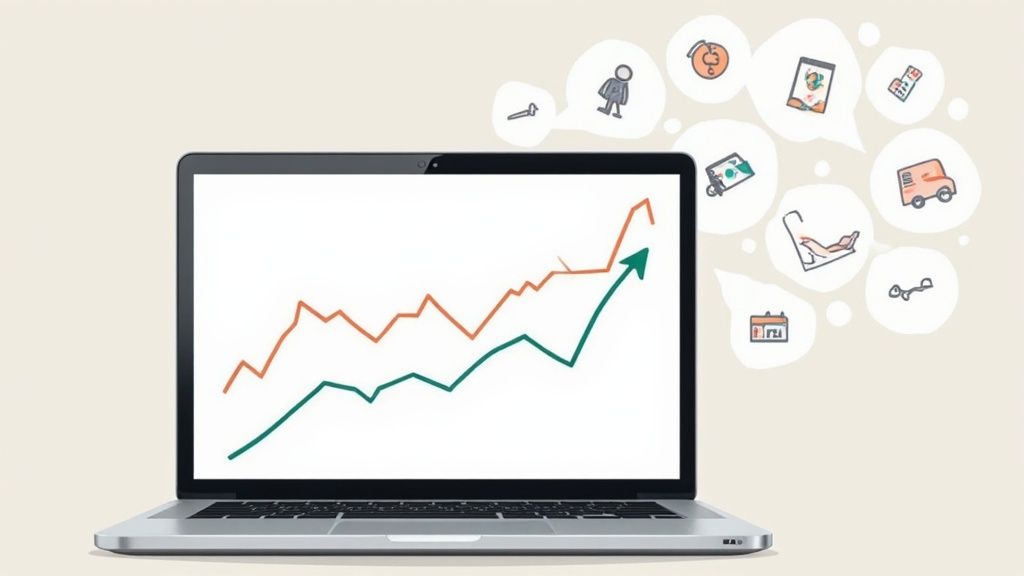
A person sitting at a desk and comparing brokerage fees on a laptop, with charts and graphs in the background, illustrating the concept of making informed financial decisions.

Think of brokerage fees like the hidden charges on a concert ticket. The ticket price is just the start; it's the service fees that can really add up. Investing works the same way. The legendary Warren Buffett built his fortune by obsessively minimizing costs to maximize his returns. His famous mantra says it all: "Rule No. 1: Never lose money. Rule No. 2: Never forget rule No. 1." While he was talking about smart investments, sidestepping unnecessary fees is a massive part of that equation.

The good news? The game has changed for the better. Just a decade ago, commissions were a huge deal, making up around 25% of how brokers were judged. Today, that number has plummeted to just 5%, mostly because free stock and ETF trades have become the industry standard.

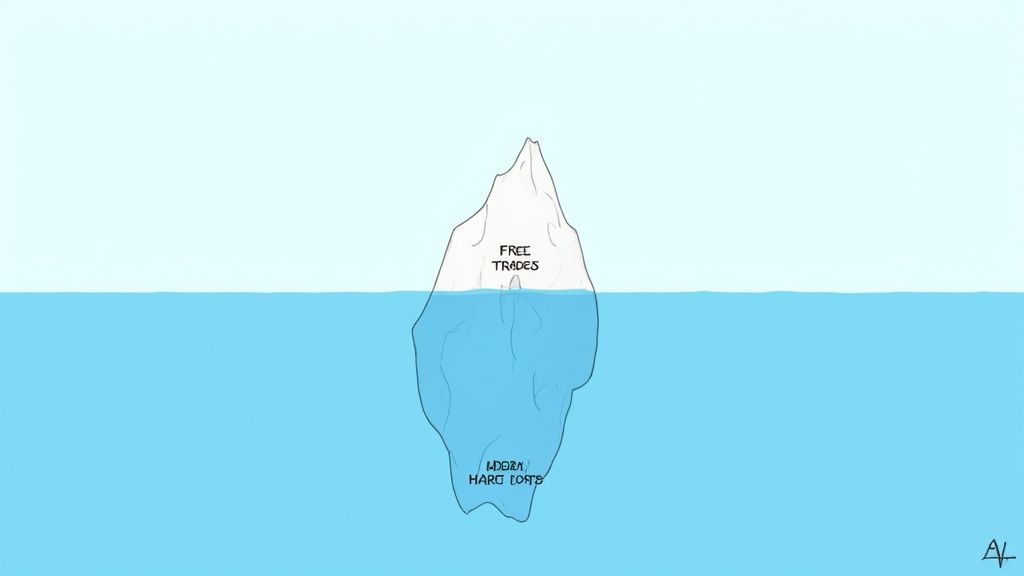
But "free" isn't really free. Brokers now make money through other methods, like a practice called Payment for Order Flow (PFOF). You can discover more insights about US brokerage fees and how this shift has reshaped the industry.

The Main Types of Brokerage Fees at a Glance

To make sense of it all, let's break down the most common fees you'll run into. This table gives you a quick and simple explanation of what each one is and who it impacts the most.

Fee Type What It Is (Simple Explanation) Who It Affects Most
Commissions A fee you pay your broker for making a trade (buying or selling). Traders of specific assets like options or international stocks.
Spreads The tiny difference between the buying and selling price of an asset. Active traders and those investing in forex or crypto.
Account Fees Charges for just keeping your account open, like for inactivity. Investors who don't trade often or want to switch brokers.
Withdrawal Fees A charge for taking your money out of your brokerage account. Anyone who needs to access their cash from the platform.

Understanding these four core fees will put you miles ahead. It helps you look past the flashy "zero commission" headlines and see where the real costs are hiding.

The Four Main Fees Every Investor Should Know

Before you can pick the right brokerage, you’ve got to speak the language-and that means understanding fees. When you start comparing platforms, you'll run into a few key terms over and over. Getting a handle on these is the first step to making a smart choice.

Think of them as the "big four" you need to watch out for. Let's break them down so you're never caught off guard.

Commissions and Spreads: The Trading Costs

First up, commissions. This is the most straightforward fee: a flat charge you pay for making a trade. Think of it like a service fee when you buy a concert ticket online. While tons of brokers now shout about "zero-commission" stock trades, these fees are still very much alive for assets like options, mutual funds, or crypto.

Then there’s the spread, which is a lot sneakier. It’s the tiny difference between the buying price (the "ask") and the selling price (the "bid") of an asset. A broker might buy a stock for $10.00 and offer to sell it to you for $10.01. That single penny difference is the spread, and it’s how they make money on so-called "free" trades.

"Rule No. 1: Never lose money. Rule No. 2: Never forget rule No. 1." – Warren Buffett

While Buffett was talking about picking winning stocks, his wisdom applies perfectly to fees. Every penny you pay in spreads or commissions is a penny that isn't working for you. Keep that in mind, because these tiny costs add up fast.

Account and Withdrawal Fees: The Hidden Annoyances

Beyond the cost of each trade, some brokers hit you with fees just for having an account. These can feel like a penalty for not using your account in the exact way they want you to.

Here are a few common ones to look for:

  • Inactivity Fees: Some brokers will charge you if you go too long without making a trade, maybe 90 days or a year. This is a real headache for long-term, buy-and-hold investors who aren't constantly tinkering with their portfolios.
  • Account Maintenance Fees: This is a recurring charge, often billed monthly or annually, just for the privilege of keeping your account open. Thankfully, most modern online brokers have ditched this, but it’s still out there.
  • Transfer Fees: Thinking about moving your stocks to a different broker? Watch out. You could get slapped with a fee which can easily be $50-$100.

Finally, there are withdrawal fees. Yes, you read that right-some platforms charge you to take out your own money. This is more common for certain withdrawal methods, like wire transfers, but it’s always worth checking the fine print.

Knowing these four fee types is your superpower. It’s how you cut through the marketing noise and find a broker that’s truly low-cost.

How Real Brokerage Fee Structures Compare

Alright, let's get out of theory and into the real world. Comparing brokerage fees isn't as simple as finding the lowest number on a page; it's about finding the right cost structure for your specific style of investing. A cheap, no-frills broker might be perfect for one person, while another will gladly pay more for access to top-tier research and powerful trading tools.

Think of it like choosing a phone plan. One might offer "unlimited" data but slow you down after a few gigs, while another costs more but delivers lightning-fast speeds all month. Neither is objectively "better"-it all boils down to whether you're a casual emailer or a 4K video streamer. Brokerages work the same way. The goal is to match the fee structure to your actual investment habits.

Discount vs. Zero-Commission: A Practical Showdown

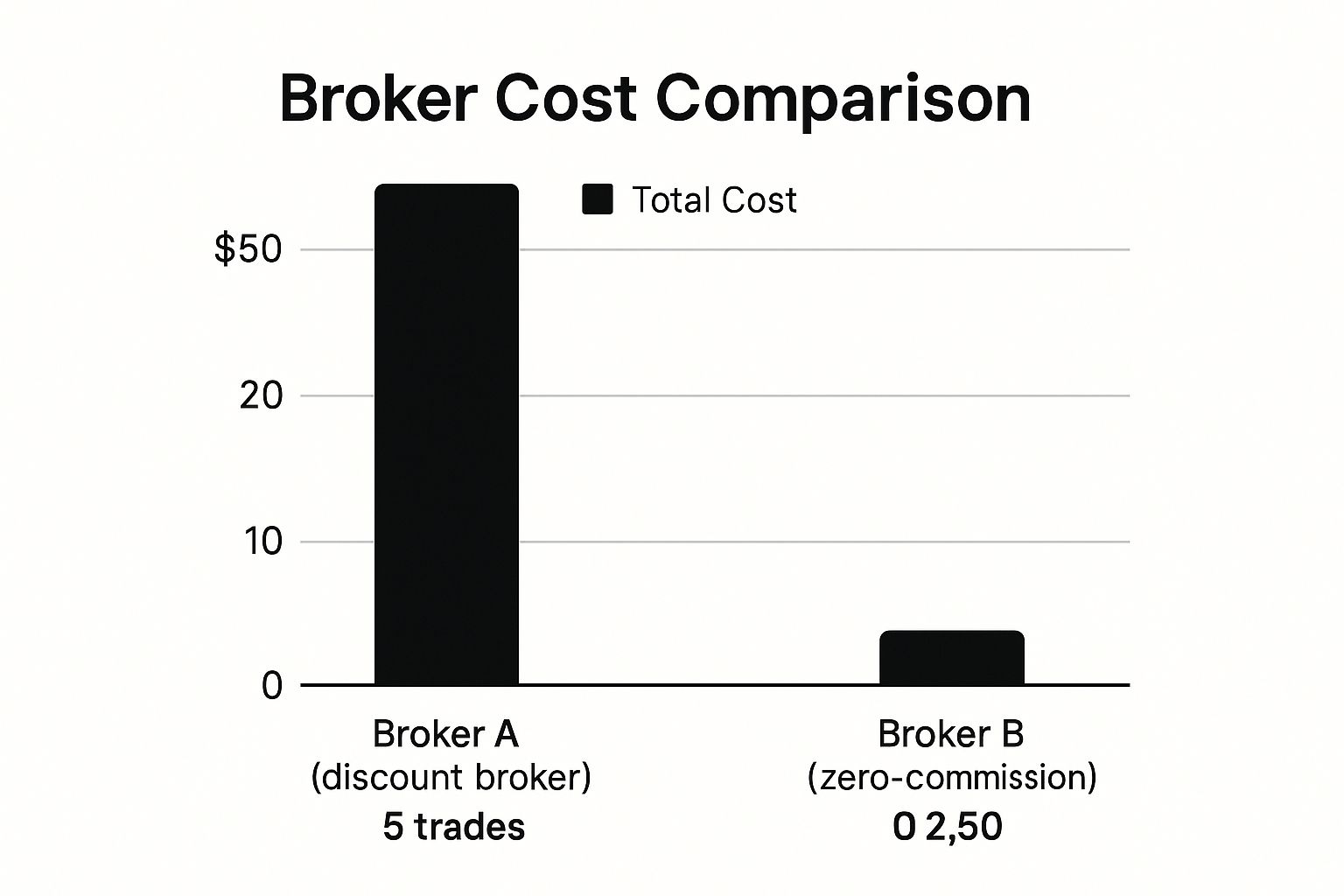
Let's make this real. Imagine you start with $1,000 and make five simple trades over a few months. This is where the slick marketing slogans hit a wall with reality.

  • Broker A (Discount Broker): This platform is old-school. It might charge a flat $10 commission for every trade you make. For your five trades, you'd be out a total of $50 in fees. Simple, predictable, and a bit pricey for small-time trading.
  • Broker B (Zero-Commission Broker): This one is all about "free" trades. But they have to make money somewhere, right? They do it on the spread for each trade. Let's say it works out to about $0.50 per trade. Your total cost here? A mere $2.50.

This chart really drives home how a traditional discount broker's costs stack up against a modern zero-commission model in our five-trade scenario.
Infographic about comparing brokerage fees

As you can see, for a handful of simple trades, the zero-commission model seems like a no-brainer.

This quick comparison teaches a critical lesson: headline rates never tell the full story. The legendary investor Peter Lynch famously said, "Know what you own, and know why you own it." The exact same logic applies to your broker-you need to know what you're paying for and why.

Choosing a broker is like picking a teammate for your financial journey. You want one who plays to your strengths and doesn't slow you down with unexpected penalties. The "cheapest" option on paper might not be the best fit for your game plan.

A Deeper Look at Popular Broker Models

To give you an even clearer picture, let’s dig into the common fee structures you'll find with three popular types of online brokers. This will help you see where the costs might pop up unexpectedly.

Real-World Cost Showdown: Popular Online Brokers

Here’s a side-by-side look at how different broker types structure their fees, from zero-commission apps to platforms built for active traders. Notice how the "best" choice really depends on what kind of investor you are.

Feature Broker A (e.g., Robinhood) Broker B (e.g., Fidelity) Broker C (e.g., Interactive Brokers)
Stock/ETF Commissions $0 $0 Often $0, but can have a small per-share fee
Key Revenue Source Payment for Order Flow (PFOF), subscriptions Interest on cash balances, premium services PFOF, margin interest, per-share commissions
Options Fees $0 per contract ~$0.65 per contract Tiered pricing, often lower for high volume
Account Minimum $0 $0 Often $0, but Pro accounts may have minimums
Best For New investors making simple stock/ETF trades. Long-term investors who want research tools. Active and professional traders seeking low costs.

This breakdown makes one thing crystal clear: comparing brokerage fees forces you to look way beyond a single number. The right broker for you depends entirely on how often you trade, what you trade, and what tools you need to succeed.

The Hidden Costs of 'Free' Trading

You’ve heard the old saying, right? "If something is free, you are the product." This has never been more true than in the world of 'commission-free' trading. It's a fantastic marketing hook, but it pays to be a little skeptical and ask how these brokers are keeping the lights on if they aren't charging for trades.

Let's pull back the curtain on how things really work.
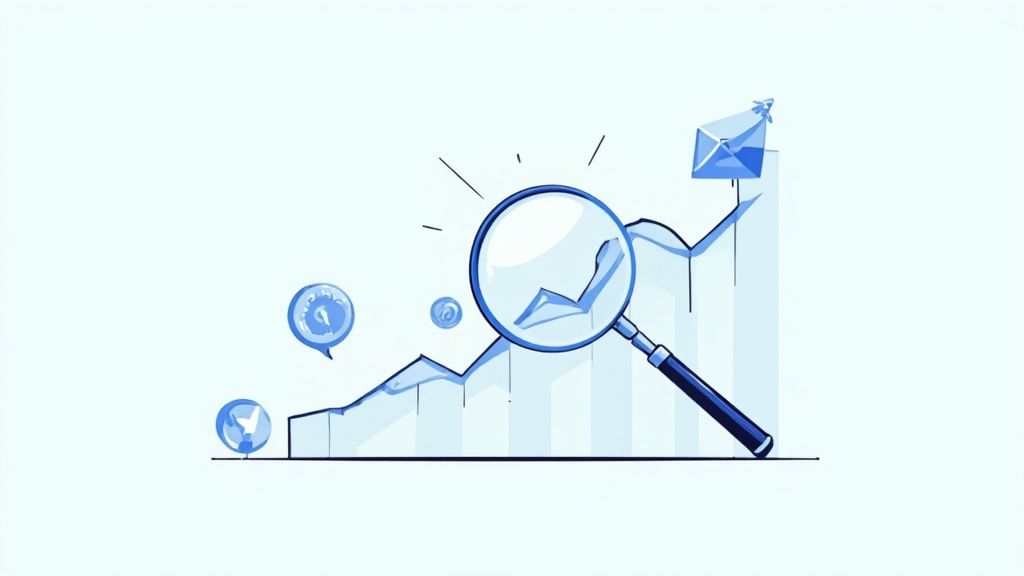
A magnifying glass hovering over a stock chart, revealing hidden fee symbols like dollar signs and percentages, symbolizing the hidden costs of 'free' trading.

One of the biggest ways these brokers make money is from a practice called Payment for Order Flow, or PFOF. It sounds technical, but the idea is pretty simple. Instead of sending your "buy" order straight to the New York Stock Exchange, your broker sells it to a massive, high-speed trading firm (think Citadel or Virtu).

That big firm is the one that actually executes your trade. For the privilege of getting your order, they pay your broker a tiny fee. Think of it like a referral kickback. The catch? You might not be getting the absolute best price on your stock. It could be off by a fraction of a cent, but when you multiply that by millions of trades, it adds up to real money for them.

Margin Loans: The Sneaky Debt Trap

Another huge moneymaker is the interest charged on margin loans. Margin is just a fancy word for borrowing money from your broker to buy more stocks than you can afford with your own cash. It’s a classic high-risk, high-reward move that can magnify your gains, but it can just as easily amplify your losses.

It's a strategy so risky that even billionaire investor Mark Cuban has warned against it, famously saying, "If you're using a margin account, you're a schmuck."

The interest rates on these loans can be shockingly high and vary wildly from one broker to the next. For anyone considering trading on margin, this difference is one of the most important cost factors to compare.

A 2025 analysis revealed a massive gap in margin loan rates. For a $100,000 loan, Robinhood's rate hovered around 5.55%. In contrast, traditional brokers like Fidelity and Charles Schwab were charging over 11%-nearly double. You can learn more about how these rates impact traders here.

This huge difference in rates shows just how aggressively some of the newer platforms are competing, while older brokers often rely on more expensive fee models. If you ever plan to use margin, this "hidden" cost could easily become your single biggest expense.

Getting a handle on PFOF and margin interest is vital. It proves that even when the sticker price says "$0 commissions," trading is never truly free. Knowing how these things work lets you look past the slick marketing and choose a broker whose fee structure genuinely aligns with your trading style-not just their bottom line.

How Fees Change for Different Investment Types

Think of your brokerage account like a restaurant menu. Ordering a simple soda (like buying a popular US stock) is cheap and straightforward. But when you start looking at the more complex meals (like options or international assets), the price tag changes. This is a critical detail to grasp when comparing brokers: what you trade directly impacts what you pay.

It's a common trap for new investors. They get lured in by "zero-commission" trades on US stocks and ETFs, only to be surprised by unexpected costs when they venture into other markets.

Fees for Forex and Options Trading

If you're drawn to the fast-paced world of Forex (foreign currency) trading, you'll almost always run into a small commission on every trade. The currency market moves at lightning speed, and brokers charge this fee for executing your orders instantly. For frequent traders, even a tiny commission can stack up quickly. In fact, these rates can vary wildly across the globe depending on the currency pair. You can see how Forex commissions differ globally here.

Options trading is another beast entirely, with its own unique fee structure. Brokers typically charge a per-contract fee, which often hovers around $0.65 per contract. That might sound tiny, but for active traders juggling dozens of contracts at a time, it's a major cost to factor in. This model is completely different from the flat-fee or zero-commission structure you find with stocks.

The Special Case of Mutual Funds

Mutual funds have long been a go-to for long-term investors, but they come with a sneaky internal fee known as the expense ratio. This isn't a fee you pay upfront when you click "buy." Instead, it's quietly deducted from the fund's assets every single year.

The expense ratio is like a slow leak in your tire-you might not notice it day-to-day, but over a long journey, it can seriously deflate your performance. A 1% expense ratio on a $10,000 investment will cost you $100 every single year, whether the fund makes money or not.

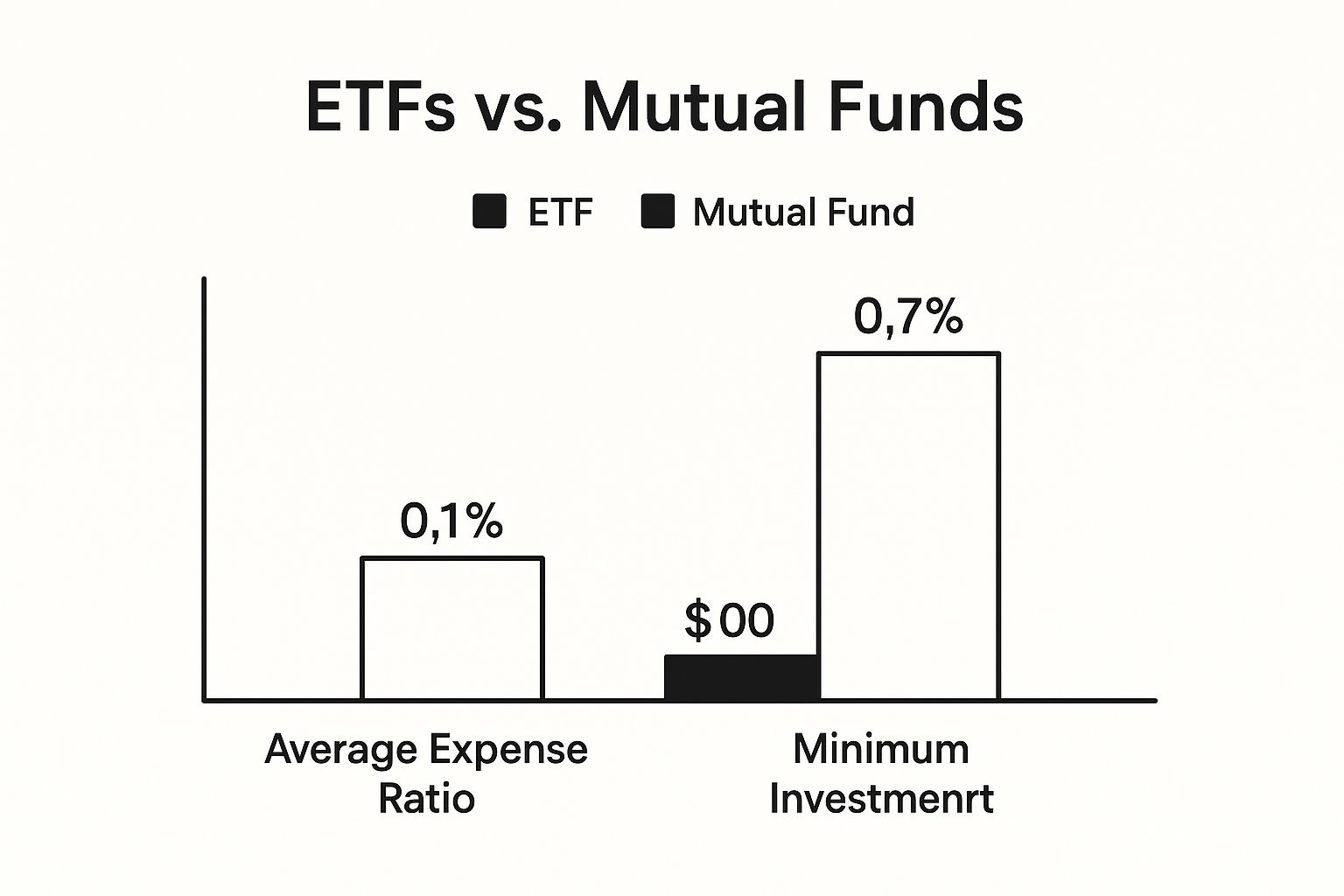
This hidden cost is exactly why comparing individual funds is just as crucial as comparing brokers. You can learn more about the differences between ETFs and mutual funds in our article and see how their fee structures really stack up.

Ultimately, understanding that different investments have different pricing models is the key to avoiding nasty surprises and keeping your trading costs under control.

Choosing the Right Broker for Your Investing Style

A young person looking at a checklist on a tablet, with financial charts in the background, making a decision about which broker to choose.

Alright, it’s time to pick your financial partner. After digging into brokerage fees, you've probably figured out that the cheapest option isn't always the right one. The most critical factor, by a long shot, is your personal investing style.

Are you aiming to be a long-term, "buy-and-hold" investor in the mold of the legendary Warren Buffett, who famously trades only when the stars align? Or are you more of an active trader, ready to pounce on market moves? Your answer changes everything.

"I will tell you the secret to getting rich on Wall Street. You try to be greedy when others are fearful. And you try to be fearful when others are greedy." – Warren Buffett

Buffett's quote is about psychology, but it also reveals a strategy. A patient investor who makes a handful of smart decisions each year has completely different needs than someone trading daily. Your broker needs to match your game plan, not fight against it.

A Quick Checklist for Choosing Your Broker

To find the perfect fit, you need to ask yourself a few key questions. This simple framework will help you cut through the marketing noise and make a smart, personalized decision.

  • How often will I trade? If you're planning to trade multiple times a week, a broker with low or zero commissions and tight spreads is non-negotiable. For infrequent investors, a slightly higher per-trade cost might be perfectly fine if the platform offers better long-term tools.
  • What tools and research do I need? Are you a beginner who just needs a simple buy button, or are you hungry for advanced charting software and in-depth analyst reports? Don’t pay for bells and whistles you’ll never use. Many investors find a free online stock trading course gives them a solid foundation before they ever need to pay for premium tools.
  • What is my long-term goal? Is this for retirement, passive income, or something else entirely? As you compare brokers, look for those that offer comprehensive resources, like strategies for building a retirement stock portfolio. Your broker should support your ultimate financial destination.

Your goal is to find a broker that feels like a true partner on your financial journey-not just another monthly expense. This checklist makes that process a whole lot simpler.

Brokerage Fees: Your Questions Answered

Got a few lingering questions before you jump in? Perfect. Let's clear up some of the common things that trip up new investors when it comes to brokerage fees.

Can I Really Invest with Absolutely Zero Fees?

In short, not really. While tons of brokers shout from the rooftops about commission-free stock and ETF trades, it's almost impossible to invest without ever paying something.

Think of it like a "free" game on your phone-sure, the download costs nothing, but you know there are in-app purchases waiting. For brokers, the costs are just less obvious. They might make money from the spread (the tiny difference between the buy and sell price) or through something called Payment for Order Flow (PFOF).

Always hunt down the full fee schedule on a broker's website. You'll usually find it tucked away in the footer under "Pricing" or "Commissions."

Does a Broker with Higher Fees Mean It's Better?

Not necessarily. Sometimes, higher fees just mean you're paying for a bunch of premium services you'll never use, like personal financial advisors or super-complex research tools. If you're just getting started, a simple, low-cost platform is almost always the smarter move.

Even legendary basketball star LeBron James is famous for his financial discipline, once saying, "We are not throwing money to the ceiling." Your goal is the same: keep as much of your money as possible working for you. That starts by cutting out unnecessary costs.

A classic rookie mistake is paying for features you don’t use. If your plan is just to buy and hold a few ETFs, you don’t need a platform built for a high-frequency day trader-one that might hit you with higher account maintenance fees for those bells and whistles.

Choosing the right broker isn't about finding the one with the most features. It's about finding the one whose costs actually align with your simple, straightforward goals. Start small, keep it cheap, and build from there.


Ready to build your trading knowledge without the confusing jargon? At Finance Illustrated, we offer free, easy-to-understand lessons and simulators to get you started. Begin your trading education journey with us today!

A Beginner’s Guide to Buy and Hold Investing

ye

The buy and hold strategy is super simple at its core. You buy investments – like stocks or funds – and you just hang onto them for a long time. We're talking years, or even decades.

The whole point is to stop stressing about the stock market's daily drama. Instead, you let your investments grow steadily over time, rather than trying to perfectly guess every up and down for a quick win.

What Is Buy and Hold Investing?

Imagine planting an oak tree. You don’t dig it up every week to check the roots, right? You give it water and sun, and you trust the process. That's the buy and hold idea in a nutshell. It's a patient, long-term game where you learn to ignore the market's daily mood swings.

Instead of trying to outsmart everyone, you focus on buying into solid, quality companies and letting them do the hard work for you. It’s no surprise that legendary investor Warren Buffett, one of the richest people on the planet, is a huge fan of this method.

He famously said:

"Our favorite holding period is forever."

This simple quote changes your role completely. You stop being a frantic trader glued to a screen and start acting like a business owner. You're not just buying a random stock symbol; you're buying a small piece of a real company, betting on its success over many years.

The Power of Time and Compounding

The real secret sauce behind buy and hold is something called compound interest. It's the magic that happens when your investment earnings start making their own earnings.

Picture a snowball rolling down a hill. It starts small, but as it rolls, it picks up more snow, getting bigger and bigger, faster and faster. That's your money at work.

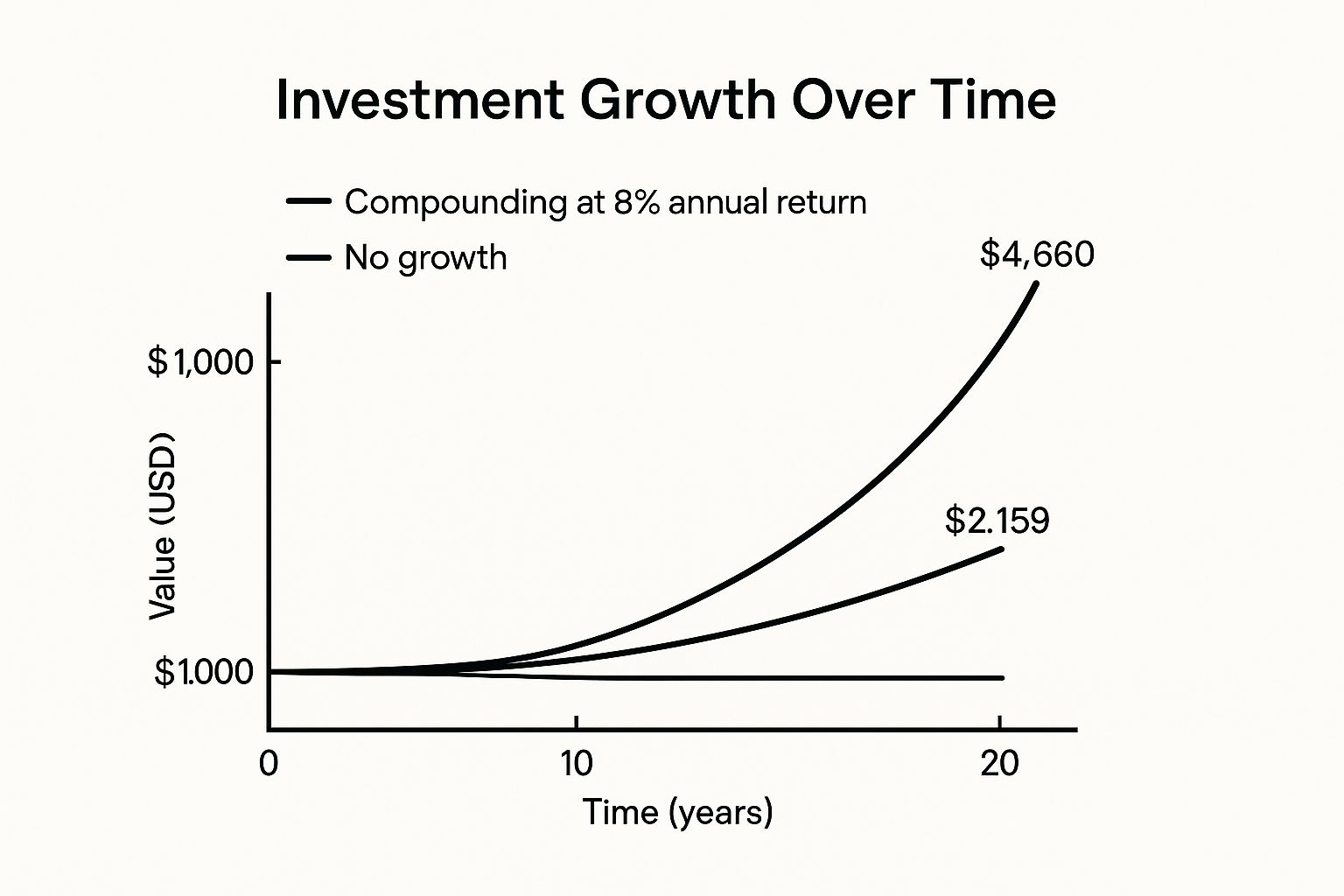
This chart shows just how powerful that effect can be. It pictures how a single $1,000 investment could blossom with an average 8% annual return over 20 years.

Infographic about buy and hold

Notice the growth isn't a straight line. It curves up, speeding up as time goes on and your money starts making more money for you. That's compounding in action.

How It's Different from Day Trading

To really get why this calm, steady approach is so cool, let's compare it to its hyperactive cousin: day trading. Day traders jump in and out of stocks within the same day, trying to grab tiny profits from tiny price changes. It's a high-stress, high-fee game that requires you to be constantly watching the screen.

Buy and hold is the total opposite. You check in sometimes, but otherwise, you just let your strategy do its thing.

Here's a quick look at the main differences.

Buy and Hold vs Day Trading at a Glance

Feature Buy and Hold Day Trading
Time Horizon Long-term (years, decades) Super short-term (minutes, hours)
Goal Build wealth with compounding Make quick profits from price swings
Activity Level Low (you buy and… hold) Very high (lots of trades every day)
Stress Level Usually pretty low Extremely high
Fees Very few transaction costs High because of all the trading
Mindset Investor (like a business owner) Trader (like a speculator)

The two approaches couldn't be more different. One is a marathon, the other is a sprint. Buy and hold isn't about getting rich overnight. It's a proven way to build a solid financial future through discipline, patience, and the incredible power of time.

Why Patience Is Your Investing Superpower

A chart showing the exponential growth of a long-term investment over time, representing the power of compound interest.

If you only remember one thing about the buy and hold strategy, make it this: patience is everything. It's the secret ingredient that unlocks the most powerful force in finance – compound interest. Think of it like a snowball rolling downhill.

At first, it’s small. Your investment makes a little money. But then, that extra money starts earning its own money. Over decades, this cycle creates a kind of financial magic where your portfolio doesn't just grow, it accelerates. It's the ultimate “work smarter, not harder” move for your money.

“Compound interest is the eighth wonder of the world. He who understands it, earns it; he who doesn't, pays it.” – A quote often linked to Albert Einstein.

This one idea is the engine that drives the whole buy and hold philosophy. By staying in the game for the long haul, you give your money the one thing it needs most to work its magic: time.

Riding Out the Storms

Let's be real, the stock market can feel like a rollercoaster. You get the awesome climbs, but you also get the stomach-lurching drops. It's during those drops that most people make their biggest mistake – they panic and sell at the worst possible time. It’s a gut reaction, but it locks in their losses and guarantees they miss the comeback.

A buy and hold mindset is your shield against that noise. It trains you to see market downturns not as a disaster, but as a temporary dip on a much longer journey. By simply staying invested, you make sure you're around for the rebound and all the growth that comes after.

Did you know that in the past 40 years, the stock market's 10 best days happened within just two weeks of the 10 worst days? If you panicked and sold during the bad days, you almost certainly missed the huge bounce-back that followed. The lesson is clear: staying patient through the chaos pays off.

Beyond the Numbers: The Mental Edge

There's more to this than just bigger bank account balances. Using a buy and hold strategy is just a calmer, saner way to invest. It’s about winning the mental game as much as the financial one.

Here are a few of the biggest perks:

  • Lower Stress: You’re free from the pressure of daily market news. Your plan is set for years, not days, so you can focus on your life.
  • Fewer Costs: Constantly jumping in and out of the market adds up in trading fees and can create a huge tax bill. Holding on keeps those costs way down.
  • Simplicity: You don’t need to be a Wall Street genius with complicated charts. The strategy is wonderfully simple: pick good investments and give them time to grow.
  • Builds Discipline: It forces you to manage your emotions and trust your plan, which is a powerful skill that helps with pretty much everything in life.

This strategy isn't just about buying stocks; it's about buying yourself time and peace of mind. It's a disciplined approach that rewards patience and lets the incredible force of compounding build real, lasting wealth for your future.

How to Invest Like a Legend

A portrait of Warren Buffett, an iconic buy and hold investor, looking thoughtful and wise.

When you picture the world's richest investors, you might imagine frantic traders glued to screens, making risky moves every second. But the reality is often the total opposite.

Many of the greatest fortunes weren't built on speed, but on incredible patience and mastering the buy and hold strategy. By looking at their game plan, we can learn the secrets to creating lasting wealth.

There's no better example than Warren Buffett, also known as the "Oracle of Omaha." He’s a legend, not for some complex secret formula, but for a simple yet powerful philosophy. Way back in 1988, his company bought stock in Coca-Cola. They’ve held it ever since, watching that initial $1.3 billion investment grow into more than $25 billion – and that’s before you even count decades of dividend payments.

"Our favorite holding period is forever." – Warren Buffett

That one line says it all. It perfectly captures the buy and hold mindset. Buffett didn’t see a stock price; he saw a fantastic business with a timeless product. So, he bought it planning to never let go, trusting the company's long-term value to win out over short-term market drama.

You Don’t Need to Be a Billionaire

Here’s the best part: this strategy isn’t just for billionaires. It's a proven path for regular people, too.

Of course, to really invest like a legend, every decision has to be based on good reasons. This is where learning how to use data and research for evidence-based decision making becomes your superpower.

Just look at the amazing story of Ronald Read. He was a janitor and gas station attendant from Vermont who lived a simple life. No one knew he was quietly investing his small savings for decades. When he passed away in 2014, he left an $8 million fortune to his local library and hospital.

Read's story is powerful proof that you don't need a Wall Street job or a fancy degree to win with buy and hold. He simply stuck to a few core rules:

  • Live below your means: This gave him the extra cash to invest consistently over time.
  • Invest in solid, well-known companies: He bought shares in household names like Procter & Gamble, Johnson & Johnson, and JPMorgan Chase.
  • Be incredibly patient: He held onto his investments for decades, giving compound interest the time it needed to do its thing.

These legends, from the Oracle of Omaha to a Vermont janitor, show us that successful investing isn't about timing the market. It’s about having a solid plan, choosing quality investments, and having the discipline to stick with it for the long run.

How to Handle the Market's Wild Mood Swings

Let's be real – the buy-and-hold strategy isn't always a walk in the park. There will be days, weeks, or even years when the market feels like it's in a freefall. Watching your account balance drop is one of the toughest tests you'll face as an investor.

This is the moment where your emotions are pushed to the limit. Every instinct might be screaming, "SELL!" just to stop the pain. But this is exactly when the most successful investors hold on tight.

Understanding that these downturns are a normal, expected part of the journey is what separates the winners from everyone else. The market has a long history of throwing tantrums, but it also has an even longer history of powerful recoveries.

Riding Out the Financial Storms

Think back to the big ones, like the 2008 global financial crisis. Fear was everywhere. It felt like the sky was falling, and many people panicked, selling their investments at the lowest prices and locking in huge losses.

But history tells a much different story for those who stayed put. The S&P 500, a collection of the 500 biggest US companies, fell by a scary 37% in 2008. But guess what happened in 2009? It shot up by 26.5%. Patient investors who held on not only recovered but saw incredible growth in the years that followed. You can explore the S&P 500's historic performance and see this strength for yourself.

This pattern isn't a fluke; it's the market's natural rhythm. Steep drops are almost always followed by powerful recoveries.

Actionable Tips to Stay the Course

Knowing this history is one thing, but living through a downturn is another. The trick is to have a game plan before the storm hits, so you can rely on logic instead of fear.

Here are a few things you can do to keep your cool when the market gets wild:

  • Stop Checking Your Account: When the market is dropping, constantly refreshing your portfolio is like picking at a scab. It just makes it worse. Limit yourself to checking once a month – or even less – to avoid a knee-jerk reaction.
  • Remember Why You Started: Go back to your original financial goals. Are you investing for retirement in 30 years? A down payment in 10? Reminding yourself of your long-term "why" helps ignore the short-term noise.
  • Focus on What You Can Control: You can't control the stock market, but you can control your actions. Stick to your plan of investing regularly. This is called dollar-cost averaging, and it means you automatically buy more shares when prices are low – a huge advantage over time.

The legendary investor Peter Lynch had a great way of looking at it.

"The real key to making money in stocks is not to get scared out of them."

In the end, your greatest asset isn't your stock-picking skill; it's your emotional discipline. It’s not about being fearless. It’s about acting despite the fear, trusting your long-term plan, and letting time do the hard work for you.

Your Simple Guide to Getting Started

Alright, you're ready to stop learning and start doing. This is where the fun begins, and trust me, it’s way easier than you think. Getting started with a buy and hold plan is less about having a lot of money and more about taking that first simple step.

Let's break it down into a super simple, beginner-friendly launch plan.

Your First Mission: Open the Right Account

The first mission is just to open the right kind of account. Think of this like getting your driver's permit before you can hit the road – it's the first essential step.

You'll need a brokerage account, which is just a fancy name for an account that lets you buy and sell investments. You could also look into a Roth IRA if you're thinking about retirement, since it offers some awesome tax advantages later on. Many online platforms let you open one in minutes with no minimum deposit.

What Should You Actually Buy?

Okay, account open. Now what? The number of choices can feel overwhelming, but for a buy and hold strategy, the best answer is usually the simplest one. You don't need to be a stock-picking genius.

Instead, look at low-cost index funds or Exchange-Traded Funds (ETFs).

Think of an ETF as a pre-made Spotify playlist of stocks. Instead of trying to pick the single best song (stock), you buy the entire "Top 500 Hits" album at once. This gives you instant diversification, spreading your money across hundreds of companies automatically.

This is a great starting point because it protects you from the risk of one single company doing poorly. For a deeper dive into how these funds compare, you can learn more about the differences between ETFs and mutual funds in our detailed guide.

To make it even easier, here are examples of popular, diversified ETFs that are great for a new buy and hold investor.

Simple Portfolio Ideas for Beginners

ETF Ticker What It Invests In Why It's a Good Starting Point
VOO (Vanguard S&P 500 ETF) The 500 largest companies in the U.S., like Apple and Microsoft. It’s a classic for a reason. You get a piece of the core U.S. stock market.
VTI (Vanguard Total Stock Market ETF) The entire U.S. stock market – large, medium, and small companies. Even more diverse than the S&P 500, giving you a tiny piece of thousands of companies.
VT (Vanguard Total World Stock ETF) Companies from all over the world, including the U.S., Europe, and Asia. The ultimate one-stop-shop for global diversification, reducing the risk of one country's economy struggling.

These aren't specific recommendations, but they show how simple and powerful a starting portfolio can be. Just one of these ETFs can give you a massively diversified foundation.

Your Secret Weapon for Consistency

Now for the last piece of the puzzle – how to invest without stressing. The secret is a technique called Dollar-Cost Averaging (DCA). It sounds technical, but it’s incredibly simple.

With DCA, you invest a fixed amount of money on a regular schedule, like $25 every two weeks, no matter what the market is doing.

  • When prices are high, your $25 buys fewer shares.
  • When prices are low, that same $25 buys more shares.

Over time, this smooths out your purchase price and removes the temptation to "time the market." It puts your buy and hold plan on autopilot, which is exactly where you want it.

Just set it, forget it, and let time and consistency do the hard work for you. Getting started really is that simple.

Building a Stronger Portfolio with Diversification

A diverse group of puzzle pieces fitting together, symbolizing how different investments combine to form a strong, complete portfolio.

You’ve definitely heard the advice, "don't put all your eggs in one basket." It might be a cliché, but it’s the perfect way to think about diversification – and it’s a must-have for a smart buy and hold strategy.

Think of it like building a championship sports team. You wouldn't just sign a dozen star quarterbacks, would you? Of course not. You need defense, offense, and specialists, all bringing different skills to win consistently. Your investment portfolio works the same way.

Spreading your money across different types of investments is your best defense against surprises. It means owning a mix of assets, like stocks from big U.S. companies, smaller tech firms, and even international businesses. When one part of your portfolio is having a rough time, another part might be doing great, which helps smooth out the ride.

Why Spreading Out Is So Powerful

This isn't just about playing it safe; it's about giving yourself more chances to win. The economy is huge and complex, and different parts of it shine at different times. By diversifying, you make sure you have a piece of the action no matter which area of the market is leading the way.

The long-term impact of this is truly mind-blowing. One study showed that if you had invested $10,000 back in 1992 into just the S&P 500, it would have grown to about $230,000 by 2022. That's amazing! But if you had put that same $10,000 into a diversified portfolio with different types of assets, it could have grown to nearly $300,000. That's a life-changing difference.

Diversification is the only free lunch in investing. It allows you to reduce risk without sacrificing expected return.

To get the most out of your long-term plan, it helps to know how your mix of investments should change over time. Learning about different strategies for 401k asset allocation by age can give you a solid plan for building a strong portfolio. For more actionable advice, our guide on how to diversify your investment portfolio also breaks down practical steps you can take today.

Got Questions About Buy and Hold? Let's Clear Things Up.

Alright, let's tackle some of the questions that always pop up when people first hear about the buy and hold strategy. Getting these sorted out is often the last step before feeling confident enough to actually get started.

How Much Money Do I Really Need to Start?

Honestly? You can probably start with whatever you have in your pocket right now. Thanks to things like fractional shares (where you can buy just a small piece of a stock) and low-cost funds, you can get in the game with as little as $5 or $10.

The real secret isn't starting with a huge pile of cash. It's all about building the habit of investing, bit by bit, on a regular basis. Consistency is what builds wealth, not some massive one-time investment.

Ashton Kutcher, the actor and successful tech investor, once said something interesting about this. He focuses on "finding the signal in the noise," which is exactly what a consistent, automated investing plan helps you do. You ignore the daily drama and focus on your long-term plan, which is the real signal for success.

Isn't Buy and Hold… Kinda Boring?

Some people might call it boring, but I prefer to call it effective. Let's be real: investing isn't meant to be a trip to the casino. It's a powerful tool for building real financial freedom for your future.

Sure, day trading might look exciting in movies, but that "excitement" comes with a mountain of stress, tons of fees, and a much, much higher chance of losing money. Buy and hold is "boring" in the best way possible – it just works quietly in the background, growing your wealth while you live your life.

Okay, So When Should I Actually Sell?

While the whole point is to hold on for the long haul (think 10+ years), life happens. There are a few logical reasons you might decide to sell.

  • You've hit a major financial goal. This is the best reason! Maybe you've saved enough for a down payment on a house or to pay for college.
  • The fundamentals have totally changed. If the main reason you invested in a company has completely and permanently soured – say, a huge scandal or a new technology makes its business model useless – it might be time to rethink.

The one time you never sell? Just because the market took a nosedive. That's panic, not a strategy. Letting fear make your decisions is the biggest mistake a long-term investor can make.

Find Your Free Online Stock Trading Course

ye

Ever feel like the world of stock trading is some exclusive club you weren't invited to? A free online stock trading course is basically your VIP pass-it lets you learn all the rules of the game without costing you a dime. Think of it as a roadmap for turning those confusing news headlines and scary-looking charts into knowledge you can actually use.

Your Stock Market Journey Starts Here

A person working on a laptop with stock market charts in the background

Jumping into anything new, especially when it involves money, can feel a bit intimidating. You’re hit with graphs, numbers, and jargon, and it's easy to think you need a finance degree and a pile of cash just to start.

That couldn’t be further from the truth.

The reality is, anyone can learn how the stock market works. All it really takes is a bit of curiosity and access to the internet. A great free online course is built to guide you from feeling clueless to feeling confident, one simple, bite-sized lesson at a time.

Breaking Down the Basics

So, what’s really going on with the stock market? It’s a lot less complicated than it seems. When you buy a stock, you're just buying a tiny slice of a company you believe in-whether that’s Apple, Nike, or a local business that’s gone public. If that company succeeds and grows, the value of your tiny slice can grow right along with it.

It's like becoming a part-owner of your favorite brands.

A good course will clear up the fog around core concepts like:

  • Stocks and Shares: What they actually are and how they represent a piece of the pie.
  • Market Trends: How to spot patterns and understand why tech stocks might jump after a big new product launch.
  • Risk vs. Reward: Getting comfortable with the idea that the potential for big wins always comes with the possibility of losses.

If you're starting from scratch, a solid guide can really help lay the groundwork. This complete guide on how to start investing for beginners is a fantastic resource for building that initial foundation.

Why Your Age Is a Superpower

Getting a handle on investing between the ages of 16 and 18 is like getting a massive head start in a race. You have the single most powerful ingredient for financial success on your side: time. It’s a concept called compounding, where your money starts making money, and then that money starts making even more money. The earlier you start, the more powerful it becomes.

Even celebrities like Ashton Kutcher got into the game early by investing in tech startups like Uber and Airbnb, knowing that starting sooner is always better than later.

"Someone's sitting in the shade today because someone planted a tree a long time ago." – Warren Buffett

Learning about this stuff now is you planting that financial tree for your future self. A free course gives you the perfect practice field to learn the ropes without putting any real money on the line.

What to Expect From a Free Trading Course

So, what’s actually packed into a free online stock trading course? If you're picturing boring lectures that feel like a high school economics class, think again. The best courses are engaging and interactive, designed to build your skills piece by piece without throwing a textbook’s worth of jargon at you all at once.

You'll usually find a mix of learning tools that keep things interesting. Think short, easy-to-digest video lessons that break down complex ideas, quick quizzes to check your understanding, and handy cheat sheets you can download for a quick refresher later. The whole point is to make the knowledge stick.

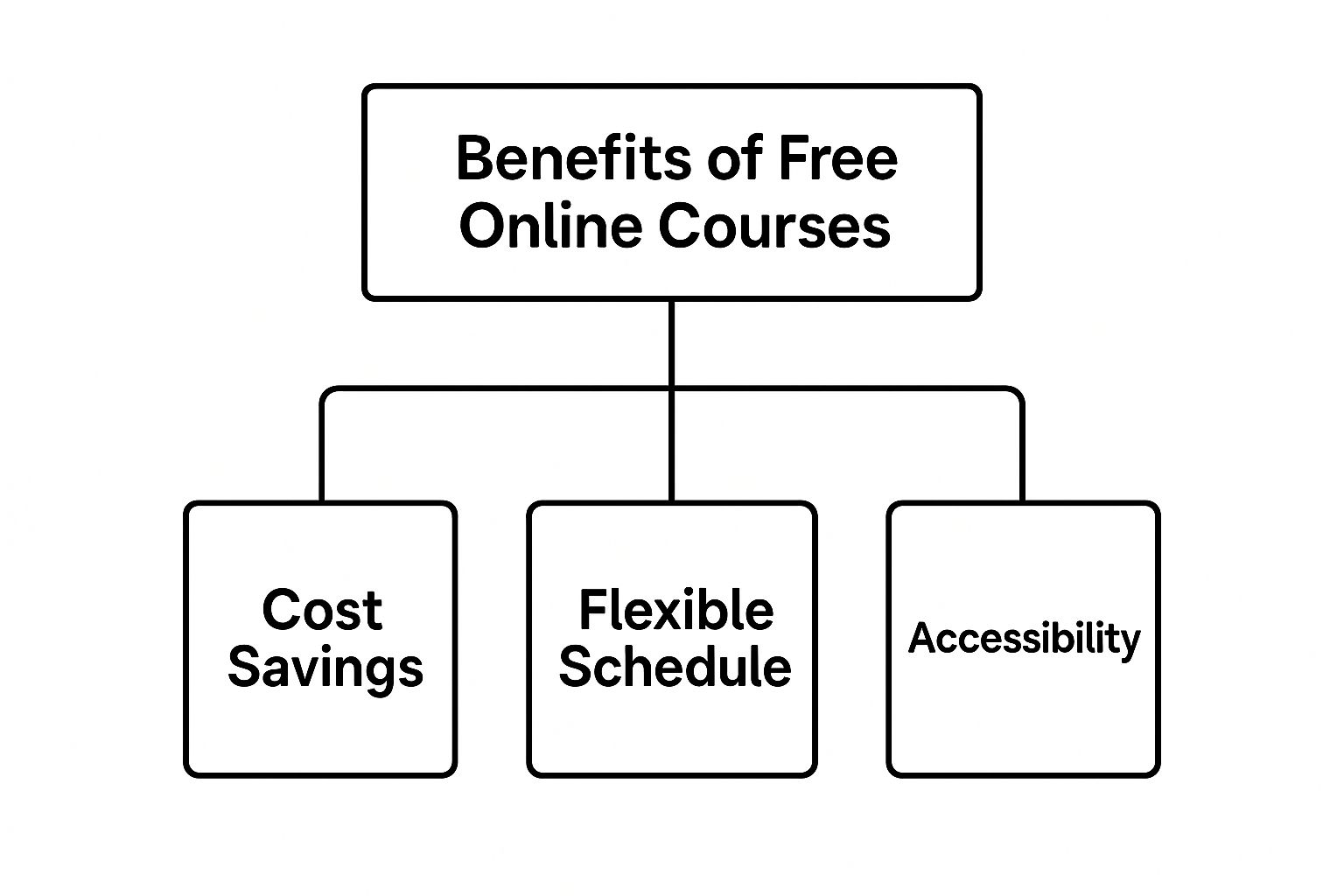
The infographic below nails the core benefits, showing why these courses are such a fantastic starting point.

Infographic about free online stock trading course

As you can see, the blend of no-cost learning, a schedule that fits your life, and the ability to learn from anywhere is a game-changer. It completely removes the old barriers that used to keep people out of financial education.

The Most Valuable Feature: A Trading Simulator

If there’s one feature that truly stands out in a good free course, it’s the trading simulator. Honestly, think of it as a video game for Wall Street. You get to play with a big pile of fake money, buying and selling real stocks at their actual, live prices-all inside a totally risk-free sandbox.

This is where all the theory you've been learning gets real. It's your chance to experiment with different strategies, see firsthand how a news headline can send a stock soaring or sinking, and experience the emotional rollercoaster of trading without risking a single dollar. It's just like a flight simulator for a pilot-you wouldn't want them learning the ropes in a real jumbo jet, would you?

"The best investment you can make is in yourself." – Warren Buffett

A free course is exactly that-an investment in your financial literacy that costs you nothing but your time. Billionaire Mark Cuban is another huge believer in self-education, often talking about how he reads for hours every day to stay sharp. This is your first step toward building that same kind of knowledge advantage.

Core Components You Will Find

To give you a clearer picture, let's break down the essential building blocks you'll find in most quality courses. They’re all designed to work together, guiding you from basic concepts to hands-on practice in a logical way.

Here’s a quick look at the essential features you'll find in most quality free online stock trading courses.

Core Components of a Free Trading Course

Component What It Is Why It Matters for You
Video Modules Short, focused video lessons, usually 5-10 minutes long, that cover one specific topic at a time (e.g., "What is a Stock?"). Makes learning digestible and easy to fit into a busy schedule. You learn one concept well before moving on to the next.
Interactive Quizzes Brief quizzes that pop up after a video or module to test what you just learned. These aren't for a grade! They help reinforce the key takeaways and show you if you need to re-watch a lesson.
Trading Simulators A virtual trading platform where you can practice buying and selling stocks with "play" money. This is where you connect theory with action. It builds confidence and lets you make mistakes without any real-world consequences.
Downloadable Resources Extra materials like PDF cheat sheets, checklists, and glossaries of common trading terms. These are your go-to references. You can save them and look back anytime you need a quick reminder, long after the course is done.

These components create a well-rounded learning experience that’s much more effective than just reading a book or watching random videos online. It's a structured path designed for beginners.

Picking the Right Course for You

Googling "free online stock trading course" can feel like opening a fire hose. You're suddenly flooded with options, and it's tough to tell which ones are genuinely helpful and which are just a waste of time. But don't sweat it. Think of this as your guide to finding a real gem.

Putting in a little effort now to find the right fit makes a huge difference. You're way more likely to stick with it, actually enjoy the process, and build skills that can serve you for the rest of your life.

Who's Behind the Curtain?

First things first: who’s actually teaching you? You wouldn't learn to fly a plane from someone who's only read about it in a book. The same logic applies here. Look for courses created by respected financial education companies, well-known trading communities, or even top-notch universities.

For instance, Yale University’s "Financial Markets" course on Coursera is a great example. It offers about 33 hours of beginner-friendly content that walks you through everything from basic pricing to forecasting. It shows that even Ivy League schools are breaking down old barriers. To see how other top universities are getting in on this, you can learn more on StockGro.

Check the Syllabus and See What Others Are Saying

Before you hit "enroll," always take a look at the syllabus. It's just a roadmap of what you’ll be learning. Does it cover the topics you’re curious about? Does it start with the basics before diving into the deep end? A good beginner course won't throw complicated strategies at you in the first lesson.

Next, play detective and read the reviews. Real student feedback is gold. It’s like getting a tip from a friend who’s already been there. Keep an eye out for comments on:

  • Clarity: Was the material easy to follow, or was it a snooze-fest of jargon?
  • Engagement: Did people find it interesting enough to finish?
  • Practical Tools: Does it come with a trading simulator so you can practice without risking real money?

A few minutes spent reading reviews can save you hours of frustration with the wrong course.

"An investment in knowledge pays the best interest." – Benjamin Franklin

Ben Franklin was onto something. Choosing a quality course is your very first investment, and it's arguably the most important one you'll make.

Find a Course That Fits Your Vibe

Lastly, be honest about how you learn best. Are you a fan of quick, bite-sized videos you can watch during a break? Or do you prefer to settle in and really dig into longer, more detailed explanations?

There’s no one-size-fits-all answer here. Some courses are built for speed, while others are paced more like a traditional class. Picking one that matches your personal style will make learning feel less like a chore and more like an exciting new adventure.

The Real-World Impact of Free Education

So, does taking a free course actually make a difference? You bet it does. Think about it-just a few years ago, learning to trade stocks felt like trying to get into an exclusive club with a steep cover charge. You needed a hefty bankroll just to get your foot in the door.

That world is history. Today, a free online stock trading course is bulldozing those old barriers. This massive shift means your curiosity, not your cash, is your ticket to entry. It’s a game-changer that's opening up the world of investing to a whole new generation.

Leveling the Playing Field for Everyone

For a long time, financial knowledge was something you inherited or paid a small fortune for at a university. Now, it's accessible to anyone with an internet connection. This has created a much more diverse market, where fresh ideas can come from literally anywhere.

Take platforms like Bullish Bears, for example. They've built their entire mission around making trading education available to everyone, offering free classes on everything from day trading to options with a simple sign-up. In fact, some reports estimate that around 90% of retail traders get their start with free resources before ever paying for more advanced training.

This new reality is proof that you don't need a fancy degree to build a valuable skill. All it really takes to get started is your time and a genuine desire to learn.

Knowledge Is Your Foundation, Not a Guarantee

Alright, so will finishing a free course turn you into the next Warren Buffett overnight? Let’s get real-probably not. Think of the course as your launchpad. It gives you the foundational knowledge and essential tools, like a trading simulator, to start building your skills without risking your own money.

But here’s the thing: success in trading is about more than just reading a stock chart. It’s about mastering your own psychology. A ton of data shows that most beginners stumble not from a lack of knowledge, but because they can't keep their emotions in check when real money is on the line.

"In this business if you’re good, you’re right six times out of ten. You’re never going to be right nine times out of ten." – Peter Lynch

This is such a crucial point. A free course trains your brain, but you have to be ready to train your gut, too. It’s all about staying disciplined, sticking to your plan, and not letting fear or greed dictate your next move. The course is your first step, but the real journey is a marathon of continuous learning.

Building Your Learning Path from Beginner to Pro

A person looking at a screen with charts, planning their next move

Think of a good free online stock trading course as your launching pad. It's not the final destination. It’s like the first season of a great TV series-it gets you hooked on the story, but you know there are deeper plot twists to come.

Many platforms that offer free introductory courses also have a clear roadmap to more advanced material. It's a fantastic "try before you buy" approach. You get to dip your toes in the water and see if trading is genuinely for you before committing cash to more in-depth training.

From Free Basics to Pro-Level Skills

Once you’ve nailed the fundamentals, you’ll probably get the itch to level up. This is where you can start looking into structured programs designed to take you from a curious beginner to a certified expert.

Platforms like Coursera have been game-changers, teaming up with world-class institutions to bring top-tier financial education to everyone. After finishing a basic course, for example, you might look into a professional certificate from the New York Institute of Finance (NYIF). Their program packs nine hours of expert-led instruction and hands-on trading simulations, culminating in an exam where you need a 70% score to get certified.

These well-designed programs really work. Studies have shown that learners who follow these kinds of structured paths have 20-30% higher completion rates than people who just piece together random tutorials online.

As basketball legend Michael Jordan once said, "Some people want it to happen, some wish it would happen, others make it happen."

Moving from a free course to advanced training is your way of making it happen. You're taking that initial spark of interest and actively building it into a real, valuable skill.

Adding Advanced Tools to Your Kit

As you make the leap from beginner to pro, it's also time to think about the tools that can give you a serious edge. The financial world moves fast, and staying ahead of the curve often means embracing new technology.

For instance, artificial intelligence isn't just for massive Wall Street firms anymore. You can learn how to leverage AI for financial analysis to uncover deeper insights and make smarter trading decisions. This is the kind of next-level skill that can truly set you apart. Your learning path is an ongoing adventure.

Your Action Plan to Start Learning Today

A person making notes while looking at financial charts on a laptop

Alright, enough thinking, it’s time to take action. Let's get you set up with your first free online stock trading course and turn that curiosity into real knowledge. The goal here isn't to become a Wall Street wizard overnight. It’s about building a solid, consistent learning habit.

Think of it this way: your financial education is the most valuable asset you’ll ever have. And that journey officially kicks off the moment you hit "play" on that first lesson.

Your First Week Learning Plan

To see real progress, you need a simple plan you can actually stick to. Forget about cramming for hours on end-consistency is way more powerful than intensity. Here’s a simple framework to get the ball rolling:

  1. Set Your Study Time: Block out just 30 minutes each day. Seriously, put it in your calendar like it’s an appointment you can’t miss. This small commitment is manageable and helps build momentum.

  2. Take Simple Notes: Don't try to write down every single word. Just focus on jotting down one or two key ideas from each lesson that really stick out. This simple act makes the information stick.

  3. Jump into the Simulator: As soon as the course allows, open up the trading simulator. Don’t be afraid to mess up with fake money-that’s exactly what it’s for! Making those first few practice trades is a massive confidence builder.

The simulator is where the theory becomes real. To find a platform that clicks with you, check out our guide to the best stock market games for traders.

As legendary investor Peter Lynch famously said, "Know what you own, and know why you own it."

This whole idea starts with education. Learning the "why" behind every single trade is the most powerful skill you can build, and this simple action plan is your very first step.

Got Questions About Free Trading Courses? Let's Get Them Answered.

Thinking about diving into a free online stock trading course? It’s totally normal to have a few questions before you start. Let's tackle some of the most common ones.

Can I Really Learn to Trade for Free?

Yes, you absolutely can. The internet is packed with high-quality free courses from trusted financial communities and even top-tier universities. These resources are perfect for learning the essential foundations of trading without spending a dime.

They're designed to give you a solid, risk-free starting point. While you won't become a Wall Street wizard overnight, you'll walk away with the core knowledge to get started with confidence.

Do I Need Any Special Software?

Nope, not at all! If you have a computer or a smartphone and an internet connection, you’re good to go.

Most free courses are completely web-based, so everything-from the video lessons to the trading simulators-runs right in your browser. No complicated downloads or installations required.

How Much Time Does It Take?

That really depends on the course and how deep you want to go. Some are quick, punchy introductions you can finish in just a few hours over a weekend.

"Investing in yourself is the best thing you can do. Anything that improves your own talents; nobody can tax it or take it away from you." – Warren Buffett

Others, like the more comprehensive university-level programs, might require 20-40 hours to complete. The beauty of it is that they're almost always self-paced. You can fit the lessons into your life, whether that means 30 minutes during your lunch break or a few hours on a Sunday afternoon. It’s completely up to you.


Ready to start your learning journey? At Agfin Ltd, our Finance Illustrated Trading School offers a free, bite-sized course that makes learning simple and fun. Build your confidence today.

How to Diversify Your Investment Portfolio: A Beginner’s Guide

ye

Think of diversifying your investment portfolio like building a playlist. You wouldn't just put one song on repeat, right? You mix different artists and genres. Investing is the same: instead of betting all your money on a single stock, you spread it across different types of investments. It’s a key strategy that helps protect your money if one investment has a bad day, making your financial journey a lot smoother.

Why Diversification Is Your Best Friend in Investing

Let’s imagine you put all your savings into one hot tech stock. It feels amazing when it’s soaring, but what happens when a new competitor shows up or they have a bad quarter? History is full of superstar companies that faded away, like Blockbuster or Myspace. Going all-in on one company is a huge gamble.

Here’s a wild fact: during the 2022 market downturn, a massive 96% of individual stocks in the S&P 500 dropped in value. That’s a tough stat if you only own a couple of them.

This is where diversification comes in to save the day. It’s a concept that the mega-successful investor Warren Buffett explained perfectly:

"Never put all your eggs in one basket."

This isn't just an old saying; it’s the secret sauce of smart investing. By owning a mix of different assets, you create a team where each player has a different strength. When one part of your portfolio is down, another part might be doing just fine, or even great. It’s like being a chef: you don’t make an amazing dish with just one ingredient. You blend different flavors to create something awesome.

Getting a Feel for the Landscape

The investment world is always changing. Last year's MVP could be this year's benchwarmer. In fact, one study that tracked different investments for 20 years found that the "best" one – whether it was international stocks, real estate, or just cash – changed almost every single year.

That unpredictability is exactly why having a smart mix is so important. The first step is to get to know the key players on the field.

A Quick Look at Investment Types and Risk

To get started, it helps to know the main types of investments, or "asset classes," and how risky they generally are. Think of this as your investor starter pack.

Asset Class What It Is (In Simple Terms) Typical Risk Level
Stocks (Equities) Owning a small piece of a company. High
Bonds Loaning money to a government or company. Low to Medium
Real Estate Investing in physical property. Medium
Commodities Raw materials like gold, oil, or even coffee. High
Cash & Equivalents Money in savings accounts or short-term bonds. Very Low

Getting familiar with these basic building blocks is the first real step toward building a portfolio that can handle the market's ups and downs.

Building Your Core Investment Mix

A diverse array of financial charts and graphs representing different asset classes.

Alright, let's get to the fun part: building your investment team. You can't just have all star quarterbacks; you need great defenders and all-rounders, too. Each one has a job to do.

In investing, these "players" are called asset classes. It’s just a fancy way of grouping different types of investments.

The two main players everyone knows are stocks and bonds. Stocks are your star attackers – they have the potential for big growth, but they also come with more risk. When you buy a stock, you're buying a tiny piece of a company like Apple or Nike. Some even pay you a slice of their profits, called dividends. If you're curious, checking out a list of the best dividend stocks to buy can give you a feel for how they work.

Bonds, on the other hand, are your reliable defense. You're basically loaning money to a government or a big company, and they pay you back with interest. They're usually much more stable than stocks, acting as an anchor when the market gets choppy.

Expanding Your Roster Beyond the Basics

A great team needs more than just offense and defense. To build a truly diversified portfolio that can handle anything, you need to bring in some other key players.

Of course, before adding any new asset, it's essential to understand how to calculate return on investment. This is a must-have skill that lets you compare different opportunities fairly.

Here are a few other asset classes to consider for your lineup:

  • Real Estate Investment Trusts (REITs): Ever wanted to invest in real estate but don't want the hassle of being a landlord? REITs are for you. These are companies that own buildings that make money – think apartment complexes, shopping malls, or office towers. You get to collect a piece of the rent without fixing a single leaky faucet.
  • Commodities: We're talking about raw materials here – stuff like gold, silver, and oil. Gold is a classic "safe-haven" asset. When the stock market gets scary and people start selling, the price of gold often goes up, providing a nice balance.
  • Cash Equivalents: This is your emergency fund inside your portfolio. Think high-yield savings accounts or super safe, short-term government bonds. It’s the safest part of your portfolio, earning a little interest while waiting for a great investment opportunity to pop up.

Why This Mix Matters

So, why go to all this trouble? Because these different assets rarely move up and down at the same time.

It’s all about creating balance. In a year when your stocks might be struggling, your bonds or gold could be doing well, helping to soften the blow to your overall portfolio. This blend smooths out the wild rides, which is key to staying invested for the long run.

Billionaire investor Ray Dalio famously called this the "Holy Grail of investing."

"The Holy Grail of investing is to have a portfolio of 15 or more uncorrelated assets."

Now, you don't need to run out and find 15 different things to invest in tomorrow. The main idea is what’s important. By spreading your money across different players – stocks for growth, bonds for stability, and others like REITs or commodities for special roles – you’re building a tough portfolio that’s ready for any economic season.

Investing Beyond Your Own Backyard

Only investing in your home country is like only listening to artists from your hometown. Sure, you know them and they're great, but you’re missing out on a whole world of amazing music. The same goes for your money. This is where geographic diversification comes in – it’s your passport to finding growth all over the globe.

Every country's economy moves at its own pace. When the U.S. market is slow, another market somewhere else could be booming. By spreading your investments across different countries, you're not just playing defense; you're setting yourself up to catch growth wherever it's happening.

Why Look Abroad?

It's tempting to stick with what you know, but there's a huge world of opportunity out there. Pushing your portfolio beyond your country's borders is a proven strategy for building a stronger, long-term portfolio.

Here’s why it's a smart move:

  • Different Economic Cycles: Economies rarely move in perfect sync. A slow year at home might be balanced by a great year in a developed market like Germany or a fast-growing emerging market like India.
  • Access to Global Giants: Many of the world's coolest companies aren't American. Think of industry leaders like Samsung (South Korea), luxury brand LVMH (France), or even TikTok's parent company ByteDance (China). Investing internationally gives you a piece of their success.
  • Currency Magic: Changes in currency exchange rates can actually help you. A strong dollar might make foreign stocks cheaper to buy, while a weaker dollar can boost the value of your international profits when you bring them back home.

We saw this in action back in 2025, when portfolios with global investments did better than those that just stuck to the U.S. Why? A big reason was that stocks in places like Europe and Japan were a better deal and got a nice boost from currency trends.

Putting It Into Practice

The good news is you don't need a Swiss bank account to invest internationally. For most people, the easiest way is through funds that do all the work for you.

  • International ETFs (Exchange-Traded Funds): These are like baskets of stocks that track indexes from different countries or regions. You can easily buy an ETF that covers developed markets (like Europe and Japan) or one that focuses on emerging economies (like Brazil and India).
  • Global Mutual Funds: These funds are run by pros who pick and choose stocks from all over the world, trying to find the best opportunities to grow your money.

And don't forget about physical assets. When you're diversifying with real estate, learning about powerful tax-deferred investment strategies like the 1031 exchange can make a huge difference to your final profits.

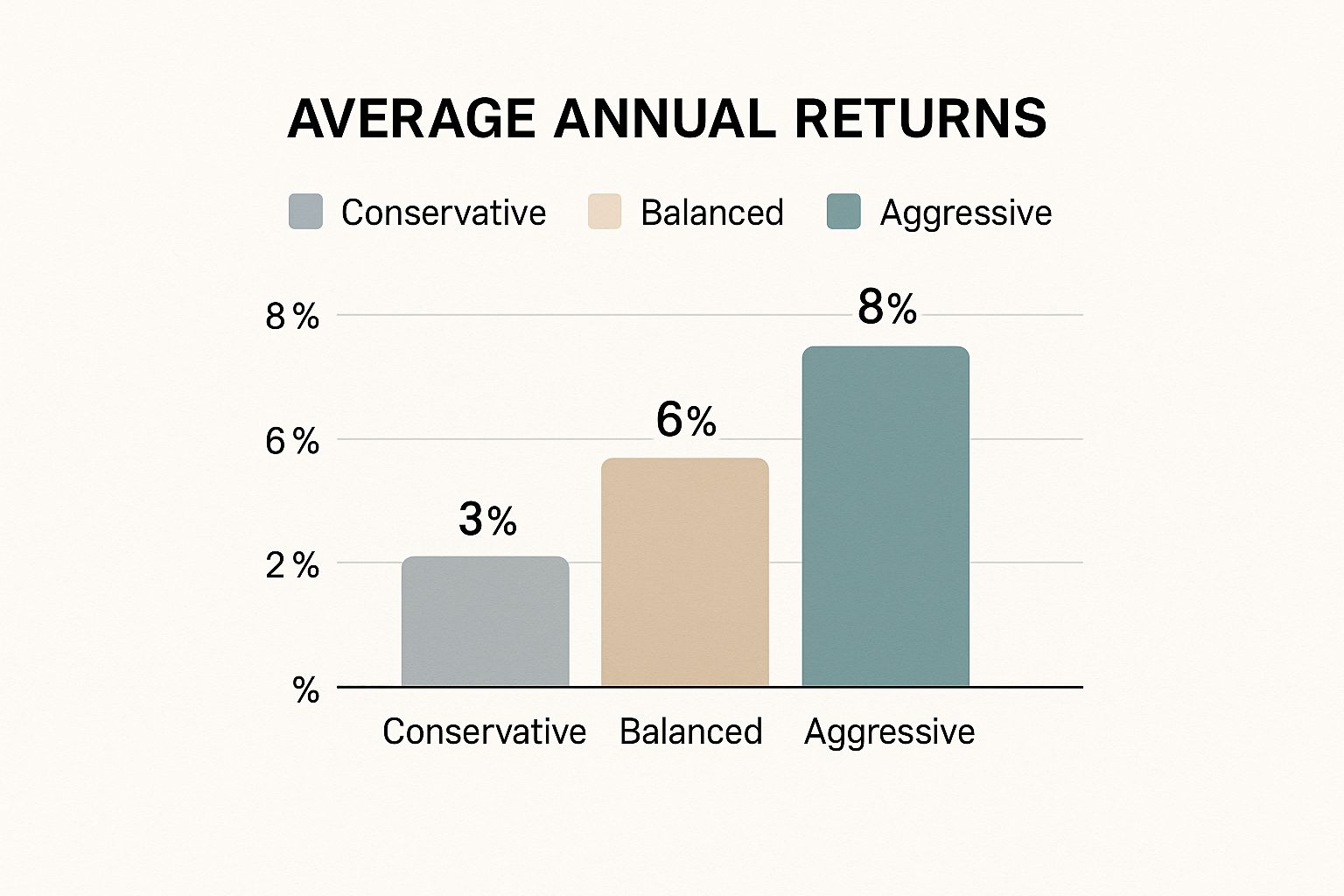
This chart shows how different investment strategies, including those with global stocks, can really affect your average annual returns over time.

Infographic about how to diversify investment portfolio

As you can see, the strategies that usually make more money often have a healthy amount of growth-focused investments – and international stocks are a key ingredient in that mix.

US Stocks vs International Stocks A Snapshot

It's not about choosing one over the other; it's about seeing how they work together. This quick comparison shows why having both U.S. and international stocks in your portfolio is a power move.

Factor U.S. Market Focus International Market Focus
Growth Sources Driven by U.S. shoppers, tech, and government decisions. Taps into different economies, growing middle classes, and global trade.
Major Companies Access to giants like Apple, Amazon, and Microsoft. Exposure to leaders like Toyota, Samsung, and Nestlé.
Currency Risk None (your investments are in USD). Affected by currency changes, which can be both a risk and an opportunity.
Economic Exposure Focused on the ups and downs of the U.S. economy. Spreads risk across many economies, so you're not dependent on just one.

Ultimately, combining both gives you a more balanced and strong portfolio, helping you smooth out the ride and capture growth no matter where in the world it’s happening.

Finding Your Personal Risk Comfort Zone

A person looking at a mountain range, symbolizing the challenge and reward of determining investment risk.

Before you start picking investments, you need to have an honest chat with yourself. The big question is: how much risk can you handle without freaking out? This is your risk tolerance, and it’s totally personal.

Figuring this out is less about math and more about knowing yourself. Are you a thrill-seeker who loves a roller coaster, or do you prefer a chill, predictable boat ride? There's no right or wrong answer. It's about building a portfolio that fits your personality.

What's Your Investing Style?

Your age and how long you plan to invest are probably the biggest clues to your risk level.

If you’re young, you have an incredible superpower: time. With decades ahead of you, you can afford to ride out the market’s ups and downs. A portfolio with a lot of stocks makes sense because the long-term growth potential is huge.

But if you're close to retirement, the game totally changes. Your main goal switches from growing your money to protecting what you’ve built. This is where the stability of bonds and other safer assets becomes your best friend.

"The individual investor should act consistently as an investor and not as a speculator." – Benjamin Graham

This piece of wisdom from the legendary investor Benjamin Graham is perfect. Your strategy shouldn't be about chasing quick wins; it should be a plan that lets you sleep at night.

To figure out your style, think about these three things:

  • Your Timeline: When will you need this money? A longer timeline usually means you can take on more risk.
  • Your Goals: Saving for a car in two years needs a much safer plan than saving for retirement in 40 years.
  • Your Gut Reaction: Seriously, imagine your portfolio value dropped by 20% in a month. If your first instinct is to panic and sell everything, you’re probably better off with a more careful strategy.

What Different Risk Profiles Look Like

So, what does this look like in real life? Let’s say you have $10,000 to invest. Here’s a simple breakdown of how you might split it up based on different comfort levels.

Portfolio Type Stock Allocation (Growth) Bond Allocation (Stability) Real Estate/Alternatives
Aggressive 70% ($7,000) 20% ($2,000) 10% ($1,000)
Moderate 50% ($5,000) 40% ($4,000) 10% ($1,000)
Conservative 30% ($3,000) 60% ($6,000) 10% ($1,000)

As you can see, the aggressive portfolio is all about growth, making it a great fit for someone young with a long career ahead of them, like the 27-year-old Zendaya.

On the other hand, the conservative mix focuses heavily on stability. This approach would be much better for someone like Harrison Ford, whose main goal now is to protect his wealth.

Your goal is to find your sweet spot – a diversification strategy that helps you reach your financial goals and feels right for you.

How to Keep Your Portfolio on Track

So, you’ve done the hard work and built your perfect investment mix. Let's say you chose a classic 60% stock and 40% bond split. Right now, it’s perfectly balanced for your goals and risk level.

But here’s the thing: your portfolio doesn't sit still.

Imagine your stocks have an amazing year and their value shoots up. That perfect 60/40 balance is suddenly more like 70/30. Without you doing anything, your portfolio has become riskier than you planned. This sneaky change is called portfolio drift.

The fix? It’s a simple but super important habit called rebalancing. This is just the process of hitting the reset button every so often to get your investments back to their original percentages. Think of it like a regular tune-up for your car – it keeps everything running smoothly and safely.

The Art of Buying Low and Selling High

Rebalancing might sound technical, but its logic is simple and smart. It automatically makes you follow the oldest rule in investing: buy low and sell high.

When you rebalance, you’re selling a bit of what has done well (selling high) and using that money to buy more of the assets that have fallen behind (buying low). It’s a disciplined strategy that removes emotion from your decisions. You aren't trying to guess what the market will do next; you're just sticking to your original plan.

"The stock market is a device for transferring money from the impatient to the patient." – Warren Buffett

Buffett's famous line is all about rebalancing. It’s a patient, disciplined approach that stops you from chasing hot stocks or panic-selling when things dip. It’s all about steady maintenance.

How Often Should You Rebalance?

Now, this doesn't mean you need to check your account every day. Not at all. For most investors, one of these two simple methods works perfectly:

  • Time-Based Rebalancing: This is the "set it and forget it" approach. Just pick a schedule – once a year, every six months, or every quarter – and make your adjustments then. For many people, once a year is perfect.
  • Threshold-Based Rebalancing: This method is a bit more hands-on. You set a specific trigger, say 5%. If any part of your portfolio drifts more than 5% from its target (like your 60% stock portion grows to 65%), that’s your signal to rebalance.

Sticking to a rebalancing plan is what really protects your portfolio. The data proves it. In 2022, the S&P 500 fell a painful 18.11%. But, historical analysis from firms like Envestnet shows that a well-diversified and regularly rebalanced portfolio could have softened that blow, limiting losses to around 11.80%. It’s a powerful reminder of how important this simple tune-up can be.

Once you have a strategy, it's a good idea to see how it might have done in the past. To learn more, check out our guide on how to backtest trading strategies. It can give you a better feel for how your chosen mix might act in different markets.

The Evolving World of Alternative Investments

A modern art installation with geometric shapes, symbolizing alternative and non-traditional investment assets.

We've covered the big players: stocks, bonds, and real estate. They’re the foundation of most solid investment plans. But what if you could invest in things that move to their own beat, often not caring what the stock market is doing?

Welcome to the fascinating world of alternative investments.

Think of these as the indie bands of the investment world. They don't always follow the mainstream charts. This huge category includes everything from fine art and rare sneakers to shares in private companies and even crypto like Bitcoin.

For a long time, this was a world only for the super-rich. You’d hear stories of billionaires like Steve Cohen building art collections worth over $1 billion, treating it as a serious financial asset. Meanwhile, the average person was stuck on the outside.

Making Alternatives Accessible

Thankfully, that’s all changed. A whole new wave of platforms has popped up, letting everyday investors buy a tiny piece of a famous painting, invest in a cool startup before it goes public, or add a slice of a private credit fund to their portfolio.

This isn’t about going all-in on crypto or trying to flip collectibles for a quick profit. It’s about strategically putting a small part of your portfolio – say, 5% to 10% – into assets that are uncorrelated with traditional markets. Simply put, when your stocks go down, these assets might go up, adding another layer of stability to your financial life.

"The key is to find things that have a low correlation so that you get the risk-reducing benefits of diversification." – Ray Dalio

Hedge fund legend Ray Dalio said it perfectly. The goal isn't just to add more stuff to your portfolio; it's to add different types of risk and potential reward.

A Modern Approach to Diversification

This shift hasn't been missed by the big investment firms. Major companies now see that alternatives like hedge funds, real assets, and even digital currencies are becoming essential tools for building strong portfolios. As BlackRock's latest investment insights point out, these assets are used to lower the risk of having all your eggs in one basket.

So, what are some of these cool, accessible alternatives? Here are a few to get you thinking:

  • Crowdfunded Real Estate: Instead of buying a whole property, you can invest in specific projects with other people.
  • Peer-to-Peer (P2P) Lending: You become the bank, lending money directly to people or small businesses for a set return.
  • Collectibles: New platforms let you buy shares in everything from rare comic books and classic cars to cases of fancy wine.

Dipping your toes into alternatives is a powerful way to learn how to diversify your investment portfolio for the modern world. By thinking beyond the classic stock-and-bond box, you can build a stronger, more resilient portfolio that’s ready for whatever the future holds.

Got a Few Lingering Questions About Diversification?

Even with a solid plan, it's normal to have a few questions. Let's clear up some of the most common ones I hear from new investors.

First off, people always ask, "How much money do I actually need to diversify?" The good news is, you don't need a huge pile of cash. Thanks to things like ETFs and fractional shares, you can own a piece of hundreds of companies with as little as $5. Seriously.

So, Can You Be Too Diversified?

Believe it or not, yes. There's a point where it stops helping, sometimes called "diworsification."

When you spread your money across too many different things – we're talking hundreds of stocks and funds – your portfolio starts to look like a watered-down version of the whole market. The great performance of your big winners gets canceled out by everything else, and just keeping track of it all becomes a nightmare.

The legendary investor Peter Lynch had a great take on this: “Owning stocks is like having children – don’t get involved with more than you can handle.”

For most of us, a well-built portfolio with around 10 to 15 different assets – like a few core ETFs mixed with some individual stocks or bonds you really believe in – is more than enough to get the job done.

Can You Diversify Within a Single Asset Class?

Totally. In fact, this is a smart move that adds another layer of safety.

Let's say you're excited about the tech industry. Instead of putting all your money into one company, you could spread it across different types of tech businesses.

  • The Giants: Think established players like Apple or Microsoft.
  • The High-Flyers: Look at faster-growing software or cybersecurity companies.
  • The "Picks and Shovels": Consider the companies that make the essential parts, like computer chips.

This same idea works for bonds and real estate, too. By owning different types of assets within the same category, you protect yourself if one specific corner of that market has a bad year. One bad apple won't spoil the whole bunch.


Here at financeillustrated.com, our goal is to make complex financial ideas simple and something you can actually use. If you’re ready to start building a stronger financial future, check out our free Trading School and try out our simulators to practice without any risk.

ETF vs Mutual Funds: A Simple Guide for Young Investors

ye

So, what's the real difference between ETFs and mutual funds? It really comes down to one simple thing: how you trade them. ETFs (Exchange-Traded Funds) trade all day on a stock exchange, just like a share of Tesla or Nike. On the other hand, you can only buy or sell mutual funds once per day, at a price that’s set after the market closes for the night.

Think of it this way: buying an ETF is like grabbing a snack from a vending machine-you can do it anytime you want, and the price is right there. A mutual fund is more like placing an order for pizza delivery-you place your order, but you have to wait until the end of the day for it to show up at a set price.

ETF vs Mutual Fund At a Glance

You're looking at these two popular ways to invest and wondering where to even begin. It might seem complicated, but the main idea for both is super simple. Both are basically "baskets" that hold a mix of investments, like stocks and bonds. This lets you own a bunch of different things at once without having to buy each one individually.

Instead of betting all your money on one company, you're buying a tiny piece of hundreds of them. The real debate isn't about which one holds "better" stuff; it's about how they work. And that small difference in how they operate changes everything, from how much they cost to how you can use them to build your wealth.

"The stock market is filled with individuals who know the price of everything, but the value of nothing." – Phillip Fisher

This classic quote reminds us to look beyond just the price tag. The way these funds are built can either help you stick to a smart plan or tempt you into making emotional mistakes. One gives you the power to react instantly to market drama, while the other encourages you to be more patient and chill.

Let's do a quick breakdown of the main differences.

Here is a quick summary of what sets ETFs and mutual funds apart.

Feature ETF (Exchange-Traded Fund) Mutual Fund
Trading Style Traded all day on a stock exchange, like a single stock. Priced and traded only once per day after the market closes.
Typical Minimum Investment As low as the price of one share (sometimes under $100). Often requires a higher starting amount (like $1,000 to $3,000).
Cost (Expense Ratio) Usually have lower fees, since many just copy the market. Can have higher fees, especially if a manager is trying to be a stock-picking genius.
Best For Hands-on investors who want flexibility and low costs. "Set-it-and-forget-it" investors who prefer to automate their savings.

This table gives you the bird's-eye view. Now, let's dive into what each of these points really means for your money.

Understanding the Building Blocks of Your Portfolio

Two people looking at charts on a computer screen, discussing investments

Before we get into the weeds, let's get a feel for what ETFs and mutual funds really are. I like to think of them as investment playlists. Instead of trying to find every hit song one-by-one, you just buy a ready-made "Greatest Hits" album.

With one click, you can own a slice of hundreds of companies. This instant diversification is their superpower. It's like not putting all your eggs in one basket. Did you know that even rap mogul Jay-Z is a big believer in diversification? He didn't just stick to music; he invested in art, tech companies like Uber, and real estate. Spreading your risk is a key to building lasting wealth.

Even the most famous investor in the world, Warren Buffett, champions this idea, although he says it with his classic humor:

"Diversification is protection against ignorance. It makes very little sense for those who know what they're doing." – Warren Buffett

For most of us who aren't spending all day analyzing stocks, that "protection" is a lifesaver. ETFs and mutual funds are your straightforward ticket to owning a piece of the entire market.

The New Kid on the Block: ETFs

ETFs, which stands for Exchange-Traded Funds, are the more modern of the two. They showed up in the 90s and have become super popular, especially with younger investors.

Their main feature? They trade on a stock exchange, just like a share of Apple or Amazon. This means you can buy and sell them anytime during the day when the market is open (usually 9:30 AM to 4:00 PM EST). Their prices go up and down in real-time, giving you a ton of control.

The Original Portfolio-in-a-Box: Mutual Funds

Mutual funds are the old-school champs, the original workhorses of investing. They've been around for almost 100 years and became the foundation of retirement plans like 401(k)s. For a long time, they were the main way for regular people to invest for the future.

Here’s the main difference: mutual funds only trade once per day. All the buy and sell orders get bundled together and happen at a single price that's calculated after the market closes. This price is called the Net Asset Value (NAV). This system naturally makes you a more patient, long-term investor, since you can't panic-sell the second the market gets a little shaky.

The Trillion-Dollar Shift in How We Invest

The amount of money pouring into these funds is mind-blowing, and it tells a really interesting story. More and more, people are choosing simple, "passive" funds that just copy the market instead of "active" funds that try (and often fail) to be stock-picking heroes.

Just look at the numbers. The combined cash in U.S. ETFs and mutual funds has ballooned to a massive $34.87 trillion. Of that, $18.00 trillion is in simple index funds that just try to match the market. You can see the details in this report on combined asset flows.

This shows just how much people trust these tools to build wealth. Both are awesome, but the way they work creates different experiences and makes them better for different goals.

How Trading Fees and Taxes Impact Your Money

When you first start investing, it’s easy to get excited about finding the "perfect" stock. But the real secret to getting rich isn't just picking winners-it's about keeping what you earn. Fees and taxes are like silent partners that can take a surprisingly big bite out of your money over time.

Think of it like a subscription service you forgot about. A few bucks a month doesn't seem like much, but over years, it adds up to a ton of wasted money. Investment costs work the same way. A tiny fee can cost you thousands of dollars that could have been growing for you.

This is where the differences between ETFs and mutual funds really start to hit your wallet. Their unique structures lead to very different costs and taxes, which directly affects how much money you end up with. Let's see how this works in the real world.

Trading Flexibility and Associated Costs

One of the first things you'll notice is how you buy and sell these funds. ETFs trade just like stocks-you can buy or sell them anytime the market is open, watching prices change by the second. This gives you laser-point control.

Mutual funds are different. They only trade once per day, after the market closes, at a calculated price called the Net Asset Value (NAV). All the buy and sell orders from that day get processed at that one price. It’s a small detail with big effects on your investing style.

  • ETFs offer instant access: If you see the market dip and want to buy, or need to sell your shares fast, you can do it right away. This flexibility is a huge plus for more active investors.
  • Mutual funds build discipline: The once-a-day pricing stops you from making rash decisions based on market drama. For many, this forced patience is a feature, not a bug.

This all-day trading for ETFs does come with a small catch, though. You'll probably run into the bid-ask spread-a tiny price difference between what buyers are willing to pay and what sellers are willing to accept. For popular ETFs, it's often just a penny, but it's still a small cost to be aware of.

The Power of Low Fees

The biggest and most important cost is almost always the expense ratio. This is an annual fee, charged as a percentage of your investment, that covers the fund's operating costs. And this is where ETFs usually win.

ETFs, especially simple "passive" ones that just track an index like the S&P 500, are famous for their super-low expense ratios. On the other hand, many mutual funds, especially those with managers actively trying to beat the market, charge a lot more for that service.

"The miracle of compounding returns is overwhelmed by the tyranny of compounding costs." – John C. Bogle, Founder of Vanguard

That quote from the guy who basically invented index investing says it all. A small difference in fees might not seem like a big deal in one year, but over decades, it can have a huge impact on your final account balance. Less money paid in fees means more money is left working for you.

This chart makes the point crystal clear, showing how different the average costs and starting amounts can be.

Infographic comparing average expense ratios and minimum investments for ETFs versus mutual funds.

As you can see, ETFs usually make it easier and cheaper to get started, both in how much you need upfront and how much it costs you each year.

The Hidden Advantage of Tax Efficiency

Here’s a secret weapon that many new investors miss: taxes. When a fund manager sells a stock inside the fund for a profit, that profit-a capital gain-gets passed on to you. And guess what? You owe taxes on it, even if you never sold a single share yourself.

This is where ETFs have a superpower. Because of the clever way they are built, ETFs are masters at avoiding these taxable events. They can swap stocks in and out without "selling" them in a way that creates a tax bill for you.

The numbers are pretty wild. In 2024, only 5.08% of stock ETFs had to pay out taxable capital gains. Compare that to a whopping 64.82% of stock mutual funds. With an ETF, you usually only pay capital gains tax when you decide to sell, giving you way more control. To make sure you're being as smart as possible with your money, it's always good to stay informed about investment tax. Over a lifetime, this tax advantage can save you a fortune.

Active vs. Passive: The Real Battle for Your Returns

A chess board with pieces set up, symbolizing strategic investment decisions.

When you get right down to it, the "ETF vs. mutual fund" debate is really about a much bigger fight: active versus passive investing. This is the real tug-of-war for your money, and figuring out which team you're on is key to making smart choices.

Think of it like this. An active manager is like a celebrity chef trying to invent a new, mind-blowing dish. A passive manager is like a chef who perfectly follows a classic, beloved recipe every single time.

Most ETFs are firmly on the passive team. They don’t try to be heroes. Their one job is to perfectly copy a market index, like the famous S&P 500. If the S&P 500 goes up 10%, the ETF aims to give you a 10% return (minus a tiny fee).

In the other corner, many mutual funds are active. They’re run by professional managers who hand-pick investments they think will crush the market. They're trying to be better than average, and you pay them a higher fee for that effort.

The Surprising Truth About Beating the Market

So, who wins more often? The highly-paid expert trying to find the next big thing, or the simple fund that just copies everyone else? The answer might shock you. Over and over, studies show the same thing: the vast majority of active fund managers fail to beat their simple, passive competition over the long run.

It feels weird, right? You'd think paying more for an expert should get you better results, but in investing, it usually doesn't. It’s like paying extra for a "gourmet" burger only to find out the classic one from the diner next door tastes better and costs half as much.

This simple truth is what made investing legends like John C. Bogle, the founder of Vanguard, so famous. He built a massive company on what was, at the time, a crazy idea.

"Don't look for the needle in the haystack. Just buy the haystack." – John C. Bogle

Bogle's idea was beautiful in its simplicity: instead of trying (and probably failing) to pick the few winning stocks, just own a tiny piece of all the stocks. That way, you're guaranteed to get your fair share of the market's overall growth.

Why Being Average Is a Winning Strategy

Trying to be "average" by just matching the market’s return might sound boring, but it's one of the most powerful ways to build wealth. It all comes down to two big things: lower costs and human mistakes.

  1. Lower Costs: Active funds charge higher fees to pay their managers, research teams, and for all the trading they do. These costs act like a constant anchor, dragging down your returns.
  2. Human Error: Even the smartest people on Wall Street can't predict the future. They can get emotional, chase hype, or just be wrong. A passive index fund takes all that human guesswork out of the picture.

It’s a bit like driving in traffic. You could be the hero, constantly switching lanes trying to get ahead. Or you could just pick a lane, set your cruise control, and enjoy a much smoother, less stressful-and often faster-trip to your destination.

Of course, just picking an ETF doesn't automatically mean you'll win. Fun fact: some research has found that about 60% of ETFs actually performed worse than the overall market, which is surprisingly close to their active mutual fund cousins. You can find more insights about these ETF performance findings.

This just shows that the secret isn't just choosing "ETF" over "mutual fund." The key is picking the right kind of fund-usually one that tracks a big, diverse, low-cost index.

Choosing the Right Fund for Your Investing Style

A person sitting at a desk with a laptop, looking at charts and graphs, making an investment decision.

Okay, we've gone through all the techy differences between ETFs and mutual funds. Now for the part that really matters: figuring out which one is right for you. The truth is, there's no single "best" fund. It's about finding the right tool for your goals and, just as important, your personality.

Think of it like buying a car. A sports car is fun and gives you total control, but a simple sedan is perfect for getting you where you need to go without any drama. Neither is better; they just fit different people with different needs.

Let's look at how this plays out for different types of people. See which one sounds most like you.

The Hands-On Trader

Do you check stock prices on your phone all the time? Does the idea of buying when the market dips sound exciting? If you like being in the driver's seat of your money, ETFs are probably your new best friend.

Since ETFs trade like stocks, they give you amazing flexibility. You can buy shares at 10 AM and sell them by 2 PM if you want. This kind of real-time control is perfect for active investors who want to manage their portfolios closely and jump on opportunities as they happen.

  • You want control: ETFs let you use more advanced trading moves, like setting specific prices where you want to buy or sell.
  • You're a strategic thinker: Maybe you want to invest in a specific trend, like robotics or clean energy. The ETF world is full of these kinds of specialized funds.

This approach takes more attention, for sure. But for many people, being that involved is half the fun.

The Automatic Saver

On the other hand, maybe looking at market charts makes your eyes glaze over. You just want to build wealth slowly and steadily, like a subscription service for your future. If you're a "set it and forget it" kind of person, mutual funds were made for you.

Their best feature is automation. You can set it up so that $50 or $100 is automatically moved from your bank account and invested into your fund every payday. This simple but powerful trick is called dollar-cost averaging, and it's an amazing way to build wealth without any stress or effort.

"The individual investor should act consistently as an investor and not as a speculator." – Benjamin Graham

Warren Buffett's teacher, Benjamin Graham, knew that the slow-and-steady tortoise usually beats the hare in the long run. Mutual funds make it super easy to put that wisdom into action. It’s the perfect engine for a retirement account or any long-term goal where being consistent is more important than being a genius.

Real-World Scenarios: Which One Are You?

To make it even clearer, let's look at a couple of common situations.

Scenario 1: The New Investor with $50

You just got paid from your part-time job and have an extra $50 you want to invest. You're excited to get started right now.

  • Your Best Bet: ETFs. You can easily buy a single share of an ETF that tracks the whole S&P 500, often for much less than $500. Even better, most brokers now offer fractional shares, so you can start with as little as $1. In contrast, many mutual funds require you to start with $1,000 or more, which can be a huge barrier.

Scenario 2: The Future Retiree

You're opening your first retirement account, like a Roth IRA, and want to contribute a little bit from every paycheck for the next 40 years.

  • Your Best Bet: Mutual Funds. Here, the power of automation is a total game-changer. By setting up a recurring investment into a low-cost index mutual fund, you make sure you're always building that nest egg without even thinking about it. It takes the emotion and effort out of the equation-the perfect strategy for long-term saving.

How to Start Investing in Just a Few Steps

Alright, knowing the difference between ETFs and mutual funds is a great start, but knowledge only turns into wealth when you take action. It’s time to put your money to work.

Let’s walk through a simple roadmap to get you from square one to making your first investment.

Honestly, the whole idea of "investing" can sound kind of formal and scary. You might picture old guys in suits on Wall Street, but today it's so much simpler. As the famous author Morgan Housel says, “The most important thing you can do is increase the amount of time you’re investing for.” The sooner you start, the more time your money has to grow on its own.

Your Quick Decision Checklist

To figure out where to start, just answer these three quick questions. There are no right or wrong answers-it’s all about what fits your life.

  • How much cash do you have to start? If you’re starting with a smaller amount, like under a few hundred dollars, ETFs are your best friend. Many brokers let you buy fractional shares, so you can start with just a few dollars.
  • How hands-on do you want to be? If you like the idea of checking on your investments and want the freedom to trade whenever you want, ETFs give you that flexibility. If you'd rather "set it and forget it," mutual funds are perfect for setting up automatic, scheduled investments.
  • How important are costs to you? While you can find cheap options for both, ETFs generally have lower average fees. Keeping costs low is one of the most powerful secrets to long-term success.

Making Your First Investment

Ready to do it? It’s genuinely easier than you think. You can be up and running in less time than it takes to watch an episode of your favorite show.

  1. Choose Your Brokerage: A brokerage is just the company that lets you buy and sell investments. Great, easy-to-use options for beginners include Fidelity, Schwab, and Robinhood. They all make opening an account online super fast and simple.
  2. Fund Your Account: Next, just link your bank account and transfer whatever amount you want to start with. It can be as little as $5 or $10.
  3. Find Your Fund and Buy: Use the search bar on the app to look up a fund. A great starting point for most new investors is a broad market index fund, like one that tracks the S&P 500. Just type in the dollar amount you want to invest, click "buy," and that's it-congratulations, you're officially an investor!

The single most important step is just getting started. If you want a bit more guidance, our free online stock trading course breaks down the basics even more.

As the old saying goes, "The best time to plant a tree was 20 years ago. The second best time is now."

Your Top Questions About ETFs and Mutual Funds, Answered

Let's be real, the world of investing is full of confusing words. It's easy to get lost. So, let's cut through the noise and answer some of the most common questions people have when comparing ETFs vs. mutual funds.

Can I Lose All My Money in a Fund?

This is usually the first question on everyone's mind, and it's a smart one. While every investment has some risk, the chances of losing all your money in a diversified fund that owns hundreds of stocks is incredibly small.

Think about it: for an S&P 500 index fund to go to zero, all 500 of the biggest companies in the U.S.-like Apple, Microsoft, and Amazon-would have to go bankrupt at the same time. Not very likely, right? The real risk isn't losing everything, but watching your account go down during a market dip. That's why thinking long-term is so important-it gives your investments time to recover and grow.

Which Is Better for a Roth IRA?

Great question! Both ETFs and mutual funds work perfectly inside a Roth IRA. A Roth account already gives you amazing tax breaks-your money grows tax-free and you can take it out tax-free in retirement. Because of that, the famous tax-efficiency of ETFs isn't as big of a deal here.

The best choice really comes down to your personality:

  • Hands-Off & Automated: If you love the "set it and forget it" idea, a low-cost mutual fund is a perfect choice. You can easily set up automatic investments from every paycheck.
  • Hands-On & Flexible: If you want more control, want to trade during the day, or want to invest in specific areas like AI or clean energy, ETFs give you that freedom.

"The stock market is a device for transferring money from the impatient to the patient." – Warren Buffett

This classic line from Warren Buffett is especially true for retirement saving. The goal is to pick the option that makes it easiest for you to stay patient and stick with the plan for the long run.

Do I Need a Financial Advisor to Start?

Nope, you definitely don't need a pro to get started. Thanks to modern apps and online brokerages, opening an account and buying your first fund is easier than ever. These platforms are designed for beginners and are filled with tools to help you learn as you go.

That said, if your finances get more complicated later on or you just want a second opinion from an expert, talking to a fee-only advisor is never a bad idea. For some great free advice, you can also check out some of the best investing podcasts to listen to for market news on the go. The most important thing is to just get started.


At financeillustrated.com, our mission is to make investing clear and approachable. Our free trading school and interactive simulators are here to help you build real skills and confidence before you invest a single dollar. Explore our resources today!

How to Choose Dividend Stocks: A Beginner’s Guide

ye

So, you want to get into dividend investing? Smart move. Think of it like this: you find solid, stable companies that share their profits with you, their part-owner. But it's not just about chasing the biggest paycheck. The real skill is learning to spot companies that can reliably pay and grow those payouts over time. It’s about looking at the big picture of a company's financial health, not just a flashy number.

What Are Dividend Stocks And Why They Matter

Ever wonder how people make money from stocks without selling them? Welcome to the world of dividend stocks.

Imagine a dividend as a cash "thank you" note that a company sends you just for being a shareholder. When a business like Coca-Cola or Apple makes a profit, they can either pour all that cash back into growing the company or share a slice of the pie with their owners. That slice is the dividend. For you, this can become a steady stream of income, like getting paid for doing nothing.

The Real Power Behind Dividends

Don't mistake dividends for just a small bonus. They are a massive engine for building wealth. History makes this crystal clear. Since 1926, dividends have been responsible for about 31% of the S&P 500's total return. That means almost a third of the stock market's long-term gains came from these simple cash payments.

In really rocky decades, like the 1930s, that income was an even bigger deal, providing a much-needed cushion for investors. If you want to dive deeper, S&P Global has some fascinating research on the historical power of dividends.

This power gets supercharged by something Albert Einstein supposedly called the "eighth wonder of the world": compounding. This is where your money starts making its own money. Instead of pocketing your dividend cash, you can reinvest it to buy more shares. Those new shares then earn their own dividends, which you can use to buy even more shares. It’s a powerful snowball effect that just keeps getting bigger.

"Compound interest is the eighth wonder of the world. He who understands it, earns it… he who doesn't… pays it." – A quote often attributed to Albert Einstein

This isn't some complex strategy for Wall Street pros. It's a simple, accessible way for anyone to build serious wealth over time, even if you're just starting out.

Key Benefits of Dividend Investing at a Glance

Here’s a quick rundown of why focusing on dividend stocks can be a game-changer for your financial future.

Benefit Why It Matters for You
Passive Income Stream Get paid regular cash just for owning a piece of a company. Use it for pizza money or to buy more stock.
Indicator of Company Health A consistent, growing dividend is a strong signal of a stable, well-managed business that's confident about its future.
Reduces Portfolio Volatility That steady dividend income can help soften the blow when the stock market gets wild and prices are down.
Fuels Compounding Reinvesting dividends is the secret sauce to making your portfolio grow faster without putting in more of your own cash.

These benefits work together to create a strong and resilient investment strategy.

Why You Should Care About Dividend Stocks

For young investors especially, getting familiar with dividend stocks now can set you up for huge financial wins down the road. They offer a powerful combination of perks that are perfect for building a solid foundation.

  • Creates Passive Income: Dividends give you a regular cash flow. Think of it as getting paid just for owning an asset. You can use it to cover bills or, even better, reinvest it to make your portfolio grow faster.
  • Shows Company Health: A business that consistently pays and, ideally, increases its dividend is usually on solid financial ground. It’s a huge green flag that the management team is disciplined and optimistic about the future.
  • Reduces Risk: The income you get from dividends can act as a buffer for your portfolio's value, especially during market downturns when stock prices might be falling.
  • Powers Compounding Growth: As we mentioned, reinvesting your dividends is one of the most effective ways to accelerate wealth-building without having to constantly find new money to invest.

Learning to pick the right dividend stocks is a skill that can literally pay off for decades, helping you build a financial safety net and hit your long-term goals.

The Numbers That Really Matter for Dividend Stocks

Jumping into stock analysis can feel like learning a new language, full of jargon and confusing numbers. But here's the good news: you only need to master a few key stats to get a real feel for a company's health.

Let's break down the most important numbers that tell the true story behind a great dividend stock.

Dividend Yield: The 'Right Now' Number

The first thing everyone notices is the dividend yield. It’s a simple percentage that answers the question: "How much cash will I get back this year for every dollar I invest?" If a stock costs $100 and pays out $3 in dividends annually, its yield is a simple 3%.

A high yield can be tempting, but be careful. A crazy-high number is often a warning sign-what investors call a "dividend trap." It can mean the stock price has fallen hard because the market thinks the company is in trouble and might have to cut that dividend soon.

Chasing a big yield without looking under the hood is one of the fastest ways to lose money.

Payout Ratio: The 'Can They Afford It?' Test

This brings us to the payout ratio, which is my go-to reality check. This number tells you what percentage of a company's profits is being paid out to shareholders as dividends. It’s like checking your friend's bank account before they offer to buy everyone dinner-you want to know they can actually afford it.

A very low ratio, say under 20%, means the company is reinvesting heavily in itself, which is often a good sign for future growth. On the flip side, a ratio creeping over 80% could be a red flag. It suggests the company is stretching its finances, leaving very little room for error if profits drop.

A healthy payout ratio, typically between 30% and 60% for most established companies, strikes the perfect balance. It shows a real commitment to rewarding shareholders while keeping plenty of cash on hand to grow the business and handle tough times.

Dividend Growth Rate: The 'Will I Get a Raise?' Clue

Last but not least is the dividend growth rate. For long-term investors, this is arguably the most powerful number of all. It shows the year-over-year increase in a company's dividend payments. Think of it like this: a company that consistently gives its shareholders a "raise" is showing a huge amount of confidence in its future.

This is the secret sauce for building wealth over time. It's the difference between a static income and one that grows, compounding your returns year after year. To get a full picture of a company's financial strength, it helps to know how to analyze financial statements like a pro.

History proves the power of this approach. Take the S&P 500 Dividend Aristocrats-an exclusive club of companies that have increased their dividends for at least 25 consecutive years. These stocks have historically delivered higher average yields (around 2.5%) than the broader S&P 500 (around 1.8%). This isn't just about income; it's about quality and consistency.

Essential Dividend Metrics Explained

Use this quick reference guide to understand the most important financial numbers for any dividend stock.

Metric What It Tells You Healthy Range
Dividend Yield The annual dividend per share divided by the stock's current price. It's your immediate return. Varies by industry, but be wary of yields above 6-7% as they can signal high risk.
Payout Ratio The percentage of company profits paid out as dividends. It measures sustainability. 30% to 60% is a good sweet spot for stable companies. REITs and MLPs are exceptions.
Dividend Growth Rate The annualized percentage of growth in a company's dividend over time. It signals confidence. Look for consistent growth of 5% or more annually, ideally outpacing inflation.

Wrapping your head around these three numbers will put you miles ahead of the average investor. They provide a simple yet powerful framework for finding quality companies that don't just pay you today, but are likely to pay you even more tomorrow.

Look Beyond the High Yield for Truly Great Companies

That juicy, high dividend yield might catch your eye, but be careful. It can sometimes be the investing equivalent of fool's gold. I’ve seen it happen too many times: a struggling company dangles a big payout right before its stock price tanks. That’s a classic "dividend trap," and it’s a painful lesson to learn.

To really get good at picking dividend stocks, you have to become a bit of a financial detective.

A person using a magnifying glass to inspect a line graph going upwards

This means looking past that shiny yield number and digging for signs of a truly healthy, durable business. You're not just looking for a quick score; you're trying to find a reliable, all-star player for your long-term team.

Find Companies With a Strong "Moat"

Warren Buffett, one of the greatest investors of all time, has a brilliant way of thinking about this. He looks for companies with a strong "economic moat"-a powerful competitive advantage that protects them from rivals. It’s like owning a castle surrounded by a deep, wide moat filled with crocodiles.

"The key to investing is not assessing how much an industry is going to affect society, or how much it will grow, but rather determining the competitive advantage of any given company and, above all, the durability of that advantage." – Warren Buffett

So, what makes a company almost untouchable? It usually comes down to a few things:

  • Brand Power: Think about why people willingly pay a premium for Nike shoes or an Apple iPhone. It’s not just the product; it’s the brand. That intense customer loyalty is a huge moat.
  • Network Effects: Platforms like Instagram or TikTok become more valuable as more people join. Once a network reaches a certain size, it’s incredibly difficult for a new competitor to lure users away. Everyone is already in one place.
  • Switching Costs: If your entire business runs on Microsoft software, the thought of switching to a new system is probably a massive, expensive headache. That difficulty in leaving is a powerful, protective moat.

When a company has a wide moat, it can defend its profits for years, which is exactly what you want for a steady stream of dividend income. It gives the business real pricing power and a foundation for long-term stability.

Check for Healthy Finances

A company's moat protects it from the outside world, but you also need to pop the hood and make sure the engine is running smoothly. A couple of quick checks can tell you a lot about a company's financial strength and its ability to keep those dividend checks coming.

First, take a look at its profitability. Is the company consistently making money? Better yet, are its profits growing over time? A quick glance at a company's revenue and net income trends over the past five years on a site like Yahoo Finance can be incredibly revealing. You're looking for a steady upward climb, not a wild rollercoaster ride.

Second, check its debt levels. A mountain of debt can sink even the most promising businesses when things get tough. A handy metric here is the debt-to-equity ratio. While what's "good" can vary by industry, a ratio below 1.0 is generally a sign of a very healthy balance sheet. High debt is a red flag because it can put dividend payments on the chopping block if the company hits a rough patch.

How to Find Great Dividend Stocks for Free

Alright, enough with the theory. Let's get our hands dirty and figure out how you can actually find these gems without getting lost in thousands of stock tickers. The best tool for the job is a stock screener, and thankfully, you can find some excellent ones for free.

Think of it like using a filter on an online store. You wouldn't scroll through every single shirt; you'd narrow it down by size, color, and price. A stock screener does the same thing for the stock market, letting you zero in on companies that match your exact criteria.

This process essentially takes the entire universe of stocks and funnels it down to a manageable list of candidates worth a closer look.

Infographic about how to choose dividend stocks

It’s all about applying smart filters to sift out the junk and focus on quality and safety.

Using a Free Stock Screener

Fantastic, free screeners are available on websites like Yahoo Finance and Finviz. These tools are your best friend because they let you plug in the exact metrics we've been talking about, instantly creating a shortlist of potential winners. It's a massive time-saver.

If you're looking for a starting point, checking out curated lists of the best dividend stocks to buy can also give you a feel for what seasoned investors are keeping an eye on.

Let's walk through setting up a simple screen on Finviz right now. We'll tell the tool exactly what we're looking for, using the healthy numbers we've already covered. This is your first real step toward actively picking great dividend stocks.

Here are the filters I'd start with to hunt for solid companies:

  • Dividend Yield: I'd set this to "Over 2%." This immediately gets rid of companies paying next to nothing, but it also helps us avoid those suspiciously high, often unsustainable yields.
  • Payout Ratio: Let's go with "Under 60%." This is a crucial safety check. It tells us the company isn't stretching its finances too thin just to pay us, leaving a healthy cushion.
  • Debt/Equity: I always look for "Under 1.0." This filter helps weed out businesses that are buried under a mountain of debt, which can put a dividend at risk during tough times.

Just by plugging in these three simple rules, you can shrink a list of over 8,000 stocks to a much more focused, manageable handful. That’s the power of a good screener.

My Two Cents: Don't feel like you have to stop with just these three filters. Once you get the hang of it, start layering in others. You could add a filter for positive dividend growth over the past five years or screen for a minimum company size (market cap) if you prefer to stick with bigger, more established players.

From a List to Your First Pick

Once the screener works its magic, you'll have a list of companies that made the cut. This is where the real fun-the detective work-begins.

Now it's time to dig into each company one by one. Check out their website. What do they actually do? Does their business model make sense to you? This is also where you should bring back that "moat" concept we talked about earlier. Does this company have a real, durable advantage over its competitors?

Ask yourself: "Is this a business I truly understand and would be happy to own for the long haul?"

If the answer is a big "yes," then you might have just found a fantastic addition to your dividend portfolio. This simple, repeatable process is exactly how you can consistently find quality investments without paying for expensive software.

Your Wealth-Building Superpower: Reinvesting Dividends

Ready for the secret sauce of dividend investing? It’s a beautifully simple idea called dividend reinvestment, and it’s the key to putting your portfolio’s growth on autopilot.

Instead of taking your dividend payments as cash, you can tell your brokerage to automatically buy more shares of the very stock that paid you. Think of it this way: even business icons like Shaquille O'Neal love businesses that generate steady cash flow. Reinvesting is how you turn that flow into a flood.

This simple move creates an incredible snowball effect that gathers serious momentum over time.

The Magic of Compounding in Action

The process itself is wonderfully simple. Your original shares earn dividends. Those dividends then buy you more shares (often just fractions of a share, which is perfect). The next time the company pays a dividend, you get paid on your original shares plus the new ones you just bought.

This cycle repeats itself over and over. Your growing number of shares earns more dividends, which buys even more shares, which then earns even more dividends. It's a self-feeding loop that can dramatically speed up your long-term returns.

"The first rule of compounding is to never interrupt it unnecessarily." – Charlie Munger

Don't mistake this for some small trick to squeeze out a few extra bucks. Over decades, this one strategy is powerful enough to turn a modest, regular investment into a serious pile of cash. It’s about as close as you can get to a wealth-building cheat code.

A Tale of Two Investments

To see just how powerful this is, let's run through a quick story. Imagine two friends, Alex and Ben, each invest $10,000 into the same dividend stock. This stock has a solid 4% yield, and let's say its price grows by a steady 5% each year.

  • Ben takes the cash dividend every quarter and spends it. After 20 years, his initial investment grows to a respectable $26,533. Not bad.
  • Alex reinvests every single dividend. Her same $10,000 investment explodes to over $58,155 in the same 20-year period.

That's more than double Ben's result, all from flipping a single switch in her brokerage account. This isn't just a made-up story, either. Real-world data shows that dividend reinvestment is an absolute game-changer. For example, an S&P 500 tracking fund that automatically reinvested dividends grew an initial investment by an incredible 1,856% in inflation-adjusted terms from 1986 to 2024. You can find more data on the power of reinvesting at totalrealreturns.com.

Setting this up is usually super easy. Most brokers call it a Dividend Reinvestment Plan, or DRIP, and turning it on is often as simple as checking a box in your account settings. It’s a classic "set it and forget it" move that lets the power of compounding do all the heavy lifting for you.

A Few Common Pitfalls to Sidestep

Look, everyone messes up when they're starting out. Investing is no different. But if you know where the common traps are, you can often step right over them. Let's talk about a few classic rookie mistakes in dividend investing so you can avoid them from day one.

The Siren Song of High Yields

One of the biggest traps new investors fall into is yield chasing. It's easy to get starry-eyed when you see a stock with a 10% dividend yield. It sounds incredible, right? But you have to ask why the yield is that high.

More often than not, a sky-high yield is a massive red flag. It usually means the company is in trouble and its stock price has crashed, which artificially inflates the yield number. It's a classic "yield trap" that often ends with a painful dividend cut, leaving you with a loss.

All Your Eggs, One Fragile Basket

Another mistake is forgetting to diversify. I get it. You find one company you absolutely love, you've done the research, and you want to go all-in. But even the best-run companies can hit unexpected problems.

"The only investors who shouldn't diversify are those who are right 100% of the time." – John Templeton

A good rule of thumb is to spread your money across 10-20 different stocks. Make sure they're in different industries, too-think tech, healthcare, consumer goods, and utilities. That way, if one part of the market is having a bad year, your other investments can help cushion the blow.

Selling in a Panic

This last one is probably the most destructive mistake you can make: panicking when the market dips. Your gut reaction when you see your portfolio value drop is to sell everything to stop the pain. It’s a totally human feeling.

But the most successful investors have learned to fight that urge. They see market downturns not as a crisis, but as a sale. It’s your chance to buy more shares of fantastic companies at a bargain price. Sticking to your plan during the tough times is what separates the pros from the amateurs.

Got Questions About Dividend Investing? Let's Get Them Answered

It's totally normal to still have a few questions. Honestly, the best investors are the ones who never stop asking. Let's tackle some of the most common questions I hear from people just starting out with dividend stocks.

How Many Dividend Stocks Is The "Right" Number?

There’s no magic number here, but a good target to aim for is somewhere between 10 and 20 stocks.

The real key, though, isn't the number itself-it's diversification. You want those stocks spread across different parts of the economy, like tech, healthcare, and consumer goods. Think of it as a safety net; if one industry hits a rough patch, your entire portfolio doesn't go down with it. My advice? Start small with one or two companies you've really researched, and then gradually build from there.

Will I Owe Taxes On My Dividends?

Yep, you almost certainly will. The government views dividends as taxable income, and the rate you pay depends on your income and the type of dividend.

But here's a pro tip that can make a massive difference over time: use a tax-advantaged account. If you hold your dividend stocks in an account like a Roth IRA, those payouts can grow 100% tax-free. It's one of the most powerful ways to supercharge your long-term returns.

A huge part of investing is simply knowing the rules of the game. If you want to build a rock-solid foundation, this free online stock trading course does a great job covering these essentials.

Should I Focus on Dividend Yield or Dividend Growth?

Ah, the classic debate. It really comes down to what you're trying to achieve.

Dividend yield is all about the "right now"-it's a snapshot of the cash return you're getting today. Dividend growth, on the other hand, is about the future. It shows you the company's track record of increasing its payout to shareholders year after year.

From my experience, a company with a lower yield but a consistent history of raising its dividend is often a much better long-term bet. A high-yield stock might look tempting, but if that payout isn't growing, your income stream is stagnant. Growth is the engine that will truly power your wealth for years to come.


Ready to put your knowledge into practice? Finance Illustrated offers a suite of free tools, simulators, and bite-sized lessons designed to make you a smarter, more confident investor. Explore our resources and start your journey at https://financeillustrated.com.

A Smart Dividend Investing Strategy for Beginners

ye

A dividend investing strategy is all about buying stocks in companies that share their profits with you, the shareholder. These regular payouts can create a steady stream of passive income.

It's a simple way to build wealth: you collect regular cash payments from your stocks and then use that money to buy even more shares. Before you know it, your investments start working for you, creating a self-sustaining cycle of growth.

Why Dividends Are Your Secret Weapon for Wealth

Imagine getting paid just for owning a small piece of a company you believe in. That's the simple, powerful idea behind dividend investing. It's not some complex scheme reserved for Wall Street pros; it’s a practical way for anyone, even someone just starting at 16 or 18, to build real, long-term wealth.

Think of it like this: you own a tiny apple orchard. Each tree (a stock) not only grows more valuable over time, but it also produces apples (dividends) every season. You can either enjoy the apples now or plant their seeds to grow more trees. A smart dividend strategy is all about planting those seeds.

The Magic of Compounding

When you reinvest those dividend payments, you kick off a powerful snowball effect. This is the magic of compounding, which Albert Einstein supposedly called the "eighth wonder of the world." Your initial investment pays you, and then those payments start earning money of their own.

Warren Buffett is a master of this. His company, Berkshire Hathaway, pulls in billions in dividends each year from stocks like Coca-Cola and Apple. He then puts that cash right back to work, buying more assets. It's a virtuous cycle of growth that can turn a modest starting sum into a fortune over time.

"Compound interest is the eighth wonder of the world. He who understands it, earns it… he who doesn't… pays it." – Often attributed to Albert Einstein

This infographic breaks down how you, as an investor, can benefit from holding stocks and pocketing those sweet dividend payments.

Infographic about dividend investing strategy

As you can see, the core idea is simple: owning shares can generate a direct cash return, fueling your portfolio's growth.

More Than Just Pocket Money

Dividends aren't just a small bonus; they are a massive part of what makes the stock market so powerful. In fact, between 1987 and 2023, reinvested dividends made up about 55% of the total return from U.S. stocks. The other 45% came from stock prices going up.

Let that sink in. If you had ignored dividends, you would have missed out on more than half of the market's historical gains. You can find more insights about the power of dividends on the J.P. Morgan Asset Management site.

By focusing on companies that share their profits, you're not just a speculator hoping a stock price goes up – you're a part-owner in a business. This mindset shift encourages patience, helps you ride out the inevitable market swings, and turns the dream of passive income into a tangible reality, even if you're just starting small.

How to Find Great Dividend Stocks

A magnifying glass hovering over a stock chart, highlighting a dividend payment icon.

Alright, this is where the fun begins – the treasure hunt for solid dividend-paying companies. But before you dive in, know this: not all dividend stocks are created equal. A sky-high dividend yield can look tempting, but it's often a siren song luring you toward a company in deep trouble.

Your real goal is to find healthy, resilient businesses that are built to last. You're looking for companies that don't just pay a dividend now but have every intention of paying – and raising – it for years to come.

Look for Dividend Champions

Let’s start with the A-listers of the dividend world: the "Dividend Aristocrats." These are S&P 500 companies that have managed to increase their dividend payouts for at least 25 consecutive years. We're talking about giants like Coca-Cola and Johnson & Johnson.

Think about what that track record really means. It signals a company with incredible financial stability and a management team that is deeply committed to rewarding its shareholders, rain or shine. Hunting for companies with a long history of raising their dividends is one of the smartest first moves you can make.

Check the Payout Ratio

So, how can you tell if a dividend is actually sustainable? The key metric here is the payout ratio. It’s a simple calculation that tells you exactly what percentage of a company's profits are being returned to shareholders as dividends.

For instance, if a company earns $100 million and pays out $40 million in dividends, its payout ratio is a comfortable 40%. I generally look for a sweet spot between 30% and 60%. This shows the company can easily afford its dividend while still keeping plenty of cash to reinvest in growth.

A payout ratio creeping over 80% is a major red flag for me. It suggests the company is stretching itself thin, leaving little room for error if profits take a hit. One bad quarter could lead to a dividend cut.

Historically, global payout ratios have hovered around 56%, but in recent years, they’ve been closer to 36%. This is actually great news for investors, as it suggests many strong companies have plenty of firepower to keep growing their dividends. If you're curious about the bigger picture, Hartford Funds has a great piece on why dividend growth is expected to accelerate.

Spotting Strong vs. Risky Dividend Stocks

It can be tricky to tell the difference between a sustainable dividend champion and a high-yield trap at first glance. This quick comparison chart breaks down what I look for versus what makes me cautious.

Characteristic What a Healthy Stock Looks Like Red Flag to Watch Out For
Dividend History A long, consistent record of paying and increasing dividends. Erratic payments, a recent cut, or a yield that seems too good to be true.
Payout Ratio A sustainable ratio, typically under 60%. An extremely high ratio (80%+) or a negative one (paying with debt).
Business Fundamentals Growing revenue and profits, strong brand, dominant market position. Declining sales, shrinking profits, and losing ground to competitors.
Balance Sheet Low to moderate debt levels, giving it financial flexibility. A huge debt load that could jeopardize dividend payments during tough times.

Think of this table as your field guide. Keep these points in mind, and you'll get much better at spotting the reliable workhorses from the ticking time bombs.

Build a Simple Checklist

When you're sifting through potential investments, it really helps to have a simple, repeatable checklist. This keeps you grounded and focused on the qualities that truly build long-term wealth.

Here’s a basic framework I use to vet potential dividend stocks:

  • A Strong "Moat": Does the company have a durable competitive advantage? This could be a powerful brand like Nike's, a patent portfolio, or a sticky ecosystem like Apple's.
  • Consistent Profit Growth: I want to see a clear history of steady earnings growth over the last five, or even ten, years. Bumpy profits can lead to bumpy dividends.
  • Low Debt: A company with a clean balance sheet is more resilient. Too much debt can sink a business during a recession, taking its dividend down with it.
  • A History of Raises: We've already covered this, but it's worth repeating. A track record of dividend increases is a fantastic sign of a shareholder-friendly culture.

By sticking to a simple process like this, you'll learn to look past the tempting-but-dangerous high yields and start building a portfolio of true dividend champions.

Putting Your Dividend Strategy Into Action

An illustration showing a person building a portfolio with different stock icons.

Alright, theory is great, but now it's time to roll up our sleeves and actually build this thing. This is where your plan meets the real world. The first step is purely practical: you need a brokerage account. If you’ve ever signed up for Netflix, you've got this – it's a straightforward online process that takes just a few minutes.

With your account funded and ready, you’ll face your first major fork in the road. Will you be a stock picker, or will you opt for the simplicity of a dividend ETF? There’s no single "right" answer here, only what's right for you.

Picking Individual Stocks vs. Buying ETFs

Hand-selecting your own stocks can be incredibly satisfying. You get to be a business analyst, hunting for those hidden gems and future dividend champions. It gives you ultimate control to build a portfolio that’s a perfect reflection of your own research and convictions.

The catch? It’s more work. A lot more. You're responsible for the deep-dive research, ongoing monitoring, and maintaining the discipline to stick with your plan. It can also be tough to achieve proper diversification right out of the gate when you're buying one company at a time. As you start out, good investment diversification strategies are absolutely vital for managing risk.

On the flip side, you have dividend ETFs (Exchange-Traded Funds). Think of an ETF as a curated basket of dividend stocks. In one single transaction, you can own a small slice of dozens or even hundreds of companies. This is a game-changer for beginners because it provides instant diversification.

Here’s a simple way to think about it:

  • Choose Individual Stocks if: You genuinely enjoy the research process, crave total control over your holdings, and have the time to commit to it.
  • Choose a Dividend ETF if: You prefer a simpler, more hands-off approach that gives you broad market exposure and diversification from day one.

Of course, you don’t have to choose just one. A popular strategy is to build a core portfolio with a solid dividend ETF and then add a few individual companies you're really excited about.

Let Your Dividends Do the Work for You

Once you've made your first purchase, there's a simple setting that can dramatically accelerate your growth over time. It’s called a Dividend Reinvestment Plan, or DRIP.

Virtually every brokerage offers this, and it’s usually just a checkbox in your account settings.

When a DRIP is turned on, any dividend you receive is automatically used to buy more shares of that same stock or ETF. It doesn't matter if it's only enough for a fraction of a share – that cash gets put right back to work.

This is the magic of compounding in its purest form. Your investments pay you, and that payment immediately starts earning its own money. It's a completely passive way to make your portfolio grow faster.

Imagine a small snowball rolling down a hill. Every time your dividends are reinvested, the snowball gets a little bigger, allowing it to pick up more snow on its next revolution. Turning on your DRIP is one of the most powerful, yet simple, moves you can make to set your dividend strategy up for long-term success.

How to Manage Your Dividend Investments

https://www.youtube.com/embed/eJmt9sqDFNc

Alright, you've built your portfolio. That's the first big step, but it's really just the beginning of the journey. The real trick to winning with dividend investing is learning how to manage your portfolio for the long haul – without it turning into a stressful, second job.

Think of yourself as a business owner, not a day trader. You're in it for the long game.

Investing is a marathon, not a sprint. The market will have its good days and its bad days; that’s just part of the deal. Patience is your superpower here. Legendary coach John Wooden once said, "The most important key to achieving great success is to decide upon your goal and launch, get started, take action, move." Your goal is steady, long-term growth, so don't let the small dips spook you.

Diversification Is Your Best Friend

You’ve heard it a million times: “Don’t put all your eggs in one basket.” It might sound cliché, but when it comes to investing, this is the golden rule of diversification. Spreading your money across different sectors is absolutely essential for managing risk.

Imagine you only owned tech stocks. If the tech industry hits a rough patch, your entire portfolio takes a nosedive. But, if you also own shares in consumer goods, healthcare, and utilities, the stability in those areas can cushion the blow. It’s all about balance.

A well-rounded portfolio might include a mix of:

  • Tech Sector: High-growth potential, but can be volatile.
  • Consumer Staples: Rock-solid companies selling things we always need, like food and soap (think Procter & Gamble).
  • Utilities: The businesses that keep the lights on and the water running – often dividend powerhouses.
  • Healthcare: An industry that’s always in demand, no matter what the economy is doing.

This simple strategy of spreading things out is what lets you sleep at night, even when the market gets a little turbulent. It’s the buffer that protects your hard-earned money.

Knowing When to Hold and When to Fold

So, when do you actually hit the "sell" button? It's almost never because of a short-term price drop. The real red flag is when a company suddenly cuts or completely gets rid of its dividend. That’s often a clear signal the business is in deep financial trouble.

But it’s equally important to know when to just hang on. Investing legends like Warren Buffett built their empires by holding onto great companies through thick and thin, collecting those dividend checks along the way. He doesn't dump a solid business just because its stock is having a bad month.

Owning a dividend stock is like a long-term partnership. You only end that partnership when the company's story fundamentally changes for the worse – not because of temporary market noise.

The Simple Annual Health Check

Once a year, take a few minutes to give your portfolio a quick health check. It doesn't have to be complicated. Just ask yourself a few simple questions:

  1. Is my portfolio still in line with my long-term goals?
  2. Did any of my companies slash their dividends?
  3. Do I need to rebalance a bit by adding to a sector I'm light on?

This quick review is all it takes to keep your strategy on the right path. The proof is in the pudding. One analysis of U.S. stocks from 1928 to 2017 found that the top 20% of dividend-paying companies could have turned $1 million into more than $21 million. Meanwhile, the non-dividend payers only grew to about $1.7 million. You can dig into the historical data on these returns to see just how powerful this is over time.

And finally, don't get too bogged down with taxes right away. In the U.S., most dividends from stocks you hold for at least a couple of months are considered "qualified." This means they're taxed at a much lower rate than your regular income – a nice little bonus for being a patient investor.

Common Dividend Investing Mistakes to Avoid

We’ve all heard that learning from your mistakes is smart, but learning from other people's mistakes is even smarter – and a lot cheaper. When it comes to dividend investing, sidestepping a few common traps can be the difference between a growing income stream and a portfolio full of regrets.

Let's walk through the biggest blunders I see investors make, so you can avoid them from day one.

Don't Fall for the "Yield Trap"

The most tempting mistake, by far, is chasing a sky-high yield. You see a stock with an 8% or 10% dividend and think you’ve hit the jackpot. It feels like a no-brainer, right?

Slow down. An unusually high yield is more often a warning sign than an opportunity. It usually means the stock price has been hammered because investors are fleeing. That high yield might not last long – it's often a precursor to a dividend cut.

Think of it this way: if a dividend yield looks too good to be true, it almost always is. That flashy 10% yield could easily turn into 0% overnight, leaving you with a shrinking stock on top of a lost income stream.

Remember, You're Buying a Business, Not Just a Dividend

Another pitfall is getting so fixated on the dividend that you completely ignore the underlying business. The best dividend stocks come from companies that are actually growing. You want the whole package: a reliable dividend payment and a stock price that appreciates over time.

Here's a simple comparison:

  • Company A: Pays a stagnant 5% dividend, but its earnings are flat and the stock price has been bouncing around the same level for years.
  • Company B: Pays a more modest 2% dividend, but it’s consistently growing its profits by 10% a year, and the stock price is climbing steadily.

Which one do you think builds more wealth? It’s Company B, hands down. Your total return – the dividend plus the stock's appreciation – is what truly matters.

Keep Your Emotions in Check

This is the hard one, the one that trips up even seasoned pros. The market is an emotional rollercoaster, and our gut reactions are often dead wrong. When things get scary and stocks are tanking, the urge to sell everything is powerful. When the market is euphoric, the fear of missing out can push you to buy at the absolute worst time.

Warren Buffett's mentor, the legendary Benjamin Graham, said it best.

"The investor's chief problem – and even his worst enemy – is likely to be himself." – Benjamin Graham

He knew that our own psychology is the biggest hurdle. Having a solid, pre-defined dividend strategy is your best defense. When you’re focused on the simple goal of collecting your next dividend check from a great company, it’s much easier to tune out the daily market chaos and stay the course.

Stick to your plan. Focus on quality. Be patient. That's how you invest with a clear head and avoid making costly decisions driven by fear or greed.

Got Questions About Dividend Investing? Let's Get Them Answered

Alright, let's tackle some of the common questions that always come up when you're just getting your feet wet with dividend investing. Think of this as your quick-start FAQ to clear up any confusion and get you moving forward.

How Much Money Do I Really Need to Start?

Honestly, you can get started with whatever you've got. The old myth that you need a huge pile of cash to be an investor is just that – a myth. Thanks to fractional shares, most online brokers will let you buy a tiny slice of a massive company for as little as $1.

What matters most isn't the dollar amount you begin with, but the consistency. It's about building the habit. Seriously, investing just $20 a week can snowball into something substantial over the years, especially if you have a long time horizon for compounding to work its magic.

Are Dividends a Sure Thing?

This is a fantastic and super important question. The short answer is no, dividends are not guaranteed. A company's board of directors can choose to raise, lower, or completely cut their dividend payments whenever they see fit.

This is precisely why we put so much emphasis on picking financially solid companies. A business with a long track record of not just paying, but consistently increasing its dividend is sending a powerful signal. It tells you they’re stable, confident in their future earnings, and committed to rewarding their shareholders.

Look at a company like Procter & Gamble, the giant behind brands like Tide and Gillette. They've paid a dividend for over 130 years and have bumped it up for more than 60 consecutive years. That's the kind of reliability you're looking for.

What's a DRIP and Should I Bother With It?

DRIP is short for a Dividend Reinvestment Plan. It’s a beautifully simple feature your broker offers that automatically takes the cash dividends you receive and uses them to buy more shares of that same stock – often in tiny, fractional amounts.

So, should you use one? If you're investing for long-term growth, the answer is an absolute, unequivocal yes. A DRIP is like setting your compounding machine on autopilot. Instead of a few bucks landing in your cash balance, that money is instantly put back to work, buying you more assets that will generate even more income. It’s a game-changer.

How Often Will I Actually Get Paid?

It really depends on the company, but the standard payout schedule for most U.S. stocks is quarterly. This means you can expect a check (or a direct deposit into your brokerage account) every three months, which creates a nice, predictable income flow.

That said, you'll see some other schedules out there:

  • Semi-Annually: Paid out twice a year.
  • Annually: Just one payment per year.
  • Monthly: This is a favorite for income-focused investors. Some funds and Real Estate Investment Trusts (REITs) pay out every single month, which is fantastic for managing cash flow.

No matter how often the payments come, the core goal of your dividend investing strategy stays the same: build a growing stream of income you can rely on.


Ready to put this knowledge into practice? financeillustrated.com has free, easy-to-digest lessons and simulators that let you build your investing skills from scratch. Start your journey with confidence at https://financeillustrated.com.

ETF vs Mutual Funds: A Simple Guide for Young Investors

ye

So, what's the real difference between ETFs and mutual funds? It really comes down to one simple thing: how you trade them. ETFs (Exchange-Traded Funds) trade all day on a stock exchange, just like a share of Tesla or Nike. On the other hand, you can only buy or sell mutual funds once per day, at a price that’s set after the market closes for the night.

Think of it this way: buying an ETF is like grabbing a snack from a vending machine-you can do it anytime you want, and the price is right there. A mutual fund is more like placing an order for pizza delivery-you place your order, but you have to wait until the end of the day for it to show up at a set price.

ETF vs Mutual Fund At a Glance

You're looking at these two popular ways to invest and wondering where to even begin. It might seem complicated, but the main idea for both is super simple. Both are basically "baskets" that hold a mix of investments, like stocks and bonds. This lets you own a bunch of different things at once without having to buy each one individually.

Instead of betting all your money on one company, you're buying a tiny piece of hundreds of them. The real debate isn't about which one holds "better" stuff; it's about how they work. And that small difference in how they operate changes everything, from how much they cost to how you can use them to build your wealth.

"The stock market is filled with individuals who know the price of everything, but the value of nothing." – Phillip Fisher

This classic quote reminds us to look beyond just the price tag. The way these funds are built can either help you stick to a smart plan or tempt you into making emotional mistakes. One gives you the power to react instantly to market drama, while the other encourages you to be more patient and chill.

Let's do a quick breakdown of the main differences.

Here is a quick summary of what sets ETFs and mutual funds apart.

Feature ETF (Exchange-Traded Fund) Mutual Fund
Trading Style Traded all day on a stock exchange, like a single stock. Priced and traded only once per day after the market closes.
Typical Minimum Investment As low as the price of one share (sometimes under $100). Often requires a higher starting amount (like $1,000 to $3,000).
Cost (Expense Ratio) Usually have lower fees, since many just copy the market. Can have higher fees, especially if a manager is trying to be a stock-picking genius.
Best For Hands-on investors who want flexibility and low costs. "Set-it-and-forget-it" investors who prefer to automate their savings.

This table gives you the bird's-eye view. Now, let's dive into what each of these points really means for your money.

Understanding the Building Blocks of Your Portfolio

Two people looking at charts on a computer screen, discussing investments

Before we get into the weeds, let's get a feel for what ETFs and mutual funds really are. I like to think of them as investment playlists. Instead of trying to find every hit song one-by-one, you just buy a ready-made "Greatest Hits" album.

With one click, you can own a slice of hundreds of companies. This instant diversification is their superpower. It's like not putting all your eggs in one basket. Did you know that even rap mogul Jay-Z is a big believer in diversification? He didn't just stick to music; he invested in art, tech companies like Uber, and real estate. Spreading your risk is a key to building lasting wealth.

Even the most famous investor in the world, Warren Buffett, champions this idea, although he says it with his classic humor:

"Diversification is protection against ignorance. It makes very little sense for those who know what they're doing." – Warren Buffett

For most of us who aren't spending all day analyzing stocks, that "protection" is a lifesaver. ETFs and mutual funds are your straightforward ticket to owning a piece of the entire market.

The New Kid on the Block: ETFs

ETFs, which stands for Exchange-Traded Funds, are the more modern of the two. They showed up in the 90s and have become super popular, especially with younger investors.

Their main feature? They trade on a stock exchange, just like a share of Apple or Amazon. This means you can buy and sell them anytime during the day when the market is open (usually 9:30 AM to 4:00 PM EST). Their prices go up and down in real-time, giving you a ton of control.

The Original Portfolio-in-a-Box: Mutual Funds

Mutual funds are the old-school champs, the original workhorses of investing. They've been around for almost 100 years and became the foundation of retirement plans like 401(k)s. For a long time, they were the main way for regular people to invest for the future.

Here’s the main difference: mutual funds only trade once per day. All the buy and sell orders get bundled together and happen at a single price that's calculated after the market closes. This price is called the Net Asset Value (NAV). This system naturally makes you a more patient, long-term investor, since you can't panic-sell the second the market gets a little shaky.

The Trillion-Dollar Shift in How We Invest

The amount of money pouring into these funds is mind-blowing, and it tells a really interesting story. More and more, people are choosing simple, "passive" funds that just copy the market instead of "active" funds that try (and often fail) to be stock-picking heroes.

Just look at the numbers. The combined cash in U.S. ETFs and mutual funds has ballooned to a massive $34.87 trillion. Of that, $18.00 trillion is in simple index funds that just try to match the market. You can see the details in this report on combined asset flows.

This shows just how much people trust these tools to build wealth. Both are awesome, but the way they work creates different experiences and makes them better for different goals.

How Trading Fees and Taxes Impact Your Money

When you first start investing, it’s easy to get excited about finding the "perfect" stock. But the real secret to getting rich isn't just picking winners-it's about keeping what you earn. Fees and taxes are like silent partners that can take a surprisingly big bite out of your money over time.

Think of it like a subscription service you forgot about. A few bucks a month doesn't seem like much, but over years, it adds up to a ton of wasted money. Investment costs work the same way. A tiny fee can cost you thousands of dollars that could have been growing for you.

This is where the differences between ETFs and mutual funds really start to hit your wallet. Their unique structures lead to very different costs and taxes, which directly affects how much money you end up with. Let's see how this works in the real world.

Trading Flexibility and Associated Costs

One of the first things you'll notice is how you buy and sell these funds. ETFs trade just like stocks-you can buy or sell them anytime the market is open, watching prices change by the second. This gives you laser-point control.

Mutual funds are different. They only trade once per day, after the market closes, at a calculated price called the Net Asset Value (NAV). All the buy and sell orders from that day get processed at that one price. It’s a small detail with big effects on your investing style.

  • ETFs offer instant access: If you see the market dip and want to buy, or need to sell your shares fast, you can do it right away. This flexibility is a huge plus for more active investors.
  • Mutual funds build discipline: The once-a-day pricing stops you from making rash decisions based on market drama. For many, this forced patience is a feature, not a bug.

This all-day trading for ETFs does come with a small catch, though. You'll probably run into the bid-ask spread-a tiny price difference between what buyers are willing to pay and what sellers are willing to accept. For popular ETFs, it's often just a penny, but it's still a small cost to be aware of.

The Power of Low Fees

The biggest and most important cost is almost always the expense ratio. This is an annual fee, charged as a percentage of your investment, that covers the fund's operating costs. And this is where ETFs usually win.

ETFs, especially simple "passive" ones that just track an index like the S&P 500, are famous for their super-low expense ratios. On the other hand, many mutual funds, especially those with managers actively trying to beat the market, charge a lot more for that service.

"The miracle of compounding returns is overwhelmed by the tyranny of compounding costs." – John C. Bogle, Founder of Vanguard

That quote from the guy who basically invented index investing says it all. A small difference in fees might not seem like a big deal in one year, but over decades, it can have a huge impact on your final account balance. Less money paid in fees means more money is left working for you.

This chart makes the point crystal clear, showing how different the average costs and starting amounts can be.

Infographic comparing average expense ratios and minimum investments for ETFs versus mutual funds.

As you can see, ETFs usually make it easier and cheaper to get started, both in how much you need upfront and how much it costs you each year.

The Hidden Advantage of Tax Efficiency

Here’s a secret weapon that many new investors miss: taxes. When a fund manager sells a stock inside the fund for a profit, that profit-a capital gain-gets passed on to you. And guess what? You owe taxes on it, even if you never sold a single share yourself.

This is where ETFs have a superpower. Because of the clever way they are built, ETFs are masters at avoiding these taxable events. They can swap stocks in and out without "selling" them in a way that creates a tax bill for you.

The numbers are pretty wild. In 2024, only 5.08% of stock ETFs had to pay out taxable capital gains. Compare that to a whopping 64.82% of stock mutual funds. With an ETF, you usually only pay capital gains tax when you decide to sell, giving you way more control. To make sure you're being as smart as possible with your money, it's always good to stay informed about investment tax. Over a lifetime, this tax advantage can save you a fortune.

Active vs. Passive: The Real Battle for Your Returns

A chess board with pieces set up, symbolizing strategic investment decisions.

When you get right down to it, the "ETF vs. mutual fund" debate is really about a much bigger fight: active versus passive investing. This is the real tug-of-war for your money, and figuring out which team you're on is key to making smart choices.

Think of it like this. An active manager is like a celebrity chef trying to invent a new, mind-blowing dish. A passive manager is like a chef who perfectly follows a classic, beloved recipe every single time.

Most ETFs are firmly on the passive team. They don’t try to be heroes. Their one job is to perfectly copy a market index, like the famous S&P 500. If the S&P 500 goes up 10%, the ETF aims to give you a 10% return (minus a tiny fee).

In the other corner, many mutual funds are active. They’re run by professional managers who hand-pick investments they think will crush the market. They're trying to be better than average, and you pay them a higher fee for that effort.

The Surprising Truth About Beating the Market

So, who wins more often? The highly-paid expert trying to find the next big thing, or the simple fund that just copies everyone else? The answer might shock you. Over and over, studies show the same thing: the vast majority of active fund managers fail to beat their simple, passive competition over the long run.

It feels weird, right? You'd think paying more for an expert should get you better results, but in investing, it usually doesn't. It’s like paying extra for a "gourmet" burger only to find out the classic one from the diner next door tastes better and costs half as much.

This simple truth is what made investing legends like John C. Bogle, the founder of Vanguard, so famous. He built a massive company on what was, at the time, a crazy idea.

"Don't look for the needle in the haystack. Just buy the haystack." – John C. Bogle

Bogle's idea was beautiful in its simplicity: instead of trying (and probably failing) to pick the few winning stocks, just own a tiny piece of all the stocks. That way, you're guaranteed to get your fair share of the market's overall growth.

Why Being Average Is a Winning Strategy

Trying to be "average" by just matching the market’s return might sound boring, but it's one of the most powerful ways to build wealth. It all comes down to two big things: lower costs and human mistakes.

  1. Lower Costs: Active funds charge higher fees to pay their managers, research teams, and for all the trading they do. These costs act like a constant anchor, dragging down your returns.
  2. Human Error: Even the smartest people on Wall Street can't predict the future. They can get emotional, chase hype, or just be wrong. A passive index fund takes all that human guesswork out of the picture.

It’s a bit like driving in traffic. You could be the hero, constantly switching lanes trying to get ahead. Or you could just pick a lane, set your cruise control, and enjoy a much smoother, less stressful-and often faster-trip to your destination.

Of course, just picking an ETF doesn't automatically mean you'll win. Fun fact: some research has found that about 60% of ETFs actually performed worse than the overall market, which is surprisingly close to their active mutual fund cousins. You can find more insights about these ETF performance findings.

This just shows that the secret isn't just choosing "ETF" over "mutual fund." The key is picking the right kind of fund-usually one that tracks a big, diverse, low-cost index.

Choosing the Right Fund for Your Investing Style

A person sitting at a desk with a laptop, looking at charts and graphs, making an investment decision.

Okay, we've gone through all the techy differences between ETFs and mutual funds. Now for the part that really matters: figuring out which one is right for you. The truth is, there's no single "best" fund. It's about finding the right tool for your goals and, just as important, your personality.

Think of it like buying a car. A sports car is fun and gives you total control, but a simple sedan is perfect for getting you where you need to go without any drama. Neither is better; they just fit different people with different needs.

Let's look at how this plays out for different types of people. See which one sounds most like you.

The Hands-On Trader

Do you check stock prices on your phone all the time? Does the idea of buying when the market dips sound exciting? If you like being in the driver's seat of your money, ETFs are probably your new best friend.

Since ETFs trade like stocks, they give you amazing flexibility. You can buy shares at 10 AM and sell them by 2 PM if you want. This kind of real-time control is perfect for active investors who want to manage their portfolios closely and jump on opportunities as they happen.

  • You want control: ETFs let you use more advanced trading moves, like setting specific prices where you want to buy or sell.
  • You're a strategic thinker: Maybe you want to invest in a specific trend, like robotics or clean energy. The ETF world is full of these kinds of specialized funds.

This approach takes more attention, for sure. But for many people, being that involved is half the fun.

The Automatic Saver

On the other hand, maybe looking at market charts makes your eyes glaze over. You just want to build wealth slowly and steadily, like a subscription service for your future. If you're a "set it and forget it" kind of person, mutual funds were made for you.

Their best feature is automation. You can set it up so that $50 or $100 is automatically moved from your bank account and invested into your fund every payday. This simple but powerful trick is called dollar-cost averaging, and it's an amazing way to build wealth without any stress or effort.

"The individual investor should act consistently as an investor and not as a speculator." – Benjamin Graham

Warren Buffett's teacher, Benjamin Graham, knew that the slow-and-steady tortoise usually beats the hare in the long run. Mutual funds make it super easy to put that wisdom into action. It’s the perfect engine for a retirement account or any long-term goal where being consistent is more important than being a genius.

Real-World Scenarios: Which One Are You?

To make it even clearer, let's look at a couple of common situations.

Scenario 1: The New Investor with $50

You just got paid from your part-time job and have an extra $50 you want to invest. You're excited to get started right now.

  • Your Best Bet: ETFs. You can easily buy a single share of an ETF that tracks the whole S&P 500, often for much less than $500. Even better, most brokers now offer fractional shares, so you can start with as little as $1. In contrast, many mutual funds require you to start with $1,000 or more, which can be a huge barrier.

Scenario 2: The Future Retiree

You're opening your first retirement account, like a Roth IRA, and want to contribute a little bit from every paycheck for the next 40 years.

  • Your Best Bet: Mutual Funds. Here, the power of automation is a total game-changer. By setting up a recurring investment into a low-cost index mutual fund, you make sure you're always building that nest egg without even thinking about it. It takes the emotion and effort out of the equation-the perfect strategy for long-term saving.

How to Start Investing in Just a Few Steps

Alright, knowing the difference between ETFs and mutual funds is a great start, but knowledge only turns into wealth when you take action. It’s time to put your money to work.

Let’s walk through a simple roadmap to get you from square one to making your first investment.

Honestly, the whole idea of "investing" can sound kind of formal and scary. You might picture old guys in suits on Wall Street, but today it's so much simpler. As the famous author Morgan Housel says, “The most important thing you can do is increase the amount of time you’re investing for.” The sooner you start, the more time your money has to grow on its own.

Your Quick Decision Checklist

To figure out where to start, just answer these three quick questions. There are no right or wrong answers-it’s all about what fits your life.

  • How much cash do you have to start? If you’re starting with a smaller amount, like under a few hundred dollars, ETFs are your best friend. Many brokers let you buy fractional shares, so you can start with just a few dollars.
  • How hands-on do you want to be? If you like the idea of checking on your investments and want the freedom to trade whenever you want, ETFs give you that flexibility. If you'd rather "set it and forget it," mutual funds are perfect for setting up automatic, scheduled investments.
  • How important are costs to you? While you can find cheap options for both, ETFs generally have lower average fees. Keeping costs low is one of the most powerful secrets to long-term success.

Making Your First Investment

Ready to do it? It’s genuinely easier than you think. You can be up and running in less time than it takes to watch an episode of your favorite show.

  1. Choose Your Brokerage: A brokerage is just the company that lets you buy and sell investments. Great, easy-to-use options for beginners include Fidelity, Schwab, and Robinhood. They all make opening an account online super fast and simple.
  2. Fund Your Account: Next, just link your bank account and transfer whatever amount you want to start with. It can be as little as $5 or $10.
  3. Find Your Fund and Buy: Use the search bar on the app to look up a fund. A great starting point for most new investors is a broad market index fund, like one that tracks the S&P 500. Just type in the dollar amount you want to invest, click "buy," and that's it-congratulations, you're officially an investor!

The single most important step is just getting started. If you want a bit more guidance, our free online stock trading course breaks down the basics even more.

As the old saying goes, "The best time to plant a tree was 20 years ago. The second best time is now."

Your Top Questions About ETFs and Mutual Funds, Answered

Let's be real, the world of investing is full of confusing words. It's easy to get lost. So, let's cut through the noise and answer some of the most common questions people have when comparing ETFs vs. mutual funds.

Can I Lose All My Money in a Fund?

This is usually the first question on everyone's mind, and it's a smart one. While every investment has some risk, the chances of losing all your money in a diversified fund that owns hundreds of stocks is incredibly small.

Think about it: for an S&P 500 index fund to go to zero, all 500 of the biggest companies in the U.S.-like Apple, Microsoft, and Amazon-would have to go bankrupt at the same time. Not very likely, right? The real risk isn't losing everything, but watching your account go down during a market dip. That's why thinking long-term is so important-it gives your investments time to recover and grow.

Which Is Better for a Roth IRA?

Great question! Both ETFs and mutual funds work perfectly inside a Roth IRA. A Roth account already gives you amazing tax breaks-your money grows tax-free and you can take it out tax-free in retirement. Because of that, the famous tax-efficiency of ETFs isn't as big of a deal here.

The best choice really comes down to your personality:

  • Hands-Off & Automated: If you love the "set it and forget it" idea, a low-cost mutual fund is a perfect choice. You can easily set up automatic investments from every paycheck.
  • Hands-On & Flexible: If you want more control, want to trade during the day, or want to invest in specific areas like AI or clean energy, ETFs give you that freedom.

"The stock market is a device for transferring money from the impatient to the patient." – Warren Buffett

This classic line from Warren Buffett is especially true for retirement saving. The goal is to pick the option that makes it easiest for you to stay patient and stick with the plan for the long run.

Do I Need a Financial Advisor to Start?

Nope, you definitely don't need a pro to get started. Thanks to modern apps and online brokerages, opening an account and buying your first fund is easier than ever. These platforms are designed for beginners and are filled with tools to help you learn as you go.

That said, if your finances get more complicated later on or you just want a second opinion from an expert, talking to a fee-only advisor is never a bad idea. For some great free advice, you can also check out some of the best investing podcasts to listen to for market news on the go. The most important thing is to just get started.


At financeillustrated.com, our mission is to make investing clear and approachable. Our free trading school and interactive simulators are here to help you build real skills and confidence before you invest a single dollar. Explore our resources today!

Find Your Free Online Stock Trading Course

ye

Ever feel like the world of stock trading is some exclusive club you weren't invited to? A free online stock trading course is basically your VIP pass-it lets you learn all the rules of the game without costing you a dime. Think of it as a roadmap for turning those confusing news headlines and scary-looking charts into knowledge you can actually use.

Your Stock Market Journey Starts Here

A person working on a laptop with stock market charts in the background

Jumping into anything new, especially when it involves money, can feel a bit intimidating. You’re hit with graphs, numbers, and jargon, and it's easy to think you need a finance degree and a pile of cash just to start.

That couldn’t be further from the truth.

The reality is, anyone can learn how the stock market works. All it really takes is a bit of curiosity and access to the internet. A great free online course is built to guide you from feeling clueless to feeling confident, one simple, bite-sized lesson at a time.

Breaking Down the Basics

So, what’s really going on with the stock market? It’s a lot less complicated than it seems. When you buy a stock, you're just buying a tiny slice of a company you believe in-whether that’s Apple, Nike, or a local business that’s gone public. If that company succeeds and grows, the value of your tiny slice can grow right along with it.

It's like becoming a part-owner of your favorite brands.

A good course will clear up the fog around core concepts like:

  • Stocks and Shares: What they actually are and how they represent a piece of the pie.
  • Market Trends: How to spot patterns and understand why tech stocks might jump after a big new product launch.
  • Risk vs. Reward: Getting comfortable with the idea that the potential for big wins always comes with the possibility of losses.

If you're starting from scratch, a solid guide can really help lay the groundwork. This complete guide on how to start investing for beginners is a fantastic resource for building that initial foundation.

Why Your Age Is a Superpower

Getting a handle on investing between the ages of 16 and 18 is like getting a massive head start in a race. You have the single most powerful ingredient for financial success on your side: time. It’s a concept called compounding, where your money starts making money, and then that money starts making even more money. The earlier you start, the more powerful it becomes.

Even celebrities like Ashton Kutcher got into the game early by investing in tech startups like Uber and Airbnb, knowing that starting sooner is always better than later.

"Someone's sitting in the shade today because someone planted a tree a long time ago." – Warren Buffett

Learning about this stuff now is you planting that financial tree for your future self. A free course gives you the perfect practice field to learn the ropes without putting any real money on the line.

What to Expect From a Free Trading Course

So, what’s actually packed into a free online stock trading course? If you're picturing boring lectures that feel like a high school economics class, think again. The best courses are engaging and interactive, designed to build your skills piece by piece without throwing a textbook’s worth of jargon at you all at once.

You'll usually find a mix of learning tools that keep things interesting. Think short, easy-to-digest video lessons that break down complex ideas, quick quizzes to check your understanding, and handy cheat sheets you can download for a quick refresher later. The whole point is to make the knowledge stick.

The infographic below nails the core benefits, showing why these courses are such a fantastic starting point.

Infographic about free online stock trading course

As you can see, the blend of no-cost learning, a schedule that fits your life, and the ability to learn from anywhere is a game-changer. It completely removes the old barriers that used to keep people out of financial education.

The Most Valuable Feature: A Trading Simulator

If there’s one feature that truly stands out in a good free course, it’s the trading simulator. Honestly, think of it as a video game for Wall Street. You get to play with a big pile of fake money, buying and selling real stocks at their actual, live prices-all inside a totally risk-free sandbox.

This is where all the theory you've been learning gets real. It's your chance to experiment with different strategies, see firsthand how a news headline can send a stock soaring or sinking, and experience the emotional rollercoaster of trading without risking a single dollar. It's just like a flight simulator for a pilot-you wouldn't want them learning the ropes in a real jumbo jet, would you?

"The best investment you can make is in yourself." – Warren Buffett

A free course is exactly that-an investment in your financial literacy that costs you nothing but your time. Billionaire Mark Cuban is another huge believer in self-education, often talking about how he reads for hours every day to stay sharp. This is your first step toward building that same kind of knowledge advantage.

Core Components You Will Find

To give you a clearer picture, let's break down the essential building blocks you'll find in most quality courses. They’re all designed to work together, guiding you from basic concepts to hands-on practice in a logical way.

Here’s a quick look at the essential features you'll find in most quality free online stock trading courses.

Core Components of a Free Trading Course

Component What It Is Why It Matters for You
Video Modules Short, focused video lessons, usually 5-10 minutes long, that cover one specific topic at a time (e.g., "What is a Stock?"). Makes learning digestible and easy to fit into a busy schedule. You learn one concept well before moving on to the next.
Interactive Quizzes Brief quizzes that pop up after a video or module to test what you just learned. These aren't for a grade! They help reinforce the key takeaways and show you if you need to re-watch a lesson.
Trading Simulators A virtual trading platform where you can practice buying and selling stocks with "play" money. This is where you connect theory with action. It builds confidence and lets you make mistakes without any real-world consequences.
Downloadable Resources Extra materials like PDF cheat sheets, checklists, and glossaries of common trading terms. These are your go-to references. You can save them and look back anytime you need a quick reminder, long after the course is done.

These components create a well-rounded learning experience that’s much more effective than just reading a book or watching random videos online. It's a structured path designed for beginners.

Picking the Right Course for You

Googling "free online stock trading course" can feel like opening a fire hose. You're suddenly flooded with options, and it's tough to tell which ones are genuinely helpful and which are just a waste of time. But don't sweat it. Think of this as your guide to finding a real gem.

Putting in a little effort now to find the right fit makes a huge difference. You're way more likely to stick with it, actually enjoy the process, and build skills that can serve you for the rest of your life.

Who's Behind the Curtain?

First things first: who’s actually teaching you? You wouldn't learn to fly a plane from someone who's only read about it in a book. The same logic applies here. Look for courses created by respected financial education companies, well-known trading communities, or even top-notch universities.

For instance, Yale University’s "Financial Markets" course on Coursera is a great example. It offers about 33 hours of beginner-friendly content that walks you through everything from basic pricing to forecasting. It shows that even Ivy League schools are breaking down old barriers. To see how other top universities are getting in on this, you can learn more on Trading Game Simulator.

Check the Syllabus and See What Others Are Saying

Before you hit "enroll," always take a look at the syllabus. It's just a roadmap of what you’ll be learning. Does it cover the topics you’re curious about? Does it start with the basics before diving into the deep end? A good beginner course won't throw complicated strategies at you in the first lesson.

Next, play detective and read the reviews. Real student feedback is gold. It’s like getting a tip from a friend who’s already been there. Keep an eye out for comments on:

  • Clarity: Was the material easy to follow, or was it a snooze-fest of jargon?
  • Engagement: Did people find it interesting enough to finish?
  • Practical Tools: Does it come with a trading simulator so you can practice without risking real money?

A few minutes spent reading reviews can save you hours of frustration with the wrong course.

"An investment in knowledge pays the best interest." – Benjamin Franklin

Ben Franklin was onto something. Choosing a quality course is your very first investment, and it's arguably the most important one you'll make.

Find a Course That Fits Your Vibe

Lastly, be honest about how you learn best. Are you a fan of quick, bite-sized videos you can watch during a break? Or do you prefer to settle in and really dig into longer, more detailed explanations?

There’s no one-size-fits-all answer here. Some courses are built for speed, while others are paced more like a traditional class. Picking one that matches your personal style will make learning feel less like a chore and more like an exciting new adventure.

The Real-World Impact of Free Education

So, does taking a free course actually make a difference? You bet it does. Think about it-just a few years ago, learning to trade stocks felt like trying to get into an exclusive club with a steep cover charge. You needed a hefty bankroll just to get your foot in the door.

That world is history. Today, a free online stock trading course is bulldozing those old barriers. This massive shift means your curiosity, not your cash, is your ticket to entry. It’s a game-changer that's opening up the world of investing to a whole new generation.

Leveling the Playing Field for Everyone

For a long time, financial knowledge was something you inherited or paid a small fortune for at a university. Now, it's accessible to anyone with an internet connection. This has created a much more diverse market, where fresh ideas can come from literally anywhere.

Take platforms like Bullish Bears, for example. They've built their entire mission around making trading education available to everyone, offering free classes on everything from day trading to options with a simple sign-up. In fact, some reports estimate that around 90% of retail traders get their start with free resources before ever paying for more advanced training.

This new reality is proof that you don't need a fancy degree to build a valuable skill. All it really takes to get started is your time and a genuine desire to learn.

Knowledge Is Your Foundation, Not a Guarantee

Alright, so will finishing a free course turn you into the next Warren Buffett overnight? Let’s get real-probably not. Think of the course as your launchpad. It gives you the foundational knowledge and essential tools, like a trading simulator, to start building your skills without risking your own money.

But here’s the thing: success in trading is about more than just reading a stock chart. It’s about mastering your own psychology. A ton of data shows that most beginners stumble not from a lack of knowledge, but because they can't keep their emotions in check when real money is on the line.

"In this business if you’re good, you’re right six times out of ten. You’re never going to be right nine times out of ten." – Peter Lynch

This is such a crucial point. A free course trains your brain, but you have to be ready to train your gut, too. It’s all about staying disciplined, sticking to your plan, and not letting fear or greed dictate your next move. The course is your first step, but the real journey is a marathon of continuous learning.

Building Your Learning Path from Beginner to Pro

A person looking at a screen with charts, planning their next move

Think of a good free online stock trading course as your launching pad. It's not the final destination. It’s like the first season of a great TV series-it gets you hooked on the story, but you know there are deeper plot twists to come.

Many platforms that offer free introductory courses also have a clear roadmap to more advanced material. It's a fantastic "try before you buy" approach. You get to dip your toes in the water and see if trading is genuinely for you before committing cash to more in-depth training.

From Free Basics to Pro-Level Skills

Once you’ve nailed the fundamentals, you’ll probably get the itch to level up. This is where you can start looking into structured programs designed to take you from a curious beginner to a certified expert.

Platforms like Coursera have been game-changers, teaming up with world-class institutions to bring top-tier financial education to everyone. After finishing a basic course, for example, you might look into a professional certificate from the New York Institute of Finance (NYIF). Their program packs nine hours of expert-led instruction and hands-on trading simulations, culminating in an exam where you need a 70% score to get certified.

These well-designed programs really work. Studies have shown that learners who follow these kinds of structured paths have 20-30% higher completion rates than people who just piece together random tutorials online.

As basketball legend Michael Jordan once said, "Some people want it to happen, some wish it would happen, others make it happen."

Moving from a free course to advanced training is your way of making it happen. You're taking that initial spark of interest and actively building it into a real, valuable skill.

Adding Advanced Tools to Your Kit

As you make the leap from beginner to pro, it's also time to think about the tools that can give you a serious edge. The financial world moves fast, and staying ahead of the curve often means embracing new technology.

For instance, artificial intelligence isn't just for massive Wall Street firms anymore. You can learn how to leverage AI for financial analysis to uncover deeper insights and make smarter trading decisions. This is the kind of next-level skill that can truly set you apart. Your learning path is an ongoing adventure.

Your Action Plan to Start Learning Today

A person making notes while looking at financial charts on a laptop

Alright, enough thinking, it’s time to take action. Let's get you set up with your first free online stock trading course and turn that curiosity into real knowledge. The goal here isn't to become a Wall Street wizard overnight. It’s about building a solid, consistent learning habit.

Think of it this way: your financial education is the most valuable asset you’ll ever have. And that journey officially kicks off the moment you hit "play" on that first lesson.

Your First Week Learning Plan

To see real progress, you need a simple plan you can actually stick to. Forget about cramming for hours on end-consistency is way more powerful than intensity. Here’s a simple framework to get the ball rolling:

  1. Set Your Study Time: Block out just 30 minutes each day. Seriously, put it in your calendar like it’s an appointment you can’t miss. This small commitment is manageable and helps build momentum.

  2. Take Simple Notes: Don't try to write down every single word. Just focus on jotting down one or two key ideas from each lesson that really stick out. This simple act makes the information stick.

  3. Jump into the Simulator: As soon as the course allows, open up the trading simulator. Don’t be afraid to mess up with fake money-that’s exactly what it’s for! Making those first few practice trades is a massive confidence builder.

The simulator is where the theory becomes real. To find a platform that clicks with you, check out our guide to the best stock market games for traders.

As legendary investor Peter Lynch famously said, "Know what you own, and know why you own it."

This whole idea starts with education. Learning the "why" behind every single trade is the most powerful skill you can build, and this simple action plan is your very first step.

Got Questions About Free Trading Courses? Let's Get Them Answered.

Thinking about diving into a free online stock trading course? It’s totally normal to have a few questions before you start. Let's tackle some of the most common ones.

Can I Really Learn to Trade for Free?

Yes, you absolutely can. The internet is packed with high-quality free courses from trusted financial communities and even top-tier universities. These resources are perfect for learning the essential foundations of trading without spending a dime.

They're designed to give you a solid, risk-free starting point. While you won't become a Wall Street wizard overnight, you'll walk away with the core knowledge to get started with confidence.

Do I Need Any Special Software?

Nope, not at all! If you have a computer or a smartphone and an internet connection, you’re good to go.

Most free courses are completely web-based, so everything-from the video lessons to the trading simulators-runs right in your browser. No complicated downloads or installations required.

How Much Time Does It Take?

That really depends on the course and how deep you want to go. Some are quick, punchy introductions you can finish in just a few hours over a weekend.

"Investing in yourself is the best thing you can do. Anything that improves your own talents; nobody can tax it or take it away from you." – Warren Buffett

Others, like the more comprehensive university-level programs, might require 20-40 hours to complete. The beauty of it is that they're almost always self-paced. You can fit the lessons into your life, whether that means 30 minutes during your lunch break or a few hours on a Sunday afternoon. It’s completely up to you.


Ready to start your learning journey? At Agfin Ltd, our Finance Illustrated Trading School offers a free, bite-sized course that makes learning simple and fun. Build your confidence today.

Master the Basics of Technical Analysis for Market Success

ye

Technical analysis is basically studying a chart to guess where prices might go next. It’s built on one big idea: everything you need to know about a stock – from company news to investor feelings – is already reflected in its price.

So, What Is Technical Analysis Anyway?

Imagine you’re trying to guess the mood of a huge crowd at a concert. Instead of asking every single person how they feel, you just watch how the crowd moves. Are they jumping up and down, swaying gently, or heading for the exits? That’s what technical analysts do with stocks. They don’t get bogged down in a company's financial reports. Instead, they focus on reading the market's mood through its charts.

Think of yourself as a financial detective. You're looking for two main clues to solve the mystery of what happens next:

  • Past Price Movements: How has this stock or crypto acted before?
  • Trading Volume: How many people are buying or selling it right now?

“The trend is your friend.” – Paul Tudor Jones

This famous line from billionaire hedge fund manager Paul Tudor Jones sums it up perfectly. Your goal is to spot a trend – whether it's up, down, or sideways – and go with the flow instead of fighting it.

This isn’t some new trick, either. Its roots go all the way back to Japanese rice traders in the 1700s. They invented the candlestick charts we still use on our phones and laptops every single day. A little-known fact is that a trader named Munehisa Homma became a legend using these techniques, reportedly making the equivalent of $10 billion in today's money. To get the full picture, it helps to understand what technical analysis truly is from a deeper perspective.

A Time-Tested Approach

The whole idea hangs on one core belief: history tends to repeat itself. Why? Because human emotions, especially fear and greed, don't really change over time. By spotting patterns that have happened before, traders hope to get a statistical edge on what might be coming next.

While it started in Japan, this discipline was really defined in the West by a guy named Charles Dow in the late 1800s (yes, the same Dow from the Dow Jones Industrial Average!). He showed that this is a solid method for making sense of the market, and its principles have been helping traders for centuries.

Learning to Read the Market's Story with Charts

If you want to get into technical analysis, you have to learn the market's language. That language is written on charts. A price chart is like a visual story of a stock's journey, showing every up and down swing and the general vibe of the market.

The easiest place to start is with a basic line chart. It just connects the closing prices over time, giving you a clean, simple view of the trend. It's like reading the summary on the back of a book – you get the main plot points without all the extra details.

Next up, we have bar charts. These add a bit more detail to the story. Each bar gives you four key pieces of info for a period: the open, high, low, and close prices (often called OHLC). With these, you start to see the daily drama, not just where the price ended up.

But for most traders today, the real action is with Japanese candlestick charts.

Understanding Candlesticks

Candlesticks are the go-to for a reason: they are super visual and show the ongoing fight between buyers (called bulls) and sellers (bears). They tell you who's winning the fight with just a single glance.

Every candle has two main parts:

  • The Body: This is the thick part. It shows the distance between the opening and closing price. If the body is green (or white), the price closed higher than it opened – a win for the buyers. If it’s red (or black), the price closed lower, meaning the sellers were in control.
  • The Wicks: These are the thin lines sticking out from the top and bottom. They show the highest and lowest prices reached during that time. Long wicks can mean the market is unsure or that a big power struggle is happening.

Let's quickly compare the three types.

Three Main Chart Types at a Glance

This table breaks down the key differences to help you see why traders often level up from one chart to the next.

Chart Type What It Shows Best For
Line Chart A single line connecting closing prices over a set period. Seeing the big-picture trend at a glance.
Bar Chart The open, high, low, and close (OHLC) for each period. Analyzing volatility and price ranges.
Candlestick The OHLC, plus a visual clue about who's in control. Quickly spotting market sentiment and patterns.

As you can see, each chart type adds more info, with candlesticks telling the most detailed and immediate story.

This infographic gives you a great visual for how these charts differ.

Infographic about basics of technical analysis

This visual contrast makes it obvious how much more information a candlestick packs in. A long, solid green candle screams "buy!", while a deep red one signals intense selling pressure.

Once you’re comfortable with the basics, you can dive into more advanced resources on how to read forex charts to really sharpen your skills. Learning to read these visual cues is what turns a confusing screen of blinking lights into a clear story about the market.

Spotting Trends, Support, and Resistance

You’ve heard the saying, "The trend is your friend," right? It's a classic for a reason. Legendary traders built entire fortunes on this one idea, and it’s one of the first things you need to learn.

Your first job as a chart detective is to figure out which way the market is heading. Generally, it's doing one of three things:

  • Uptrend: Imagine a staircase heading up. You'll see a pattern of higher highs and higher lows.
  • Downtrend: This is the opposite – a staircase going down, with a series of lower highs and lower lows.
  • Sideways Channel: The price isn't really going anywhere. It's just bouncing between two levels, stuck in a rut.

Once you see the trend, you can start finding the most important levels on any chart.

Finding the "Floor" and the "Ceiling"

This is where we talk about support and resistance. Honestly, this is one of the most powerful and simple concepts you'll learn. Imagine the price is a bouncy ball inside a room.

Support is the floor. It’s a price level where buyers tend to jump in, thinking it's a good deal. Their buying pressure is strong enough to stop the price from dropping further, causing it to "bounce" up.

Image

Resistance is the ceiling. This is a price point where sellers usually take over, and the price gets pushed back down. When you see the price hit this ceiling multiple times without breaking through, you've found a solid resistance level.

Learning to draw these lines is like mapping out the market's memory. You're seeing where the big fights between buyers and sellers have happened before.

“Don’t be a hero. Don’t have an ego. Always question yourself and your ability.” – Paul Tudor Jones

That quote is a powerful reminder to trust what the chart is telling you, not what you hope will happen. These levels aren't magic; they're created by thousands of people making decisions. A surprising number of people pay attention to them, from Wall Street pros to celebrity investors like Mark Cuban, who has tweeted about Bitcoin hitting key technical levels.

Knowing where the floor and ceiling are gives you a huge advantage, helping you decide on better spots to get into or out of a trade.

Your Technical Analysis Toolkit: Key Indicators

If charts tell the story of a stock's price, then technical indicators are your high-tech spy gadgets. They help you zoom in, find hidden clues, and see what's really going on. These are basically math formulas based on price or volume that help you confirm a trend or spot a potential change in direction.

Moving Averages (MA): Clearing Up the Noise

Ever looked at a price chart and just felt confused by all the jagged up-and-down lines? It’s like trying to listen to music with a ton of static. That's where the Moving Average (MA) comes in to help.

This simple but powerful tool smooths out all that random price noise by creating a single, flowing line. It shows you the average price over a set period, making it much easier to see the real trend without getting distracted by small daily jumps.

Relative Strength Index (RSI): The Market's Speedometer

Next up is one of the most popular tools in any trader's kit: the Relative Strength Index (RSI). Think of it like a car's speedometer, but for market momentum. It tells you how fast and how far prices have moved.

A chart showing key technical indicators like moving averages and RSI

This tool, the Relative Strength Index (RSI) explained for traders, moves back and forth on a scale from 0 to 100. Its main job is to help you see if a stock is "overbought" or "oversold."

Here's the simple breakdown:

  • A reading above 70 often suggests a stock is overbought (too many people have bought it too quickly) and might be ready for a price drop.
  • A reading below 30 can signal that it's oversold (too many people sold off) and could be about to bounce back.

It's a fantastic way to check if a strong trend is starting to run out of gas.

These tools work because they tap into the predictable ways people act in the market. As the famous investor George Soros once noted:

“The financial markets generally are unpredictable. So that one has to have different scenarios… The idea that you can actually predict what's going to happen contradicts my way of looking at the market.”

While Soros highlights unpredictability, he also mastered finding market imbalances – something indicators like the RSI help you spot. The cool part? The man who invented the RSI, J. Welles Wilder Jr., was a mechanical engineer before he became a trader. He brought an engineer's mindset to the market, creating tools that are still essential today.

Spotting Classic Chart Patterns

You’ve probably heard the saying, "History doesn't repeat itself, but it often rhymes." In trading, those rhymes show up on charts as specific, repeating shapes. We call these chart patterns.

Think of them as the market's body language. They give you clues about the tug-of-war between buyers and sellers and can hint at where the price might go next. Learning to spot these is a key skill in technical analysis.

Some patterns are like warning signs. The classic "Head and Shoulders" pattern, for example, often appears when an uptrend is losing steam and might be about to reverse. It looks just like its name suggests: a peak (the left shoulder), a higher peak (the head), and then a final, lower peak (the right shoulder).

Other patterns signal a pause in the action, like a coiled spring building up energy before it bursts.

Key Reversal and Continuation Patterns

Once you start looking, you'll see a few common patterns popping up all the time. Each one tells a different story:

  • Double Tops and Bottoms: Imagine a stock hits a price ceiling, falls back, and then hits that same ceiling again without breaking through. That's a Double Top. It’s a strong signal that the upward push has failed. Its opposite, the Double Bottom, looks like a "W" and suggests the price has found a solid floor and might be ready to rise.
  • Triangles: These form when the price bounces between highs and lows that get tighter and tighter. This squeezing action shows the market is building up energy, often leading to a powerful breakout move up or down.

“The game of speculation is the most uniformly fascinating game in the world. But it is not a game for the stupid, the mentally lazy, the person of inferior emotional balance, or the get-rich-quick adventurer.” – Jesse Livermore

And this isn't just about finding shapes in the clouds. Scientists from MIT actually studied chart patterns and found that some of them, like the head and shoulders, do have real predictive value. You can dive deeper into the data and how algorithms identify chart patterns to see the science behind it.

Building Your First Trading Plan

All the charts and indicators in the world are like a pro-level gaming setup – totally useless if you don't have a game plan. In trading, your plan is your strategy guide. Its most important job? To protect your money. That is always rule number one.

This all starts with a tool you absolutely must use: the stop-loss. Think of a stop-loss as an automatic eject button. It's an order you set that sells your position if a trade starts going against you. It gets you out before a small, manageable loss turns into a disaster. It is the single best way to protect your account.

Weighing Your Options

Next, you have to decide if a trade is even worth the risk. That's where the risk-to-reward ratio comes in. It's a simple calculation that makes you compare how much you could make versus how much you're willing to lose.

The goal is to only take trades where what you could win is much bigger than what you could lose.

"The key to trading success is emotional discipline. If intelligence were the key, there would be a lot more people making money trading." – Victor Sperandeo

This quote perfectly explains why a plan is so important. It stops you from making emotional, impulsive decisions. A good rule of thumb is to look for at least a 3:1 ratio – meaning you're risking $1 for the chance to make $3. That makes mathematical sense over the long run. Risking $1 just to make 50 cents? That's a bad bet.

Your plan ties everything together. You'll use trendlines, support levels, and indicators to find a smart entry point. But before you ever click "buy," you'll know exactly where you plan to take profits and, just as importantly, where your stop-loss will be.

This isn't about gambling; it's about making smart, disciplined decisions based on your analysis. Once you have a strategy, you should see how it would have worked in the past. You can learn exactly how to do this by exploring how to backtest trading strategies before you risk a single dollar of real money.

Common Questions About Technical Analysis

https://www.youtube.com/embed/qN0-ltRAcV4

As you start learning this stuff, a few questions always pop up. Let's tackle the most common ones to give you a realistic view from the start.

Is Technical Analysis a Guaranteed Way to Make Money?

In a word: no. It's super important to understand this. Technical analysis is not a crystal ball that prints free money.

Think of it more like being a sports analyst. You can study a team's past performance, player stats, and recent games to make a really good guess about who will win, but upsets can always happen. Technical analysis gives you an edge and helps you spot probabilities, but it can never predict the future with 100% certainty. Real success comes from mixing good analysis with smart risk management.

What is the Difference Between Technical and Fundamental Analysis?

This is a classic question, and here’s a simple way to think about it.

A fundamental analyst is like a detective investigating a company. They read financial reports, check out the management team, and try to figure out a company's true value – what it should be worth. Warren Buffett is the most famous fundamental investor in the world.

A technical analyst is more like a crowd psychologist. They don't care about the company's earnings reports; they only look at the price chart. They believe all that fundamental info is already baked into the price, so their job is to figure out the market's mood and predict what the crowd will do next.

"The charts are the truth of the market." – Paul Tudor Jones

This famous line perfectly captures the technical mindset. For them, the price tells the whole story.

Where Is the Best Place to Start Practicing?

The absolute best way to learn is by doing – but without risking your own money. The solution? Open a "paper trading" account.

Most online brokers offer these free demo accounts that give you virtual money to trade in the real, live market. It’s like a flight simulator for traders. You can test your strategies, place trades, make mistakes, and learn how everything works without any financial risk. It's the perfect training ground to build confidence before you ever go live.


At Finance Illustrated, our mission is to make financial education clear and accessible for everyone. Start building your skills today with our free courses and risk-free trading simulators at https://financeillustrated.com.