
Forex
The ABC of Forex Trading: Pairs, Pips, Lots and Leverage
Learn the forex basics in plain words: currency pairs, going long or short, pips, lots, the spread, and how leverage makes a small move cost a lot.
Learn forex in a sensible order. Each step ends with a check you can do yourself, so you know you have the skill before you move on.

Learn in order: the product, prices, market hours, what moves rates, costs, charts, then testing.
A good course teaches skills you can check. By the end, you should be able to read a price and work out what a trade costs. You should also know how much you could lose. A good course leaves room for an honest answer too: trading with leverage (a trade much bigger than your money) may not suit you.
Be careful with courses that sell results instead of skills. "Start winning today" is a promise, not a lesson. So are countdown timers and claims about what students earn.
This page is a free course plan. It puts our lessons in order, in 7 steps. Each step ends with a check. If you can do the check without help, move on. If not, go back and read that step again.
Try it yourself
Read each made-up course ad. Tap "Red flag" or "Seems fine", then see which words gave it away.
Red flags in these ads: "Start winning today", "make 10% a week", "Only 3 seats left", a free course that needs a $250 broker deposit, and "95% accuracy" signals. Good signs: a checkable syllabus, honest losing examples, a clear price and a refund.
What would you expect?
What this shows: A good course shows what you will learn and lets you check it. Promised profits and pressure to hurry are red flags.
Courses that teach real skills can show you the syllabus, the price and sample lessons. Courses that sell results lean on urgency, big numbers and broker deposits.
Step 1: know the product. Swapping dollars for euros at a bank gives you euros. A trading app may sell a instead. That is a contract that pays the price change, and you own no euros. Start with forex trading for beginners.
Check: can you say who is on the other side of your trade, and whether you own anything? If the app's documents do not say, stop there. In the US, the CFTC explains how retail forex dealers work. Other countries need their own checks.
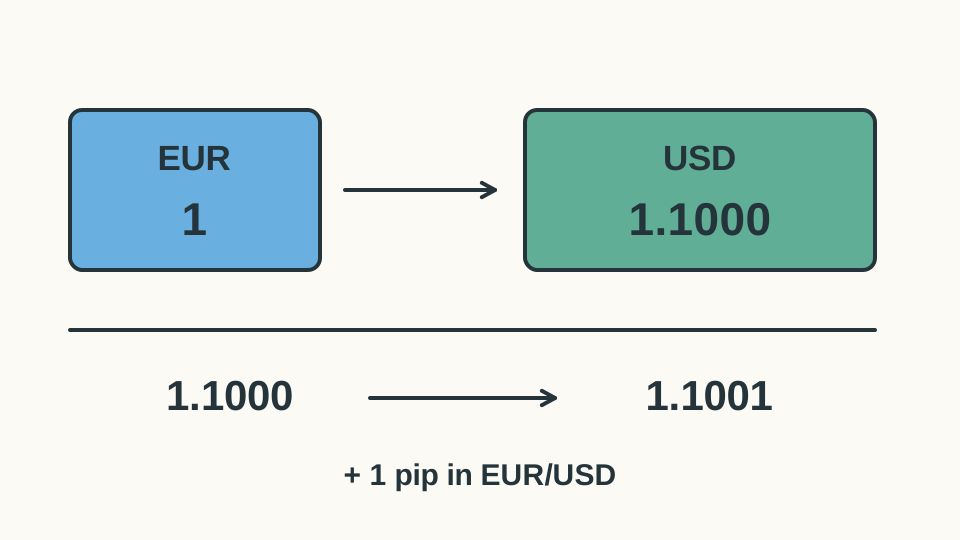
Step 2: read the price. EUR/USD 1.1000 means 1 euro costs 1.10 US dollars. USD/CAD 1.3500 means 1 US dollar costs 1.35 Canadian dollars. Buying a pair is called going . Selling it is going . Practise with how to read currency pairs.
Check: USD/CAD falls from 1.3500 to 1.3300. Which currency got stronger? The Canadian dollar. So a long USD/CAD trade loses money, before costs.
Step 3: learn the clock. Currencies trade around the clock on weekdays. But your broker has its own hours, holidays and overnight charges. Read forex market hours.
Check: why is a US report at 8:30 a.m. New York time sometimes 12:30 UTC and sometimes 13:30 UTC? Because New York changes its clocks for daylight saving. Also explain why a stop can fill past its price after a weekend .
Step 4: learn what moves currencies. Read what influences exchange rates. Then pick one real economic report. Find the original source. Note the actual number, the forecast and any later changes.
Check: write one story where the currency rises and one where it falls. A higher interest rate does not always make a currency stronger. What was expected, and what other countries do, matter too.
Read the spread lesson, then work through this example on paper.
Check: a broker says you need $200 of . Is $200 the most you can lose? No. Margin is money the broker locks while the trade is open. Your loss depends on the trade size and how far the price moves. See margin vs leverage.
Use a small, made-up account for these sums, such as $2,000. Small round numbers make the percentages easy to see.
Step 6: read a chart. Use the chart lesson to label the open, high, low and close of a candle. Find out if the chart shows the buy price, the sell price or the middle.
Check: one candle's range includes both your stop and your target. Which was hit first? You cannot tell from the candle alone. You would need more detailed data.
Step 7: test one idea. Choose one rule from the beginner strategies. Then read how to backtest it. Write the rule down before you look at new data. Include spreads and commission. Count the losing trades too.
Check: a is a test on past prices, not a real account. The CFTC explains the limits of simulated results. A good result is a reason to keep testing, not a promise of future profit.
There is no fixed date. You are ready for the next step when you can do every check above without help. Keep proof of each skill:
| Skill | Proof to keep |
|---|---|
| Read a pair | A sentence with both currencies, such as "1 euro costs 1.10 dollars" |
| Plan a trade size | The size and the loss from a 1% move |
| Count costs | One full example with spread and fees |
| Read a chart | A labelled candle and where its prices came from |
| Test a rule | The written rule and every result, losses included |
Then use the practice workbook with virtual money. Practice cannot copy the stress of losing real savings. It cannot prove you will make money either.
Before you use any broker, run the broker checklist. Finishing a course is a learning milestone. It is not a qualification, and it does not mean you have to trade.
No. Free lessons, like the steps on this page, cover the basics. If you do pay, ask for the syllabus, the total price, the refund terms and whether the course earns money from a broker.
There is no fixed time. Move on when you can do each step's check without help. If a calculation still feels hard, go back to that step before you move on.
No course can promise that. A course can teach you to read prices, count costs and size a trade. Whether any strategy makes money is uncertain, and you can lose money even with good skills.
Learn the forex basics in plain words: currency pairs, going long or short, pips, lots, the spread, and how leverage makes a small move cost a lot.
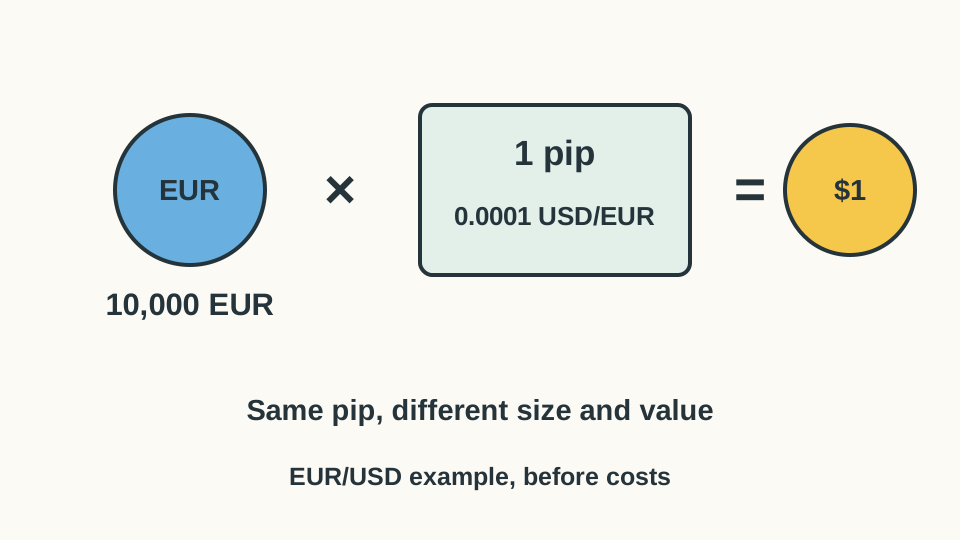
Learn what a pip is and how to turn a pip move into money on EUR/USD, USD/CAD and USD/JPY, and why your trade size matters more than the pip count.