
Forex
15 Forex Strategies and Patterns for Beginners (and How They Fail)
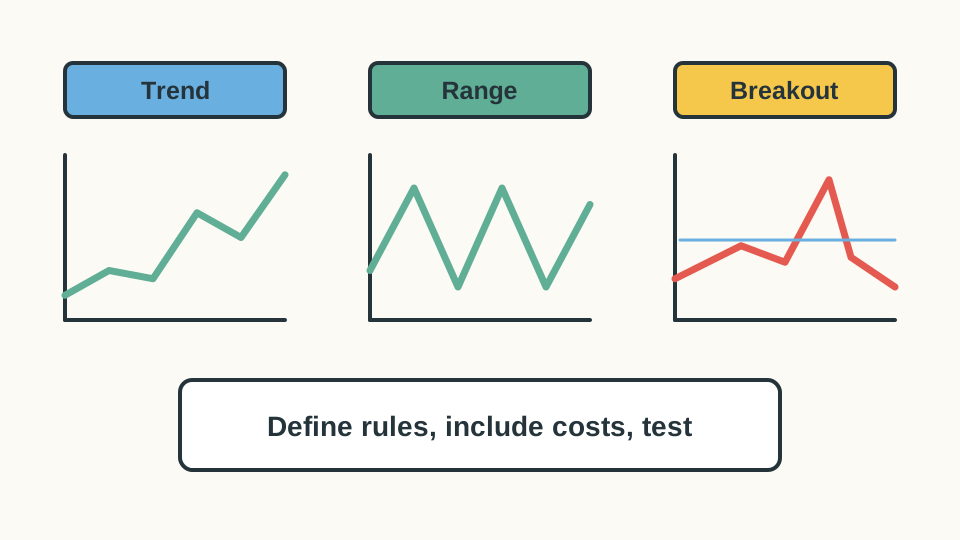
15 forex strategy ideas and chart patterns, from head and shoulders to carry trades: what each one bets on, how it fails and how to test one honestly.
Every forex trade starts slightly behind. Learn to read the bid and ask, turn the gap into pips and money, and compare it with other fees.

The spread is the ask price minus the bid price. You pay it on every trade.
At an airport money counter, you see two prices for the same currency: one to buy and one to sell. The gap between them is how the counter gets paid. Forex trading works the same way.
Every quote has two prices. The is the price you can sell at. The is the price you can buy at. The is the ask minus the bid.
| Price | Value | What you can do |
|---|---|---|
| Bid | 1.1000 | Sell euros for dollars |
| Ask | 1.1002 | Buy euros with dollars |
| Spread | 0.0002 | Ask minus bid |
The is halfway between the two, here 1.1001. Some charts show it, but you usually cannot trade at it. If the pair itself is new to you, start with how to read currency pairs.
Try it yourself
Press Buy to buy 10,000 euros at the ask, then press Sell now. Then slide the number of trades per month.
EUR/USD is 1.1000 bid and 1.1002 ask. Buying 10,000 euros costs $11,002. Selling them straight back gives $11,000, a $2 loss. At 20 round trips a month, that is $40.
What would you expect?
What this shows: You pay the spread the moment you trade. Buy and sell straight away and 10,000 euros loses $2. Twenty round trips a month cost $40.
The price did not move at all. You bought at the higher price and sold at the lower one. That gap is a cost on every trade, so trading often makes it add up fast.
Divide the spread by the size. For EUR/USD a pip is 0.0001, so 0.0002 ÷ 0.0001 = 2 pips.
Pairs with the Japanese yen use 0.01 as a pip. If USD/JPY is 150.00 bid and 150.03 ask, the spread is 0.03, or 3 pips.
Many platforms show an extra digit, so a spread can be 1.5 pips. Some show the spread in points instead. On many platforms a point is a tenth of a pip, so 20 points means 2 pips. Check what your platform uses.
Most platforms show the bid and ask in a price list, often called a watchlist. Many let you add a spread column too.
Multiply your trade size by the spread. Buy 10,000 euros at 1.1002, sell them straight back at 1.1000, and you get back $2 less than you paid. That is the cost of one , before any other fees.
| Trade size | One pip is worth | Round-trip spread cost |
|---|---|---|
| 1,000 euros | $0.10 | $0.20 |
| 10,000 euros | $1 | $2 |
| 100,000 euros | $10 | $20 |
For USD/JPY, the cost comes out in yen first. On 10,000 US dollars, a spread of 0.03 is 300 yen. At 150 yen per dollar, that is $2.
Small costs add up when you trade often. Twenty round trips a month at 2 pips is 40 pips, or $40 on 10,000 euros. You have to win that back before you make anything.
Some accounts have wider spreads and no other fee. Others have tiny spreads but charge a fee for each trade, called . Accounts sold as raw or zero spread usually work this way.
Compare them using the same trade, such as 10,000 euros of EUR/USD:
The smaller spread did not make B cheaper. These are made-up numbers, not real broker prices.
Spreads can be fixed or variable. A fixed spread stays the same in normal times, but it is often wider and comes with its own terms. A variable spread can be tiny when markets are calm and jump when they are not.
Holding a trade overnight and changing currencies can cost extra, too. ASIC's Moneysmart lists these costs for CFDs in Australia. Your own account terms may differ.
A provider sets its prices based on how busy the market is, how uncertain things are and its own costs. So spreads can widen around big news, in quiet hours, on holidays and when systems break down.
Even a busy pair like EUR/USD can have a wide spread for a moment. No hour is always the cheapest, and no spread is always safe. Watch the real pair, provider and time you plan to use.
The forex market hours lesson shows when the main centres are open and why time zones matter.
Counting it twice. If you work out a result from your real buy and sell prices, the spread is already in it. Only add it if you used mid prices.
Stops that trigger early. Some charts show only the bid price. If you sold (went short), your stop is triggered by the ask, which is higher. A wider spread can hit your stop even when the chart line does not touch it.
A false break-even. Bought at 1.1002? The bid must reach 1.1002 before you cover the spread. Commission and other fees still count; check your provider's order rules.
Try this made-up trade: 5,000 euros of EUR/USD, a 3-pip spread, and $0.50 commission each way.
Got a different answer? Check the trade size, the pip size and both commission charges.
Next lesson: margin and leverage, which decide how big a trade you can open. Spreads also change with the time of day, so read forex market hours too. To compare providers, see comparing brokerage fees and our forex broker guide. And always include costs when you backtest a strategy.
There is no single good number. Spreads differ by pair, provider and time of day. Compare the total cost of the same trade, including commission, and check the spread at the times you actually plan to trade.
The firm that quotes your prices. A dealer buys at the bid and sells at the ask, so the gap pays for its service and risk. Some accounts also charge commission on top.
Rarely, and usually only for a moment. Accounts sold as zero or raw spread normally charge commission instead. Always add the spread and the commission together.
15 forex strategy ideas and chart patterns, from head and shoulders to carry trades: what each one bets on, how it fails and how to test one honestly.
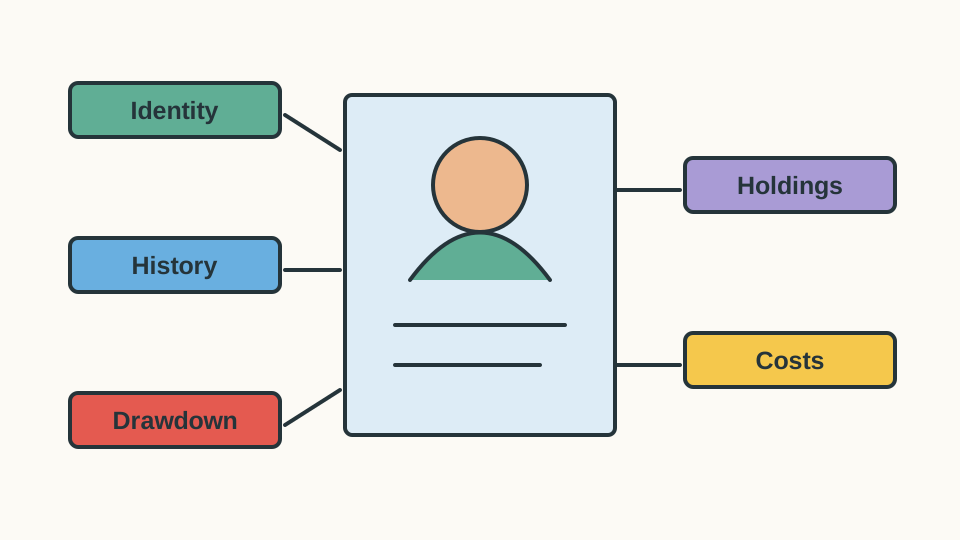
Find better eToro traders to copy in 5 steps: check the record, the deepest fall, big bets, the risk score and who gets paid, before you risk money.