

Crypto
Bitcoin Memes: 13 Funny Favorites and the Truth Behind the Jokes
13 funny Bitcoin memes and two viral crypto videos, from chart-checking to AI meme-coin hype, with the real lesson behind each joke.
Most crypto scams end with a request to send money or share a secret. Learn the warning signs, how to check a platform yourself, and what to do if you already paid.
A crypto scam can start with a friendly chat and end with a dashboard that looks real. So before you think about profits, look at the request. Who wants you to send money? Where would it go? How did you check who they are?
The US Federal Trade Commission (FTC) lists clear warning signs:
| The message says | What to do |
|---|---|
| "Your account is unsafe. Move your coins to this address." | Stop. Contact the real company using details you find yourself. |
| "Our profits are guaranteed." | Write it down and check the company with a . Don't deposit money to test it. |
| "Share your so we can fix your wallet." | Never share it. Real support does not need it. |
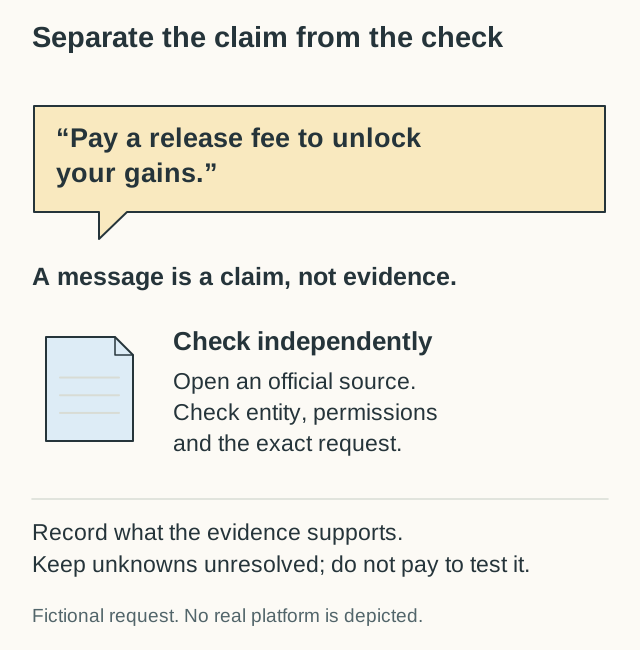
| "Pay a release fee to get your winnings." | Don't pay. Another payment will not unlock the money. |
One more rule: never let the sender give you both the claim and the proof. A link or phone number in their message can lead straight back to them. The same checks apply to trading bots that claim to use AI: see how to check AI trading claims.
Try it yourself
Read each message and tap Red flag or Seems fine. Then see the exact words that give it away.
Red flags (5 messages): a request for your 12-word recovery phrase, a $700 'tax' to withdraw $8,000 and 'guaranteed profits' from a dating match. Also a 'send 0.1 BTC, get 0.2 BTC back' giveaway and a recovery service with an upfront fee. Seems fine (2 messages): a friend sharing a transaction ID, and a notice inside your exchange's app about new fees.
What would you expect?
What this shows: Every red flag asked for money or a secret, or promised a sure profit. Real companies never need your recovery phrase.
Scams change their story, but they end the same way: send money, share a secret, or act now before you check. The 2 safe messages asked you for nothing.
Crypto payments are fast, they cross borders, and they usually can't be reversed. Australia's ASIC Moneysmart says scammers use crypto because payments are hard to recover. Once you send coins, no bank can pull them back.
That is why so many scams end with the same step: buy crypto and send it to this address. The story before that step changes. It might be a love interest, a celebrity giveaway, or a "government agency" that says you owe money. The FTC also warns about fake company staff who claim there is fraud on your account and tell you to buy crypto to fix it.
So treat any request to buy crypto and send it somewhere as a stop sign, whoever is asking.
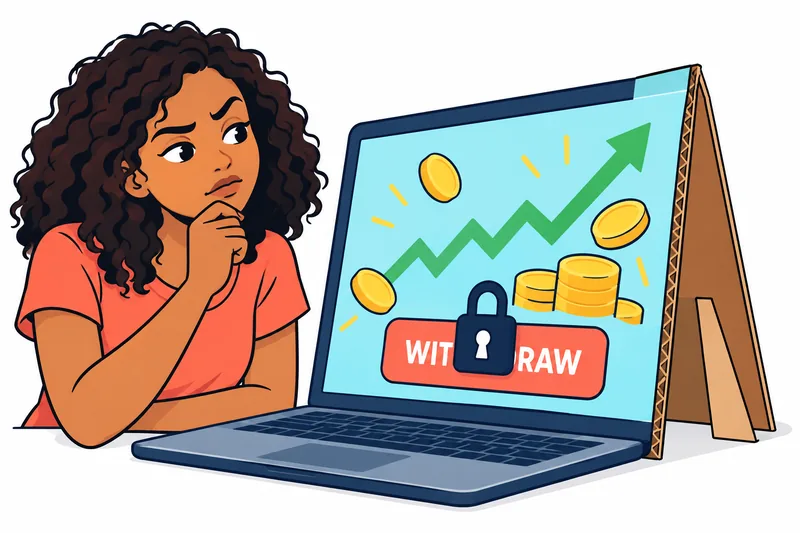
Here is a made-up example. A person you met online suggests a platform called Example Coin Desk. You send a small amount, and the dashboard shows a gain. Later it shows $8,000. Then "customer service" says you must pay a $700 "verification tax" before you can withdraw.
What can you verify? Messages and a payment record show what was said and sent. The dashboard alone cannot prove that $8,000 exists, that trading happened or that a tax is due. An earlier small withdrawal does not verify the remaining balance.
The FBI calls demands for "taxes" or "fees" to unlock funds a trap: the scammers never release the money. Its advice is to stop sending money and to report the scam.
Then watch for the second trick. People who were scammed often hear from "recovery" services that promise to get the money back for a fee. The FBI says not to pay for these services.
In Canada, start with the CSA's crypto platform pages. They link to a list of platforms allowed to do business with Canadians. In the UK, crypto firms must register with the FCA. In the US, the right regulator depends on the product. A real registration is a good start, but it is not a promise that your money is safe.
Act quickly, and stop sending money. Save the evidence somewhere private: , dates, amounts, wallet addresses, messages and website details.
Contact your bank, or the real platform, using contact details you found yourself. Then report the scam:
A report helps, but it is not a promise that you will get the money back. To rehearse these checks without risking anything, try the crypto practice plan. Spotting a scam and walking away is a real skill.
No. It only shows what that website displays. Ask what independent records show that you own the coins, that trades happened and that you can withdraw. A screenshot from the promoter is not proof.
It is often very hard, because crypto payments can't be reversed. Report it quickly to your bank, the platform and the authorities in your country. Never pay anyone who promises to recover it for a fee.
No. A message telling you to move crypto to a new address to protect it is a classic scam. Contact the company yourself, through its app or a website address you typed in.
Very likely. The FTC says only scammers demand payment in cryptocurrency. No real business or government will demand that you buy crypto or pay with it.
13 funny Bitcoin memes and two viral crypto videos, from chart-checking to AI meme-coin hype, with the real lesson behind each joke.
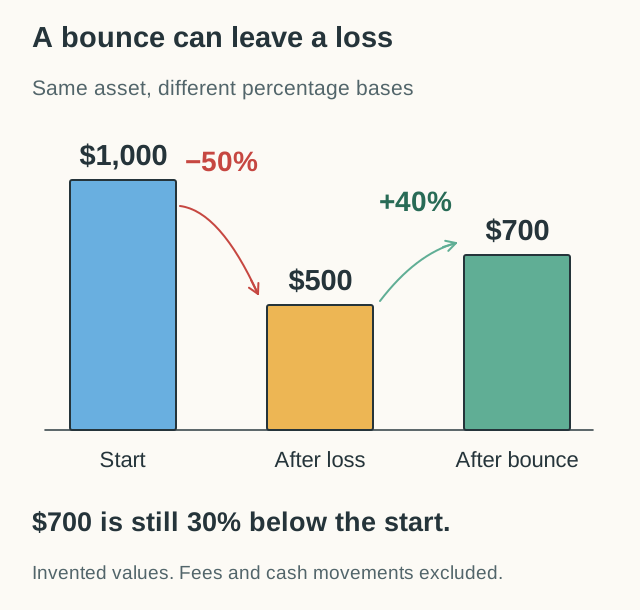
Bitcoin millionaire stories, from 5,000 forgotten coins to a $1,000 bet in 2011, and what the headlines leave out: timing, paper wealth and the losers.